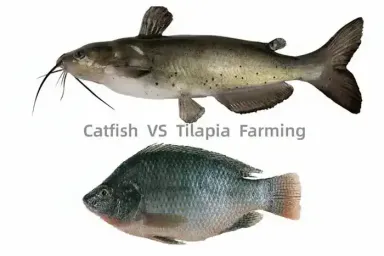

Catfish Or Tilapia - Which One To Farm?
Posted on: 2026-01-05
By: Yomi Adisa
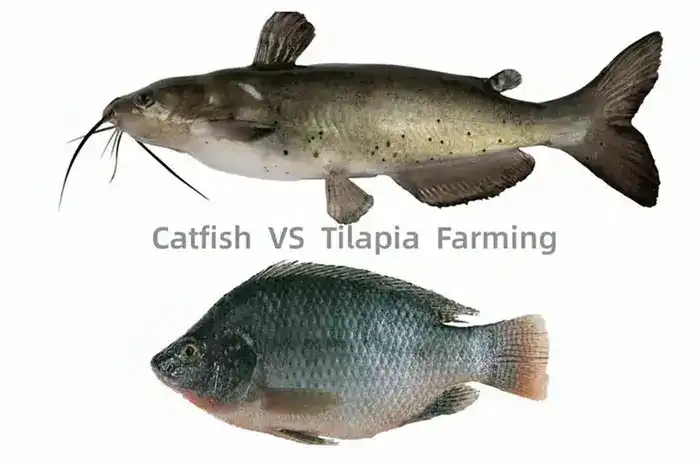
Catfish vs. Tilapia: A Beginner's Guide to Choosing the Right Fish for Your Farm
Introduction: Making Your First Big Decision in Fish Farming
Welcome to the exciting world of aquaculture! As an aspiring fish farmer, one of the first and most critical decisions you'll make is choosing which species to raise. The choice between catfish and tilapia can feel overwhelming, as this single decision will shape your farm's costs, daily tasks, and ultimate profitability.
The purpose of this guide is to demystify that choice. We will provide a simple, side-by-side comparison of the most important factors—from growth speed and feed costs to market demand and risk. Our goal is to equip you with the clarity needed to make a confident, informed decision that aligns perfectly with your goals, budget, and resources. While this guide provides a strong foundation, it is a complement to, not a replacement for, on-the-ground research in your local market.
1. At-a-Glance Comparison: Catfish vs. Tilapia
This table provides a high-level summary of the core differences between African Catfish and Nile Tilapia to help you quickly understand their unique profiles.
|
Factor |
African Catfish |
Nile Tilapia |
|
Growth to Market Size |
4-5 months to reach 1 kg |
6 months to reach 400-600 g |
|
Market Price Range |
₦1,000 - ₦1,200 / kg |
₦1,200 - ₦1,500 / kg (premium markets) |
|
Key Advantage |
Hardy and fast-growing with broad market acceptance |
Premium market appeal and higher price potential |
|
Feed Protein Required |
35-40% |
28-32% |
|
Feed Conversion Ratio (FCR) |
1.3 - 1.6 (more efficient) |
1.6 - 2.0 (less efficient) |
|
Optimal Stocking Density |
100 - 150 fish/m³ (high density) |
50 - 80 fish/m³ (lower density) |
|
Hardiness & Water Needs |
Very hardy; tolerates lower-quality water |
More sensitive; requires better water quality |
|
Estimated Annual ROI |
60-75% |
45-65% |
2. The Farming Journey: Growth, Time, and Effort
Beyond the numbers, the day-to-day experience of raising catfish and tilapia differs significantly. This section explores the practical realities of their growth, hardiness, and space requirements.
2.1. Speed to Market: How Quickly Will You See a Return?
A key consideration for any new business is cash flow. African Catfish deliver a significant advantage here, reaching a market weight of 1kg in just 4-5 months, whereas Nile Tilapia take 6 months to reach a smaller 400-600g. This faster growth cycle directly translates to quicker cash flow, enabling you to reinvest and grow your business more rapidly.
2.2. Hardiness and Farm Management: Which Fish is More Forgiving?
For a beginner, a resilient species can be the difference between a learning curve and a costly failure. Catfish are renowned for their toughness, which simplifies farm management.
- Water Quality: Catfish are exceptionally hardy and can thrive even in lower-quality water. This tolerance makes daily management less complex and reduces the need for expensive, sophisticated filtration systems. Tilapia, by contrast, are more sensitive and require consistently better water quality to stay healthy.
- Climate Adaptability: Catfish tolerate a wider temperature range of 20-35°C, making them adaptable to more varied climates. Tilapia have a narrower ideal range of 25-30°C, making them less flexible in cooler locations.
- Disease Resistance: Catfish have a strong natural resistance to common bacterial infections. While treatments may occasionally be needed (costing around ₦15,000-25,000), tilapia are more susceptible to stress-related diseases, which can lead to higher and more frequent treatment costs (₦40,000-60,000).
For a new farmer, this means catfish provides a much larger margin for error as you learn water management. Their resilience acts as a buffer against common beginner mistakes.
2.3. Space and Stocking: How Many Fish Can You Raise?
Stocking density refers to the number of fish you can raise in a given volume of water, directly impacting the revenue potential of your pond.
- Catfish: Can be stocked at very high densities of 100-150 fish per cubic meter (m³). This allows you to maximize the revenue potential of even a small pond.
- Tilapia: Require more space to stay healthy and must be stocked at lower densities of 50-80 fish/m³. This means you can produce less fish in the same amount of space.
For farmers with limited land or pond space, catfish are a more space-efficient choice, allowing for higher production capacity from a smaller footprint.
These on-farm realities directly influence the most critical factor for any new business: the financials.
3. The Financial Story: Costs, Profits, and Risks
Your choice of species is fundamentally a business decision. This section breaks down the costs, profit potential, and financial risks associated with farming catfish and tilapia.
3.1. The Biggest Expense: A Deep Dive into Feed Costs
Feed is the single largest operational cost in fish farming, typically accounting for 60-70% of your total production budget. As you budget for feed, remember that the price per bag is only half the story; efficiency is what truly drives your costs.
|
Feed Factor |
African Catfish |
Nile Tilapia |
|
Protein Requirement |
35-40% (Higher) |
28-32% (Lower) |
|
Average Feed Cost per kg |
₦280 - ₦320 |
₦240 - ₦280 |
|
Feed Conversion Ratio (FCR) |
1.3 - 1.6 |
1.6 - 2.0 |
The Feed Conversion Ratio (FCR) is the most important factor here. It measures how many kilograms of feed it takes to produce one kilogram of fish. A lower FCR is better.
Putting FCR into Practice: A Cost Example
Here's a calculation to produce 1,000 fish of 1 kg each, showing why FCR matters more than the per-bag cost of feed:
- Catfish (FCR of 1.4):
- Feed Needed: 1.4 kg of feed per fish
- Cost per Fish: 1.4 kg × ₦300/kg = ₦420
- Total Feed Cost: ₦420,000
- Tilapia (FCR of 1.8):
- Feed Needed: 1.8 kg of feed per fish
- Cost per Fish: 1.8 kg × ₦260/kg = ₦468
- Total Feed Cost: ₦468,000
This example clearly shows a key insight: despite having more expensive feed per bag, catfish can be cheaper to grow to market size because they convert that feed into weight much more efficiently.
3.2. Startup Investment: What Does It Cost to Get Started?
Let's break down what your initial investment looks like. Notice how the key difference isn't the cost of the fish, but the systems needed to support them.
Startup Cost Comparison (1,000 Fish Capacity)
- Catfish Farm Setup:
- Fingerlings: ₦50,000
- Feed (full cycle): ₦420,000
- Basic infrastructure: ₦800,000
- Equipment & supplies: ₦150,000
- Total: ₦1,420,000
- Tilapia Farm Setup:
- Fingerlings: ₦35,000
- Feed (full cycle): ₦468,000
- Enhanced infrastructure: ₦1,100,000
- Equipment & supplies: ₦200,000
- Total: ₦1,803,000
A tilapia farm requires a higher initial investment primarily because of its need for enhanced infrastructure, such as more sophisticated filtration, aeration, and water quality monitoring systems to keep the less-hardy fish healthy.
3.3. Profit Potential: Comparing Your Return on Investment (ROI)
While tilapia can command higher prices, it's crucial to understand the relationship between their potential margins, the risks involved, and your overall annual return.
- Gross Margins: Tilapia can achieve slightly higher gross margins per cycle (40-50%) compared to catfish (35-45%). However, this higher margin for tilapia is a conditional reward, achievable only if you can consistently secure premium buyers like upscale restaurants and hotels.
- Annual ROI: The story changes when you look at the annual return. Catfish farming typically yields a higher annual ROI of 60-75%, while tilapia farming yields 45-65%.
The reason for this difference is time. The faster growth cycle of catfish allows for more harvests per year, meaning your capital is put to work more frequently, compounding your returns more quickly than the slower, higher-risk profit cycle of tilapia.
3.4. Understanding the Risks
Profit potential must always be balanced against risk. In fish farming, these risks can be divided into two main categories.
- Market Risk: Catfish have broad market acceptance across West Africa, with relatively stable pricing year-round. This provides a reliable and predictable sales channel. Tilapia's reliance on premium markets makes it more vulnerable. These buyers may reduce purchases during economic downturns, leading to higher price volatility and fewer sales options.
- Operational Risk: A fish's hardiness is its own form of insurance. Catfish are more resilient to environmental problems. For example, a farmer in Oyo State lost 60% of his tilapia during a three-day power outage that disabled his aeration system. The neighboring catfish farms, however, experienced minimal losses. This isn't meant to scare you, but to highlight how choosing a hardier species acts as a form of business insurance against the unexpected.
With a clear picture of the financial landscape, you are now equipped to make a final decision based on your personal circumstances.
4. Conclusion: Which Fish is Right for You?
There is no single "better" fish—only the fish that is better for you. Your personal goals, budget, experience level, and local market should guide your final decision. To help you choose, ask yourself the following questions.
- What is your budget? If you have limited startup capital, catfish is the more accessible option. It requires a lower initial investment in infrastructure and has a faster growth cycle, which improves cash flow for a new business.
- How much time and experience do you have? If you are a beginner, catfish is the more forgiving choice. Its hardiness and tolerance for simpler management systems reduce the risk of costly mistakes while you learn the ropes of aquaculture.
- What does your local market want? This is the most important question. You must research your local market. In most of Nigeria, catfish is widely popular and enjoys consistent demand. However, if you are near upscale restaurants or in a region like Kenya where tilapia is preferred, it could be the more profitable option.
- What is your tolerance for risk? If you prefer a more predictable path to profit with lower operational and market risks, catfish is generally the safer bet. If you are willing to invest more upfront and manage higher operational complexity for the chance of higher price premiums, tilapia may offer greater rewards, but it comes with greater risks.
Ultimately, the best choice is the one that sets you up for success based on your unique circumstances. Use this guide to weigh the pros and cons, and you will be well on your way to building a thriving and profitable fish farm.

Yomi Adisa
Yomi Adisa is the lead researcher at Fish Farming Business, where he studies what makes aquaculture ventures profitable across Africa. His research focuses on market patterns, buyer preferences, and the business decisions that determine success or failure in fish farming.