
New Regulations for Nigerian Fish Farmers: What You Need to Know to Stay Compliant and Profitable

Posted on: 2025-11-05
By: Yomi Adisa
Nigeria's aquaculture sector is experiencing significant regulatory changes that will reshape how you operate your fish farming business. The Federal Department of Fisheries and Aquaculture has introduced new compliance requirements, licensing procedures, and sustainability standards that affect every aspect of your operation—from pond construction to fish sales.
These changes aren't just bureaucratic hurdles to navigate. They represent a fundamental shift towards professionalising the industry, creating clearer pathways to funding, and establishing standards that can help you access premium markets.
When a farmer in Ogun State recently secured a ₦2.5 million contract with a Lagos hotel chain specifically because his farm met the new certification standards, it demonstrated how compliance translates directly into business opportunities.
Understanding these regulations now—before enforcement intensifies—gives you a competitive advantage. You'll learn exactly what documentation you need, which deadlines matter most, and how to turn compliance requirements into profit opportunities. More importantly, you'll discover how farmers across Nigeria are using these new standards to differentiate their products and command higher prices in an increasingly competitive market.
This guide walks you through everything from obtaining your aquaculture licence to accessing government funding programmes like FISH4ACP. You'll understand not just what you must do to stay compliant, but how smart farmers are leveraging these regulations to build more profitable, sustainable operations.
What You Will Learn
- Understanding the new compliance requirements and licensing processes for fish farming
- How to leverage regulatory changes to access premium markets and funding opportunities
- The importance of record-keeping and environmental standards in operational success
- Strategies to transform compliance into a competitive advantage for profitability
- Key deadlines and documentation needed to avoid penalties and ensure smooth operations
Overview of New Regulations for Nigerian Fish Farmers
The Nigerian government has launched a comprehensive overhaul of its fisheries and aquaculture policies, targeting sustainability, economic growth, and food security. These regulations aren't minor adjustments—they represent the most significant changes to fish farming governance in over a decade. You need to understand these changes because they affect everything from how you stock your ponds to how you market your fish.
The new policy framework emphasises three core objectives: sustainable production practices, improved market access, and enhanced farmer profitability. What this means for you is stricter environmental standards, mandatory record-keeping, and new certification requirements. However, these same requirements open doors to premium markets, government funding, and export opportunities that weren't available under the old system.
Introduction to the Regulatory Changes
The Federal Department of Fisheries and Aquaculture has restructured Nigeria's aquaculture governance to align with international best practices and support the sector's contribution to the country's GDP. These changes target the industry's rapid growth—aquaculture production has increased by 300% over the past five years, but regulatory frameworks hadn't kept pace. Now they have, and you need to adapt quickly.

The new regulations establish clear standards for pond construction, water quality management, feed sourcing, and fish health monitoring. You're now required to maintain detailed production records, undergo periodic inspections, and demonstrate compliance with environmental protection measures. A farmer in Kaduna discovered this when inspectors arrived unannounced and found his record-keeping inadequate—he faced a ₦150,000 fine and temporary suspension of his operations.
These standards aren't arbitrary bureaucracy. They're designed to help Nigerian fish farmers compete in regional and international markets where buyers demand traceability, quality assurance, and sustainable production practices. When you meet these standards, you're not just avoiding penalties—you're positioning your farm for premium market opportunities.
Key Policy Objectives
- Sustainability: Environmental protection through responsible farming practices
- Economic Impact: Increased contribution to GDP and rural employment
- Food Security: Enhanced domestic fish production to reduce imports
- Market Access: Standards that enable entry into premium and export markets
Key Regulatory Bodies and Their Roles
The Federal Department of Fisheries and Aquaculture now serves as the primary regulatory authority, but implementation involves multiple levels of government. You'll interact with federal agencies for licensing and major compliance issues, state governments for environmental permits and local regulations, and local government areas for operational oversight and inspections. Understanding who handles what saves you time and prevents costly mistakes.
At the federal level, the Department manages aquaculture licensing, sets national standards, and coordinates with international bodies. They're responsible for the new digital licensing system, which streamlines applications but requires specific documentation you may not have prepared. State governments handle environmental impact assessments, water use permits, and regional compliance monitoring. Local governments conduct routine inspections, manage local market regulations, and serve as your first point of contact for most day-to-day compliance issues.

This multi-tiered approach means you need relationships at each level. A farmer in Cross River State learned this when his federal licence was approved, but local authorities hadn't been informed—his operations were suspended for two weeks while agencies coordinated. You want to establish communication with all relevant authorities early in your compliance process.
| Authority Level | Primary Responsibilities | Key Contact Points |
|---|---|---|
| Federal | Licensing, national standards, international coordination | Department of Fisheries and Aquaculture |
| State | Environmental permits, regional compliance, water rights | State Ministry of Agriculture |
| Local | Routine inspections, local regulations, market oversight | Local Government Agriculture Department |
Timeline for Implementation
The regulatory rollout follows a phased approach designed to give farmers time to adapt, but the deadlines are firm. Phase One, which began in January 2024, covers licensing requirements and basic compliance standards. You have until June 2024 to obtain your aquaculture licence and demonstrate compliance with core environmental and production standards. Phase Two, starting July 2024, introduces advanced monitoring requirements and market certification standards.
The most critical deadline for existing farmers is the licence application cutoff: 30th June 2024. After this date, unlicensed operations face immediate shutdown orders and substantial penalties. New farmers have a 90-day grace period from the start of operations to complete licensing, but you cannot begin construction or stocking without preliminary approvals. A farmer in Kano missed the preliminary approval requirement and had to demolish completed pond structures that didn't meet the new standards—a loss of ₦800,000.

Phase Three, beginning in 2025, focuses on market integration and export certification. This phase is optional for domestic-only operations but mandatory if you want to access premium markets or export opportunities. The timeline seems generous, but the documentation requirements are extensive. You want to start your compliance process immediately, even if your current operations seem small-scale.
Critical Compliance Deadlines
- 30th June 2024: Final deadline for existing farmer licence applications
- 31st July 2024: Basic compliance standards enforcement begins
- 31st December 2024: Advanced monitoring requirements take effect
- 1st January 2025: Market certification standards become mandatory for premium sales
Licensing Requirements for Aquaculture
Getting your aquaculture licence isn't just a legal requirement—it's your gateway to legitimate business operations, government funding, and premium market access. The new digital licensing system has streamlined the process, but it's also made documentation requirements more stringent. You need to understand exactly what's required, what the process costs, and how to avoid the common mistakes that delay approvals for months.
The licensing process now operates entirely through the Federal Department of Fisheries and Aquaculture's online portal. This means faster processing times—applications that previously took 6-8 months now process in 4-6 weeks if your documentation is complete. However, incomplete applications face automatic rejection, and you'll need to restart the entire process. A farmer in Plateau State submitted his application three times before realising he needed environmental impact assessments for ponds larger than 0.5 hectares.
Your licence determines not just whether you can operate, but what markets you can access and what funding programmes you're eligible for. Licensed farmers can apply for the FISH4ACP programme's ₦5 million grants, access subsidised fingerlings from government hatcheries, and sell directly to institutional buyers who require certified suppliers. Without proper licensing, you're limited to informal markets with lower prices and higher risks.
Step-by-Step Process for Obtaining an Aquaculture License
The application process begins with creating your profile on the Federal Department of Fisheries portal and selecting your licence category. You'll choose between small-scale (under 2 hectares), medium-scale (2-10 hectares), or large-scale (over 10 hectares) classifications. Each category has different requirements and fees, but all require the same core documentation: land ownership or lease agreements, environmental compliance certificates, and detailed farm development plans.
Your farm development plan must include pond specifications, water source documentation, waste management systems, and projected production volumes. The authorities want to see that you understand what you're doing and have planned for environmental protection. You'll need technical drawings of your pond layout, water flow diagrams, and calculations showing your carrying capacity. A consulting engineer in Lagos charges ₦150,000-₦300,000 for complete technical documentation, but many farmers attempt this themselves and face rejection.

The application fee structure varies by scale: small-scale operations pay ₦25,000, medium-scale pay ₦75,000, and large-scale pay ₦150,000. These fees are non-refundable, even if your application is rejected. Processing typically takes 4-6 weeks for complete applications, but incomplete submissions can delay approval by 3-4 months. You want to ensure every document is properly prepared before submitting your application.
Required Documentation Checklist
- Land Documentation: Certificate of Occupancy or registered lease agreement
- Environmental Compliance: Environmental Impact Assessment (for farms >0.5 hectares)
- Technical Plans: Pond design, water management, waste disposal systems
- Financial Capacity: Bank statements, funding sources, projected cash flow
- Personal Documentation: Valid ID, tax clearance certificate, business registration
Common Misconceptions About Licensing
Many farmers believe they can operate informally until they're "ready" for licensing, but enforcement has intensified significantly. Unlicensed operations now face immediate shutdown orders, equipment confiscation, and fines ranging from ₦200,000 to ₦2 million depending on farm size. The grace period for existing farmers ends on 30th June 2024—after this date, operating without a licence becomes a criminal offence with potential imprisonment.
Another dangerous misconception is that small-scale farmers don't need licences. The new regulations apply to all commercial aquaculture operations, regardless of size. Even if you have just two ponds and sell fish locally, you need proper licensing. A farmer in Ekiti State with three small ponds faced a ₦300,000 fine and temporary closure because he assumed his operation was "too small to matter."
Some farmers also believe they can transfer or share licences, but each licence is specific to the holder, location, and approved capacity. You cannot operate on someone else's licence, and you cannot exceed your licensed capacity without applying for amendments. Licence violations carry the same penalties as operating without a licence, and authorities are actively monitoring compliance through satellite imagery and field inspections.
| Misconception | Reality | Consequences |
|---|---|---|
| Small farms don't need licences | All commercial operations require licensing | ₦200,000-₦2M fines, closure orders |
| Can operate informally initially | Licensing required before operations begin | Criminal charges, equipment confiscation |
| Licences are transferable | Each licence is holder and location specific | Same penalties as unlicensed operation |
Maintaining Your License
Your aquaculture licence isn't a one-time achievement—it requires ongoing compliance and regular renewals. You must submit quarterly production reports, maintain detailed records of fish stocks, feed purchases, and sales, and allow periodic inspections by regulatory authorities. Failure to meet these ongoing requirements can result in licence suspension or revocation, even if your initial application was perfect.
The quarterly reporting system operates through the same online portal used for applications. You'll report your stocking densities, mortality rates, feed conversion ratios, and sales volumes. This data helps authorities monitor industry trends and ensures you're operating within your licensed capacity. Late or inaccurate reports trigger automatic compliance reviews, and repeated violations lead to licence suspension.
Annual licence renewals require updated documentation and compliance certificates. The renewal fee is 50% of your original application fee, but you must demonstrate continued compliance with all regulations. This includes updated environmental assessments, financial statements, and technical inspections. A farmer in Benue State lost his licence renewal because he couldn't demonstrate proper waste management—his fish sales were strong, but regulatory compliance had deteriorated over time.
Ongoing Compliance Requirements
- Quarterly Reports: Production data, mortality rates, sales volumes due 15th of each quarter
- Record Keeping: Detailed logs of stocking, feeding, treatments, and sales for minimum 3 years
- Inspections: Allow access to regulatory authorities with 48-hour notice
- Annual Renewal: Updated documentation and compliance certificates required
Compliance Measures to Ensure Profitability
Compliance isn't just about avoiding penalties—it's your pathway to higher profits and premium market access. The new regulations create a two-tier market system where compliant farmers access lucrative contracts, government subsidies, and export opportunities, while non-compliant operations remain trapped in low-margin informal markets. Understanding this distinction transforms compliance from a burden into a competitive advantage.
When you meet regulatory standards, you qualify for institutional buyers who pay premium prices for certified fish. Hotels, restaurants, and supermarket chains increasingly require suppliers with proper documentation and compliance certificates. A farmer in Rivers State secured a ₦1.8 million monthly contract with a Port Harcourt hotel chain specifically because his farm met the new standards—his compliant competitors couldn't match the volume requirements, and non-compliant farmers weren't even considered.
The key is viewing compliance as an investment in market positioning rather than a regulatory burden. Every compliance measure you implement—from proper record-keeping to environmental monitoring—builds documentation that buyers value and regulators require. This documentation becomes your competitive moat, separating your operation from informal competitors who can't demonstrate the same standards.
Understanding Compliance Obligations
Your compliance obligations fall into four main categories: operational standards, environmental protection, record-keeping requirements, and market certification. Each category has specific requirements that must be maintained continuously, not just during inspections. Operational standards cover pond construction, stocking densities, feed quality, and fish health management. You must demonstrate that your operations meet technical specifications and follow approved practices.
Environmental protection requirements include water quality monitoring, waste management systems, and impact assessments for surrounding ecosystems. You need to test water parameters monthly, maintain treatment systems for pond discharge, and document your environmental impact mitigation measures. A farmer in Oyo State faced licence suspension because his discharge water exceeded permitted pollution levels—even though his fish production was excellent, environmental compliance failures shut down his operations.
Record-keeping obligations require detailed documentation of every aspect of your operation. You must maintain logs of fish stocking, feeding schedules, mortality events, treatment applications, and sales transactions. These records must be available for inspection at any time and submitted quarterly through the online portal. Market certification adds another layer, requiring traceability documentation that tracks your fish from fingerling to final sale.
Core Compliance Categories
- Operational Standards: Pond specifications, stocking densities, feed quality protocols
- Environmental Protection: Water quality monitoring, waste management, impact assessments
- Record-Keeping: Detailed logs of all farm activities, quarterly reporting requirements
- Market Certification: Traceability documentation, quality assurance protocols
Practical Compliance Checklists for Fish Farmers
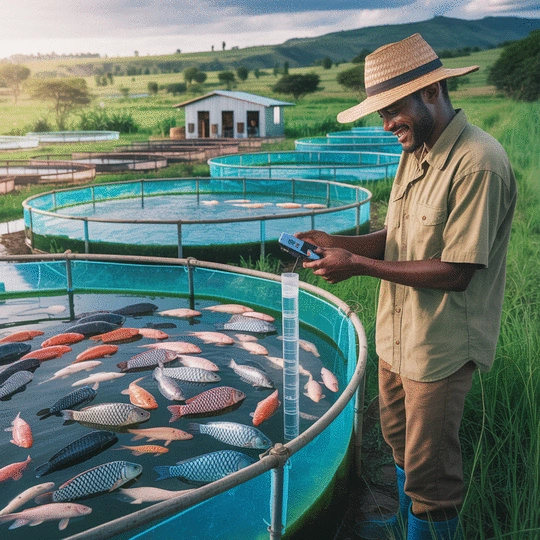
Daily compliance tasks include water quality testing, mortality monitoring, and feeding record updates. You need to check dissolved oxygen levels, pH, and temperature in each pond, document any fish deaths with probable causes, and record feed quantities and feeding times. These daily records form the foundation of your quarterly reports and provide early warning of problems that could affect compliance or profitability.
Weekly tasks involve more comprehensive water testing, equipment maintenance checks, and inventory updates. You'll test for ammonia, nitrites, and other parameters that change more slowly than daily measurements. Equipment maintenance includes checking aerators, pumps, and filtration systems to ensure they're operating within specifications. Inventory updates track feed consumption, medication usage, and fish growth rates to maintain accurate production records.
Monthly compliance activities include comprehensive pond assessments, environmental monitoring, and documentation reviews. You'll conduct detailed fish health evaluations, test discharge water quality, and review all records for accuracy and completeness. This monthly review helps identify compliance gaps before they become violations and ensures your quarterly reports are accurate and complete.
| Frequency | Key Tasks | Documentation Required |
|---|---|---|
| Daily | Water testing, mortality monitoring, feeding records | Daily log sheets, water parameter charts |
| Weekly | Comprehensive water analysis, equipment checks | Weekly summary reports, maintenance logs |
| Monthly | Fish health assessment, environmental monitoring | Monthly compliance reports, health certificates |
| Quarterly | Comprehensive review, regulatory reporting | Quarterly submissions, compliance certificates |
Consequences of Non-Compliance
Non-compliance penalties have escalated dramatically under the new regulations, with fines ranging from ₦200,000 for minor violations to ₦5 million for serious environmental breaches. More damaging than fines are the operational consequences: licence suspension, equipment confiscation, and prohibition from government programmes.
A farmer in Kebbi State faced a ₦800,000 fine and three-month licence suspension for inadequate record-keeping—during those three months, he lost two major contracts worth ₦2.4 million. The enforcement system now includes surprise inspections, satellite monitoring, and cross-referencing of reported data with market sales.
Authorities can detect discrepancies between your reported production and actual sales, triggering investigations that often reveal multiple compliance violations. Digital monitoring makes it nearly impossible to hide non-compliance, and penalties compound quickly when multiple violations are discovered simultaneously.
Beyond immediate penalties, non-compliance creates long-term business damage through reputation effects and market exclusion. Buyers increasingly check compliance status before entering contracts, and violations become part of your permanent regulatory record.
Insurance companies are beginning to require compliance certificates for coverage, and banks consider regulatory standing when evaluating loan applications. A farmer in Taraba State discovered that his previous compliance violations prevented him from accessing a ₦3 million agricultural loan, even though his farm was profitable.
Escalating Penalty Structure
- Minor Violations: ₦200,000-₦500,000 fines, warning letters, compliance deadlines
- Moderate Violations: ₦500,000-₦1.5M fines, temporary licence suspension, mandatory training
- Serious Violations: ₦1.5M-₦5M fines, licence revocation, equipment confiscation
- Criminal Violations: Court prosecution, imprisonment up to 2 years, permanent industry ban
Financial Support and Incentives Available
The new regulatory framework comes with substantial financial incentives designed to help farmers transition to compliant operations while improving profitability. These aren't token gestures—the government has allocated ₦45 billion across various programmes to support aquaculture development, with most funding reserved for compliant farmers. Understanding these opportunities and how to access them can transform your farm's financial position and growth trajectory.
Compliance opens doors to funding programmes that were previously difficult to access or didn't exist. The FISH4ACP programme alone offers grants up to ₦5 million per farm, subsidised fingerlings at 40% below market rates, and technical assistance worth ₦200,000 annually. However, these benefits require proper licensing, environmental compliance, and detailed business plans that demonstrate sustainable practices.
The key insight is that compliance costs—which might seem burdensome initially—are often offset by the financial benefits available to compliant farmers. When you calculate the total cost of compliance against the funding, subsidies, and premium market access it provides, most farmers discover that compliance pays for itself within 12-18 months while positioning them for long-term growth.
Government and International Funding Opportunities
The FISH4ACP programme represents the largest funding opportunity for Nigerian fish farmers, with ₦15 billion allocated over five years. This EU-funded initiative provides direct grants, subsidised inputs, and technical assistance to farmers who meet sustainability and compliance standards. Grant amounts range from ₦1 million for small-scale operations to ₦5 million for medium-scale farms, with additional funding available for equipment purchases and infrastructure development.
Application requirements include a valid aquaculture licence, environmental compliance certificate, detailed business plan, and demonstration of technical competency. The programme prioritises farmers who can show market linkages, sustainable practices, and potential for scaling operations. A farmer in Nasarawa State received ₦3.2 million through FISH4ACP, which he used to expand from 2 to 6 ponds and secure contracts with Abuja restaurants—his annual revenue increased from ₦4.5 million to ₦12.8 million.
The Central Bank of Nigeria's Anchor Borrowers Programme has expanded to include aquaculture, offering loans at 9% interest rates compared to commercial rates of 18-25%. Loan amounts range from ₦500,000 to ₦10 million, with repayment terms up to 7 years for infrastructure investments. The programme also provides guaranteed off-take agreements, ensuring you have buyers for your production before you begin farming.
Major Funding Programmes
- FISH4ACP: ₦1M-₦5M grants, subsidised inputs, technical assistance
- Anchor Borrowers Programme: 9% interest loans, guaranteed off-take agreements
- FADAMA III: Infrastructure grants, capacity building, market linkage support
- Bank of Agriculture: Specialised aquaculture loans, equipment financing
Budgeting for Compliance Costs
Initial compliance costs vary significantly based on your farm size and current infrastructure, but you can expect to invest ₦300,000-₦800,000 for a medium-scale operation to meet all requirements. This includes licensing fees (₦75,000), environmental assessments (₦150,000-₦300,000), equipment upgrades (₦200,000-₦400,000), and documentation preparation (₦50,000-₦100,000).
These upfront costs seem substantial, but they're typically recovered within the first year through improved market access and operational efficiency. Ongoing compliance costs include quarterly reporting fees (₦15,000), annual licence renewal (₦37,500), regular testing and monitoring (₦25,000 monthly), and periodic inspections (₦20,000-₦50,000).
Monthly compliance costs typically range from ₦40,000-₦70,000 for medium-scale operations, representing 3-5% of gross revenue for well-managed farms. This percentage decreases as your operation scales, making compliance more cost-effective for larger farms. The most effective approach is to phase compliance investments over 6-12 months, prioritising requirements with the shortest deadlines and highest penalties.
Start with licensing and basic operational standards, then add environmental monitoring and advanced record-keeping systems. A farmer in Delta State spread his compliance investments over 8 months, using early compliance benefits to fund later requirements—his total out-of-pocket costs were 40% lower than farmers who tried to achieve full compliance immediately.
| Cost Category | Initial Investment | Ongoing Monthly |
|---|---|---|
| Licensing & Documentation | ₦125,000-₦175,000 | ₦15,000 |
| Environmental Compliance | ₦150,000-₦300,000 | ₦25,000 |
| Equipment & Infrastructure | ₦200,000-₦400,000 | ₦20,000 |
| Monitoring & Reporting | ₦50,000-₦100,000 | ₦15,000 |
Financial Benefits of Compliance
Compliant farmers consistently achieve 25-40% higher profit margins than non-compliant operations through premium market access, reduced operational risks, and improved efficiency. The premium market differential is substantial—compliant farmers sell catfish at ₦1,200-₦1,400 per kilogram to institutional buyers, while non-compliant farmers receive ₦800-₦1,000 per kilogram in informal markets. Over a typical production cycle, this price difference more than covers compliance costs.
Access to subsidised inputs provides another significant financial benefit. Compliant farmers can purchase fingerlings at ₦8-₦12 each from government hatcheries, compared to ₦15-₦20 in open markets. Feed subsidies reduce costs by 15-20%, and equipment financing programmes offer interest rates 8-10 percentage points below commercial rates. A farmer in Kwara State calculated that input subsidies alone saved him ₦380,000 annually, while premium market access increased his revenue by ₦1.2 million.
Insurance and risk management benefits provide additional financial protection that's often overlooked. Compliant farmers qualify for agricultural insurance at reduced premiums, protecting against weather events, disease outbreaks, and market disruptions.
Government disaster relief programmes prioritise compliant farmers, and banks offer more favourable loan terms to operations with proper regulatory standing. These risk mitigation benefits become especially valuable during challenging periods when non-compliant farmers face the full impact of adverse events.
Quantified Financial Benefits
- Premium Pricing: 25-40% higher selling prices for certified fish
- Input Subsidies: 15-20% reduction in feed and fingerling costs
- Financing Access: 8-10 percentage points lower interest rates
- Insurance Benefits: 30-50% reduction in premium costs, priority coverage
Challenges and Opportunities in the New Regulatory Landscape
The new regulatory environment creates both significant challenges and unprecedented opportunities for Nigerian fish farmers. While compliance requirements demand substantial investments in time, money, and operational changes, they also establish clear pathways to premium markets, government support, and sustainable profitability. The farmers who adapt quickly will gain competitive advantages that compound over time, while those who resist change risk being excluded from the industry's growth.
Understanding these challenges and opportunities helps you make strategic decisions about how to position your farm for long-term success. The regulatory changes aren't temporary adjustments—they represent a permanent shift towards professionalising Nigeria's aquaculture sector. Early adopters who embrace these changes are already seeing benefits, while farmers who delay adaptation face increasing difficulties accessing markets, funding, and operational support.
The key insight is that challenges and opportunities often represent two sides of the same regulatory requirement. Environmental monitoring seems burdensome until you realise it prevents costly fish kills and demonstrates sustainability to premium buyers. Record-keeping appears time-consuming until it helps you optimise feeding schedules and qualify for institutional contracts. Viewing regulations through this dual lens helps you identify strategic advantages within apparent obstacles.
Identifying Key Challenges for Fish Farmers
The most immediate challenge facing farmers is the complexity and cost of initial compliance. Many farmers lack the technical knowledge to prepare environmental impact assessments, design compliant pond systems, or implement proper record-keeping protocols. Professional consulting services charge ₦200,000-₦500,000 for comprehensive compliance assistance, but attempting compliance without proper guidance often results in rejected applications and wasted investments.
Cash flow management during the transition period presents another significant challenge. Compliance investments must be made upfront, but benefits accrue gradually over 6-18 months. Many farmers struggle to finance compliance costs while maintaining current operations, especially if they're already operating on thin margins. A farmer in Adamawa State had to reduce his stocking density by 30% to fund compliance investments, temporarily reducing his income while building long-term market position.
Technical capacity gaps create ongoing challenges for many farmers who lack experience with digital reporting systems, water quality testing, and environmental monitoring. The new regulations assume a level of technical sophistication that many traditional farmers haven't developed. Training programmes are available, but they require time away from farm operations and additional costs that strain already tight budgets.
Primary Implementation Challenges
- Technical Complexity: Environmental assessments, system design, regulatory documentation
- Financial Pressure: Upfront compliance costs, reduced cash flow during transition
- Capacity Gaps: Digital systems, testing protocols, monitoring procedures
- Time Management: Balancing compliance activities with daily farm operations
Leveraging New Regulations for Competitive Advantage
Smart farmers are using compliance requirements as market differentiation tools, positioning their operations as premium suppliers in an increasingly quality-conscious market. Instead of viewing environmental monitoring as a burden, they're marketing their sustainable practices to buyers who value responsible sourcing. A farmer in Ondo State created marketing materials highlighting his environmental compliance, which helped him secure contracts with three Lagos restaurants at 20% above market rates.
The digital reporting requirements create opportunities for data-driven farm management that improves efficiency and profitability. Farmers who embrace comprehensive record-keeping discover patterns in their operations that lead to better feeding strategies, optimised stocking densities, and improved disease prevention. The same data that satisfies regulatory requirements becomes valuable business intelligence that drives operational improvements.
Early compliance also creates first-mover advantages in accessing government programmes and premium markets. As funding programmes expand and institutional buyers increase their quality requirements, compliant farmers will have established relationships and proven track records. The barriers to entry for these opportunities will only increase as more farmers achieve compliance, making early adoption increasingly valuable.
| Regulatory Requirement | Competitive Advantage | Market Value |
|---|---|---|
| Environmental monitoring | Sustainability certification, premium positioning | 15-25% price premium |
| Detailed record-keeping | Traceability, quality assurance | Institutional buyer access |
| Licensing compliance | Government programme eligibility | ₦1M-₦5M grant access |
| Technical standards | Operational efficiency, reduced losses | 10-15% cost reduction |
Future Outlook for the Fish Farming Industry in Nigeria
The regulatory changes position Nigeria's aquaculture sector for substantial growth over the next decade, with projections indicating the industry could triple in size by 2030. Government investment in infrastructure, research, and market development will create opportunities for compliant farmers to scale operations and access regional export markets.
The West African regional market represents a ₦2.8 trillion opportunity, but accessing it requires the quality standards and traceability systems that the new regulations establish. Technology integration will accelerate as digital monitoring and reporting systems become standard practice.
Farmers who adapt to these systems early will benefit from improved operational efficiency, better decision-making capabilities, and enhanced market positioning. The data generated through compliance activities will become increasingly valuable for optimising production, accessing credit, and demonstrating performance to buyers and investors. Market consolidation is likely as compliance requirements create barriers for informal operators while providing advantages to professional farms.
This consolidation will reduce competition in premium market segments while increasing opportunities for compliant farmers to capture larger market shares. A farmer in Bauchi State anticipates that half of his current competitors will exit the market within two years due to compliance challenges, potentially doubling his local market share.
Industry Growth Projections
- Market Size: Expected to triple by 2030, reaching ₦4.2 trillion annually
- Export Potential: West African regional market worth ₦2.8 trillion
- Technology Adoption: Digital systems becoming standard for monitoring and reporting
- Market Consolidation: Professional farms gaining market share from informal operators
Conclusion and Next Steps for Fish Farmers
The new regulatory landscape for Nigerian fish farming represents the most significant transformation the industry has experienced in decades. While the changes demand substantial adjustments in how you operate, document, and manage your farm, they also create unprecedented opportunities for growth, profitability, and market access.
The farmers who embrace these changes quickly will establish competitive advantages that compound over time, while those who delay adaptation risk being excluded from the industry's most lucrative opportunities. Your success in this new environment depends on viewing compliance not as a burden, but as an investment in your farm's future profitability and sustainability.
The costs of compliance—while substantial initially—are consistently offset by the financial benefits available to compliant farmers through premium pricing, subsidised inputs, and access to government funding programmes. More importantly, compliance positions your operation for long-term growth in an industry that's rapidly professionalising.
The window for adaptation is narrowing, with critical deadlines approaching in June 2024 and enforcement intensifying throughout the year. However, the support systems, funding programmes, and technical assistance available to help farmers transition have never been more comprehensive. Taking action now, while support is readily available and competition for premium markets remains limited, gives you the best opportunity to transform regulatory requirements into competitive advantages.
Summary of Key Takeaways
The most critical insight from Nigeria's new aquaculture regulations is that compliance creates a two-tier market system where compliant farmers access premium opportunities while non-compliant operations remain trapped in low-margin informal markets. This isn't a temporary adjustment—it's a permanent restructuring of the industry that rewards professional operations and penalises informal practices. Understanding this fundamental shift helps you make strategic decisions about investing in compliance versus accepting limited market access.
Financial benefits of compliance consistently outweigh the costs within 12-18 months for most operations. Premium pricing differentials of 25-40%, input subsidies of 15-20%, and access to low-interest financing create compelling returns on compliance investments. A farmer who invests ₦500,000 in compliance typically recovers those costs within the first production cycle while positioning for ongoing benefits that compound over time.
The regulatory framework emphasises sustainability, traceability, and professional management practices that align with global market trends. Farmers who develop these capabilities now will be positioned to access regional export markets, institutional buyers, and government programmes that drive the industry's future growth. The technical skills and systems you develop for compliance become valuable business assets that improve operational efficiency and market positioning.
Critical Success Factors
- Early Adoption: Compliance benefits compound over time, making early action valuable
- Strategic Investment: View compliance costs as market positioning investments
- Professional Development: Build technical capabilities that improve operations and market access
- Market Differentiation: Use compliance as a competitive advantage in premium segments
Action Plan for Compliance and Profitability
Your immediate priority is securing your aquaculture licence before the 30th June 2024 deadline. Begin by gathering required documentation—land ownership papers, environmental assessments, and technical plans—and submit your application through the Federal Department of Fisheries portal.
If you lack technical expertise for documentation preparation, invest in professional consulting services rather than risking rejection due to incomplete applications. The cost of professional assistance is minimal compared to the penalties for operating without proper licensing.
Simultaneously, implement basic compliance systems for record-keeping, water quality monitoring, and environmental management. Start with simple daily logs for feeding, mortality, and water parameters, then gradually add more sophisticated monitoring as your systems develop. Focus on creating accurate, consistent records that will support your quarterly reporting requirements and demonstrate compliance during inspections.
Develop relationships with regulatory authorities at federal, state, and local levels before you need their assistance. Attend industry meetings, introduce yourself to relevant officials, and ask questions about upcoming requirements and available support programmes. These relationships become valuable when you need guidance, face compliance challenges, or want to access government funding opportunities.
| Timeline | Priority Actions | Expected Investment |
|---|---|---|
| Immediate (0-30 days) | Licence application, basic documentation | ₦75,000-₦150,000 |
| Short-term (1-3 months) | Compliance systems, monitoring equipment | ₦200,000-₦400,000 |
| Medium-term (3-6 months) | Advanced monitoring, market certification | ₦150,000-₦300,000 |
| Long-term (6-12 months) | Premium market access, scaling operations | Variable based on growth |
Encouragement to Engage with Regulatory Bodies
Regulatory authorities want to see the aquaculture industry succeed and are generally supportive of farmers who demonstrate genuine commitment to compliance. Rather than viewing regulators as adversaries, approach them as partners who can provide guidance, support, and access to resources that improve your operation. Many farmers discover that regulatory officials offer valuable insights about market opportunities, technical improvements, and funding programmes that aren't widely publicised.
Proactive engagement with authorities demonstrates professionalism and commitment that regulators remember when making decisions about enforcement, funding, and support. A farmer who regularly communicates with officials, asks thoughtful questions, and demonstrates progress towards compliance receives more favourable treatment than one who only contacts authorities when problems arise.
This relationship-building investment pays dividends throughout your farming career. The regulatory landscape will continue evolving as the industry grows and international standards develop. Farmers who maintain ongoing dialogue with authorities stay informed about upcoming changes, participate in policy development discussions, and position themselves to benefit from new opportunities as they emerge. Your engagement today builds the foundation for long-term success in an industry that's rapidly professionalising and expanding.
Building Regulatory Relationships
- Proactive Communication: Contact authorities before problems arise, ask questions early
- Professional Approach: Demonstrate commitment to compliance and industry standards
- Ongoing Engagement: Participate in industry meetings, stay informed about changes
- Collaborative Mindset: View regulators as partners in industry development
Summary Table: Key Points at a Glance
| Key Points | Details |
|---|---|
| New Regulations Overview | The Federal Department of Fisheries has introduced regulations focusing on sustainability, market access, and profitability. Understanding these regulations helps you avoid fines and opens doors to premium markets. When a compliant farmer in Ogun secured a ₦2.5 million contract, it showed compliance can lead to significant revenue. |
| Key Compliance Deadlines | 30th June 2024 is the final deadline for existing farmers to apply for aquaculture licenses. Missing this deadline could lead to operational shutdowns and penalties, as seen when a Kano farmer lost ₦800,000 by failing to secure preliminary approvals. |
| Licensing Requirements | Licenses are crucial for accessing funding and premium markets. The application fee ranges from ₦25,000 to ₦150,000, and incomplete applications can delay processing by months, costing you potential sales. |
| Ongoing Compliance | Farmers must maintain records and allow inspections to keep their licenses. Non-compliance can lead to fines between ₦200,000 and ₦5 million, as demonstrated by a farmer in Kebbi who was fined ₦800,000 for poor record-keeping. |
| Financial Incentives | Compliance opens access to grants like the FISH4ACP, which offers up to ₦5 million. Investing in compliance can pay off within 12-18 months through market access and subsidies. |
| Consequences of Non-Compliance | Non-compliance can lead to operational disruption and market exclusion. A farmer's non-compliance led to difficulties in accessing a ₦3 million loan, impacting business growth. |
| Future Industry Outlook | The aquaculture sector is expected to triple by 2030, with increased government support for compliant farmers. Early compliance can position you favorably for future growth and market access. |
Frequently Asked Questions
What are the key objectives of Nigeria's new aquaculture regulations?
The new regulations aim to professionalise Nigeria's fish farming industry by focusing on sustainable production practices, improving market access for farmers, and enhancing overall profitability. They introduce stricter environmental standards, mandatory record-keeping, and new certification requirements to align with international best practices.
Why is obtaining an aquaculture licence crucial for Nigerian fish farmers?
A valid aquaculture licence is essential because it is your gateway to legitimate business operations, government funding, and access to premium markets. Without it, you face immediate shutdown orders, substantial fines, and are limited to informal markets with lower prices and higher risks. It is a mandatory requirement for all commercial operations, regardless of size.
What is the deadline for existing fish farmers to apply for their aquaculture licence?
The most critical deadline for existing fish farmers is 30th June 2024. After this date, operating without a licence will result in immediate shutdown orders, significant penalties, and could be considered a criminal offence. New farmers have a 90-day grace period from commencing operations, but cannot start construction without preliminary approvals.
Why should farmers view compliance as an investment rather than just a burden?
Compliance creates a two-tier market, allowing compliant farmers access to lucrative contracts, government subsidies, and export opportunities that pay premium prices. The financial benefits, such as 25-40% higher profit margins and input subsidies, often offset compliance costs within 12-18 months. It positions your farm for long-term growth and competitiveness.
What financial support programmes are available for compliant fish farmers in Nigeria?
Compliant farmers can access significant financial support, including grants from the FISH4ACP programme (up to ₦5 million), low-interest loans from the Central Bank of Nigeria's Anchor Borrowers Programme, and subsidised inputs. These programmes are designed to help you transition to compliant operations, improve profitability, and scale your business.

Yomi Adisa
Yomi Adisa is the lead researcher at Fish Farming Business, where he studies what makes aquaculture ventures profitable across Africa. His research focuses on market patterns, buyer preferences, and the business decisions that determine success or failure in fish farming.