
How Feed Prices Changed in 2025 and What It Means for Your Fish Farming Business
Posted on: 2025-11-05
By: Yomi Adisa
Feed costs represent your largest operational expense in fish farming—often consuming 60-70% of your total production budget. When feed prices shift dramatically, as they did throughout 2025, your profit margins can disappear overnight if you're not prepared.
Consider this scenario: A catfish farmer in Lagos budgeted ₦450 per kilogram for feed in January 2025. By September, that same feed cost ₦580 per kilogram—a 29% increase that turned his projected 35% profit margin into barely breaking even. Without adjusting his strategy, six months of work generated minimal returns.
Understanding feed price patterns isn't just about tracking numbers—it's about protecting your business from unexpected cost spikes and identifying opportunities when prices drop. Smart farmers in Ghana saved thousands of cedis by timing their bulk purchases during seasonal price dips, whilst others struggled because they bought feed reactively.
In this comprehensive analysis, you'll discover exactly how feed prices changed across 2025, what drove these fluctuations, and most importantly, how these changes affect your bottom line. You'll learn practical strategies for managing feed costs, explore alternative sourcing options, and understand regional price variations that could impact your operations.
By the end, you'll know how to anticipate price changes, adjust your feeding strategies accordingly, and build resilience into your fish farming business—turning feed price volatility from a threat into a competitive advantage.
What You Will Learn
- How dramatic shifts in feed prices impact profit margins in fish farming.
- Strategies for managing feed costs effectively amid price volatility.
- The importance of understanding regional price variations and their implications.
- Alternative sourcing options and their potential benefits for your operations.
- How to optimise feed conversion ratios for improved profitability.
Overview of Feed Price Changes in 2025
Feed prices in 2025 followed an unpredictable pattern that caught many fish farmers off guard. Unlike previous years where seasonal fluctuations were relatively predictable, 2025 saw dramatic swings that varied significantly by region and feed type. You need to understand these patterns because they directly impact your production costs and profit margins.
The year started with relatively stable prices in January and February, giving farmers false confidence in their budget projections. However, by March, prices began climbing steadily, reaching peak levels between August and October across most African markets. This timing was particularly devastating for farmers who typically stock their ponds during the dry season, expecting to harvest during peak market periods.
What made 2025 different was the speed and magnitude of price changes. In Nigeria, premium catfish feed jumped from ₦420 per kilogram in February to ₦595 per kilogram by September—a staggering 42% increase in just seven months. Similar patterns emerged across Ghana, Kenya, and South Africa, though the timing and severity varied by country.
Key Statistics on Feed Price Fluctuations
The numbers tell a stark story about feed price volatility in 2025. Across major African markets, average feed prices increased by 28-45% compared to 2024 levels, with some premium feeds experiencing even steeper rises. You need to grasp these figures because they represent the new reality of fish farming economics.
In Nigeria, the most comprehensive data comes from major feed suppliers across Lagos, Kano, and Port Harcourt markets. Standard catfish feed (32% protein) averaged ₦385 per kilogram in January 2025, climbing to ₦465 per kilogram by June, and peaking at ₦580 per kilogram in September. Premium feeds with higher protein content saw even sharper increases, jumping from ₦520 to ₦720 per kilogram during the same period.
| Country | Jan 2025 Price | Peak Price (Month) | % Increase |
|---|---|---|---|
| Nigeria (₦/kg) | ₦385 | ₦580 (September) | 51% |
| Ghana (GHS/kg) | GHS 8.50 | GHS 12.20 (August) | 44% |
| Kenya (KES/kg) | KES 95 | KES 135 (October) | 42% |
| South Africa (ZAR/kg) | ZAR 18.50 | ZAR 24.80 (September) | 34% |
The volatility wasn't just about peak prices—it was about unpredictable swings that made budgeting nearly impossible. In Ghana, feed prices dropped by 15% in November, only to surge again in December as farmers rushed to stock up before the new year. This roller-coaster pattern meant that timing your feed purchases became as critical as managing your fish health.
Comparison with Previous Years' Prices
When you compare 2025 feed prices to previous years, the scale of increase becomes even more alarming. The average annual price increase from 2020 to 2024 was approximately 8-12% across most African markets—manageable increases that farmers could absorb through gradual adjustments to their pricing and operations.
2025 shattered this predictable pattern completely. Where farmers in Nigeria paid ₦320 per kilogram for standard catfish feed in 2024, they faced prices averaging ₦465 per kilogram in 2025—a 45% year-over-year increase. This wasn't gradual inflation; it was a dramatic restructuring of feed economics that caught most farmers unprepared.
The comparison becomes even starker when you look at the three-year trend. A farmer who paid ₦280 per kilogram for feed in 2023 was paying ₦580 per kilogram by September 2025—more than double the price in just two years. Your feed costs, which might have represented 60% of your production budget in 2023, suddenly consumed 75-80% of the same budget by late 2025.
Critical Price Comparison
Standard Catfish Feed (32% Protein) - Nigeria:
- 2023 Average: ₦280/kg
- 2024 Average: ₦320/kg (14% increase)
- 2025 Average: ₦465/kg (45% increase)
- Peak 2025: ₦580/kg (107% increase from 2023)
What makes these increases particularly devastating is that fish prices didn't rise proportionally. Whilst feed costs doubled, the price farmers received for their fish increased by only 20-25% over the same period. This squeeze between rising input costs and relatively stable output prices eliminated profit margins for farmers who didn't adapt their strategies quickly.
Factors Influencing Price Changes
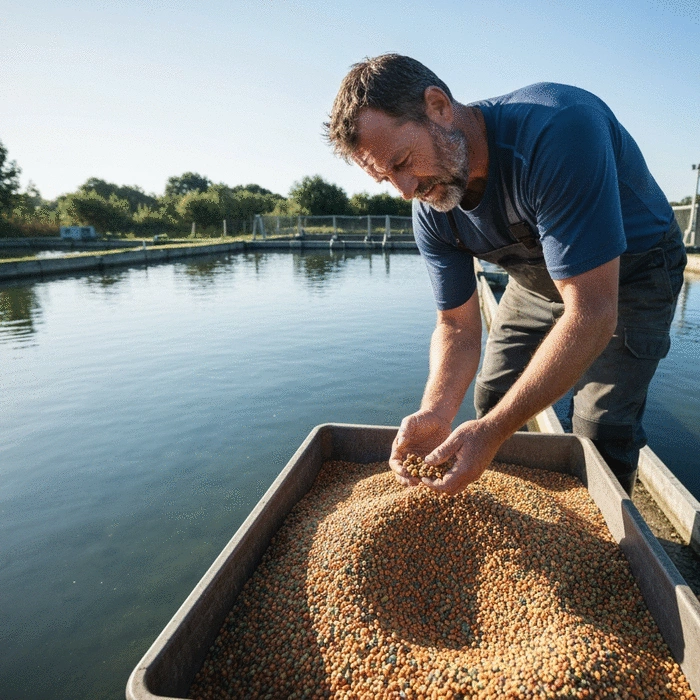
Understanding what drove these dramatic price increases helps you anticipate future changes and make better purchasing decisions. The primary culprit was the surge in raw material costs, particularly fishmeal and soybean meal, which form the protein foundation of most commercial fish feeds.
Global fishmeal prices increased by 38% in 2025, driven by reduced fish catches in major fishing regions and increased demand from both aquaculture and livestock industries. Soybean meal, the most common plant-based protein source, saw similar increases due to poor harvests in South America and increased demand from expanding poultry operations across Africa. When your feed manufacturer's raw material costs jump by 35-40%, those increases inevitably flow through to your purchase price.
Currency devaluation amplified these problems across most African countries. As local currencies weakened against the US dollar, imported feed ingredients became more expensive, even when global commodity prices remained stable. Nigerian farmers felt this particularly acutely when the naira's continued depreciation made imported fishmeal and vitamin premixes significantly more costly.
Supply chain disruptions created additional price pressures throughout 2025. Port congestion in Lagos delayed feed ingredient shipments, forcing manufacturers to source more expensive alternatives or pay premium prices for expedited shipping. Similar bottlenecks occurred in Mombasa and Tema, creating regional shortages that drove prices higher across East and West Africa.
Energy costs also played a significant role, though this factor often gets overlooked. Feed manufacturing requires substantial electricity for mixing, pelleting, and drying processes. As energy costs increased across most African countries, feed manufacturers passed these expenses directly to farmers through higher feed prices. A feed mill in Ghana reported that electricity costs alone added ₦15-20 per kilogram to their production costs by mid-2025.
Implications of Feed Price Changes for Fish Farming Operations
The dramatic feed price increases of 2025 didn't just affect your purchasing budget—they fundamentally altered the economics of fish farming across Africa. When feed costs jump from 60% to 80% of your production expenses, every aspect of your operation requires recalibration, from feeding schedules to harvest timing to species selection.
Many farmers discovered that their established feeding practices, developed during years of stable feed prices, suddenly became financially unsustainable. A tilapia farmer in Kumasi who previously fed his fish to market size over six months found that extending the growing period by just two weeks—whilst using less feed per day—actually reduced his total feed costs whilst maintaining fish quality. The key was understanding how feed price changes affect your entire production cycle, not just your monthly expenses.
The most successful farmers in 2025 were those who quickly recognised that higher feed prices demanded more precise management. You can no longer afford to waste feed through overfeeding, poor storage, or inefficient feeding schedules. Every kilogram of feed now represents a significantly larger investment that must generate proportional returns.
Impact on Feed Conversion Ratios
Feed conversion ratio (FCR)—the amount of feed required to produce one kilogram of fish—became the most critical metric for profitable fish farming in 2025. When feed prices doubled, achieving an FCR of 1.8 instead of 2.2 could mean the difference between profit and loss on your entire production cycle.
Your FCR directly determines how much the feed price increases affect your bottom line. A catfish farmer achieving an FCR of 1.6 using ₦580 per kilogram feed spends ₦928 in feed costs per kilogram of fish produced. Another farmer with an FCR of 2.4 using the same feed spends ₦1,392 per kilogram—a difference of ₦464 per kilogram of fish. When you're producing 2,000 kilograms per cycle, that FCR difference represents ₦928,000 in additional costs.
The farmers who maintained profitability in 2025 focused obsessively on improving their FCR through better feeding practices. This meant feeding smaller amounts more frequently, monitoring water quality more closely to ensure fish appetite remained strong, and adjusting feeding rates based on water temperature and fish behaviour rather than following rigid schedules. Understanding feed conversion ratios became essential for maintaining profitability.
FCR Impact on Feed Costs
Cost per kg of fish at ₦580/kg feed price:
- FCR 1.6: ₦928 feed cost per kg fish
- FCR 2.0: ₦1,160 feed cost per kg fish
- FCR 2.4: ₦1,392 feed cost per kg fish
- FCR 2.8: ₦1,624 feed cost per kg fish
For a 2,000kg production cycle, the difference between FCR 1.6 and 2.8 is ₦1,392,000 in feed costs.
Improving your FCR requires understanding what factors affect feed efficiency in your specific conditions. Water temperature, dissolved oxygen levels, fish stocking density, and feed quality all influence how efficiently your fish convert feed into body weight. A farmer in Ibadan discovered that maintaining dissolved oxygen above 5ppm improved his FCR from 2.1 to 1.8, saving him ₦180,000 in feed costs per production cycle.
Budgeting Adjustments in Response to Price Changes
Traditional fish farming budgets became obsolete in 2025, forcing farmers to completely restructure their financial planning. If you budgeted ₦2.5 million for feed costs based on 2024 prices, you suddenly needed ₦3.6 million for the same production—an additional ₦1.1 million that most farmers hadn't anticipated.
The smart approach involves creating flexible budgets with multiple price scenarios rather than fixed projections. You need to calculate your break-even points at different feed price levels and identify which operational adjustments become necessary at each price threshold. When feed hits ₦600 per kilogram, can you still maintain profitability? What about ₦650 or ₦700?
Successful farmers developed contingency plans for different price levels. At ₦500 per kilogram feed, they operated normally. At ₦550, they reduced feeding rates by 10% and extended growing periods. At ₦600, they switched to lower-protein feeds for the final month before harvest. These predetermined responses prevented panic decisions that often prove costly.

Cash flow management became particularly critical because higher feed prices meant larger upfront investments. A farmer stocking 5,000 fingerlings previously needed ₦1.8 million for feed over a six-month cycle. In 2025, the same operation required ₦2.6 million—money that had to be available upfront or secured through financing arrangements.
Many farmers discovered they needed to adjust their production cycles to match their cash flow capabilities. Instead of running three cycles per year with large volumes, some switched to four smaller cycles, reducing the capital requirements for each batch whilst maintaining annual production volumes.
Long-term Financial Planning Strategies
The feed price volatility of 2025 demonstrated that fish farmers can no longer rely on simple, linear financial projections. You need sophisticated planning tools that account for price fluctuations, seasonal variations, and economic uncertainties that can dramatically affect your profitability.
Forward contracting emerged as a crucial strategy for managing feed price risk. Several feed suppliers in Nigeria began offering contracts that locked in feed prices for 3-6 month periods in exchange for guaranteed purchase volumes. A farmer in Ogun State secured feed at ₦520 per kilogram in June when market prices were ₦580, saving ₦300,000 over his production cycle.
Diversification became another essential strategy, though not in the way most farmers initially considered. Rather than diversifying fish species, successful farmers diversified their feed sourcing, developing relationships with multiple suppliers and exploring alternative feed formulations. This approach provided flexibility when prices spiked and ensured continued access to feed during supply shortages.
| Planning Strategy | Risk Reduction | Implementation Cost | Potential Savings |
|---|---|---|---|
| Forward Contracting | High | Low | ₦200,000-500,000/cycle |
| Bulk Purchasing | Medium | High (storage) | ₦150,000-300,000/cycle |
| Multiple Suppliers | Medium | Low | ₦100,000-250,000/cycle |
| Alternative Feeds | High | Medium (testing) | ₦300,000-600,000/cycle |
Building financial reserves specifically for feed purchases became a survival strategy for many farmers. Those who maintained feed reserves equivalent to 30-45 days of feeding could take advantage of temporary price drops and avoid panic purchases during price spikes. A farmer in Kaduna who maintained ₦800,000 in feed reserves was able to purchase three months' worth of feed when prices temporarily dropped in November, saving ₦240,000 compared to buying at regular intervals.
The most sophisticated farmers began treating feed purchasing like commodity trading, tracking price patterns, seasonal trends, and supply chain indicators to time their purchases optimally. This approach requires dedication and market knowledge, but the potential savings—often ₦300,000-500,000 per production cycle—justify the effort for serious commercial operations.
Sourcing Alternatives to Traditional Fish Feed
The feed price crisis of 2025 forced many African fish farmers to explore alternatives they had previously dismissed or ignored. When commercial feed prices reached ₦580-650 per kilogram, suddenly options like locally-sourced ingredients, plant-based proteins, and even insect-based feeds became economically attractive rather than just environmentally conscious choices.
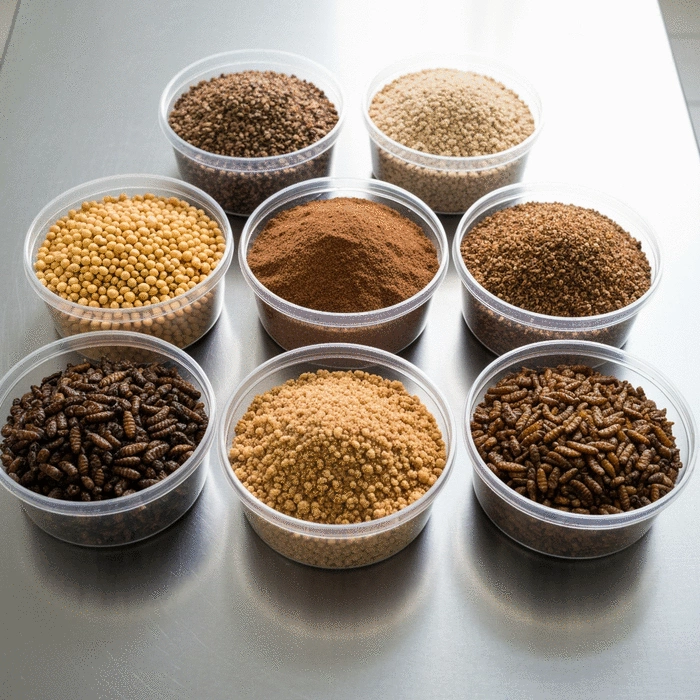
You need to understand that alternative feeds aren't just about cost savings—they're about reducing your dependence on volatile global commodity markets. A farmer in Ashanti Region who switched 40% of his feed to locally-sourced alternatives reduced his feed costs by ₦320,000 per cycle whilst maintaining similar growth rates. The key was understanding which alternatives work for your specific fish species and local conditions.
However, transitioning to alternative feeds requires careful planning and gradual implementation. You cannot simply replace commercial feed overnight without risking fish health and growth performance. The most successful farmers treated alternative feeds as a strategic diversification tool, gradually incorporating them whilst monitoring fish response and adjusting formulations based on results.
Exploring Sustainable Feed Options
Plant-based protein sources emerged as the most viable alternative for many African fish farmers in 2025. Soybean meal, when properly processed and combined with other ingredients, can replace up to 60% of fishmeal in catfish diets without significantly affecting growth rates. A farmer in Ogun State developed a blend using locally-grown soybeans, groundnut cake, and maize that cost ₦380 per kilogram compared to ₦580 for commercial feed.
Insect-based proteins gained significant traction, particularly black soldier fly larvae and cricket meal. These protein sources offer excellent amino acid profiles and can be produced locally with minimal infrastructure investment. A cooperative in Kenya established a black soldier fly farm that supplies protein meal to member farmers at 30% below commercial fishmeal prices, whilst providing consistent quality and availability.
Aquatic plants like duckweed and water hyacinth, previously considered pond nuisances, became valuable feed supplements. These plants grow rapidly in African climates and can provide both protein and essential nutrients when properly processed. You can establish duckweed production systems alongside your fish ponds, creating a closed-loop system that reduces both feed costs and environmental impact.
Alternative Protein Sources Comparison
- Soybean Meal: 45-48% protein, ₦280-320/kg, widely available
- Groundnut Cake: 40-45% protein, ₦250-290/kg, good amino acid profile
- Black Soldier Fly Larvae: 42-45% protein, ₦400-450/kg, excellent digestibility
- Cricket Meal: 60-65% protein, ₦500-550/kg, premium alternative
- Duckweed (dried): 35-40% protein, ₦150-200/kg, sustainable option
The challenge with plant-based alternatives lies in achieving proper nutrient balance and digestibility. Fish require specific amino acid profiles that single plant sources cannot provide alone. Successful farmers developed blended formulations combining multiple plant proteins with vitamin and mineral supplements to create nutritionally complete feeds.
Local vs. Imported Feed: Pros and Cons
The decision between local and imported feed became more complex in 2025 as currency fluctuations and supply chain disruptions affected both options differently. Local feed manufacturers offered greater price stability and shorter supply chains, but often struggled with consistent quality and ingredient availability during peak demand periods.
Imported feeds, particularly from South Africa and Egypt, maintained superior quality control and nutritional consistency. However, currency devaluation made these feeds increasingly expensive throughout 2025. A farmer in Lagos who relied on imported feed saw his costs increase by 65% due to naira depreciation alone, even before factoring in the underlying price increases.
Local feed production offers significant advantages beyond cost considerations. You gain greater control over ingredient sourcing, can request custom formulations for specific production needs, and support local economic development. Several farmers in Kaduna established relationships with local feed mills, providing input on formulations and even supplying some ingredients from their own agricultural operations. Learning about challenges and solutions in feed sourcing helps you make better decisions.
| Factor | Local Feed | Imported Feed |
|---|---|---|
| Price Stability | Higher (less currency risk) | Lower (currency fluctuations) |
| Quality Consistency | Variable | Generally higher |
| Availability | Better during peak seasons | Subject to shipping delays |
| Customisation | Possible with larger orders | Limited options |
| Support Services | Direct relationship possible | Limited local support |
The most resilient farmers developed hybrid sourcing strategies, using local feeds for 60-70% of their needs whilst maintaining relationships with imported feed suppliers for premium finishing feeds or emergency supplies. This approach provided cost savings during normal operations whilst ensuring access to high-quality feeds when needed for optimal growth or market preparation.
Successful Case Studies in Feed Sourcing
A catfish farmer in Ibadan transformed his operation by establishing partnerships with local grain farmers and a small feed mill. He contracted with maize and soybean farmers to supply ingredients at predetermined prices, providing them with guaranteed markets whilst securing his raw materials at 15-20% below market rates. The feed mill processed these ingredients into custom formulations, reducing his feed costs from ₦580 to ₦420 per kilogram whilst maintaining fish performance.
In Ghana, a cooperative of 12 tilapia farmers pooled resources to establish their own feed production facility. They invested GHS 180,000 in basic mixing and pelleting equipment, sourcing ingredients directly from agricultural cooperatives. Within eight months, they reduced their collective feed costs by 35% whilst creating additional income streams by selling excess feed to neighbouring farmers.
The most innovative approach came from a farmer in Kisumu who integrated black soldier fly production with his tilapia operation. He established larvae production systems using organic waste from local markets, producing 200 kilograms of protein-rich larvae meal monthly. This provided 40% of his protein requirements at virtually no cost whilst creating a waste management solution for the local community.
These success stories share common elements: gradual implementation, careful monitoring of fish performance, and strong relationships with local suppliers. None of these farmers switched to alternatives overnight—they tested small batches, monitored growth rates and feed conversion ratios, and scaled up only after proving the alternatives worked in their specific conditions.
Regional Variations in Feed Prices and Their Effects
Feed prices in 2025 varied dramatically across African regions, creating opportunities for some farmers whilst devastating others. Understanding these regional differences became crucial for strategic planning, as a ₦100 per kilogram price difference between regions could determine whether your operation remained profitable or struggled to break even.
The variations weren't just about distance from ports or manufacturing centres—they reflected complex interactions between local demand, transportation infrastructure, currency policies, and regional economic conditions. A farmer in northern Nigeria paid ₦620 per kilogram for the same feed that cost ₦480 per kilogram in Lagos, not just due to transportation costs but because of limited local competition and higher financing costs for distributors.
You need to understand these regional patterns because they affect more than just your immediate costs. They influence where you should locate new operations, which markets offer the best opportunities, and how to time your production cycles to take advantage of regional price differences. Smart farmers began viewing feed prices as a competitive intelligence tool, not just an operational expense.
Geographic Analysis of Feed Price Trends
West Africa experienced the most dramatic feed price increases in 2025, with Nigeria leading the surge due to currency devaluation and import dependency. Lagos, despite being a major port and manufacturing centre, saw feed prices rise from ₦385 per kilogram in January to ₦580 per kilogram by September. Northern states like Kano and Kaduna faced even steeper increases, reaching ₦620-650 per kilogram due to additional transportation costs and limited local production.
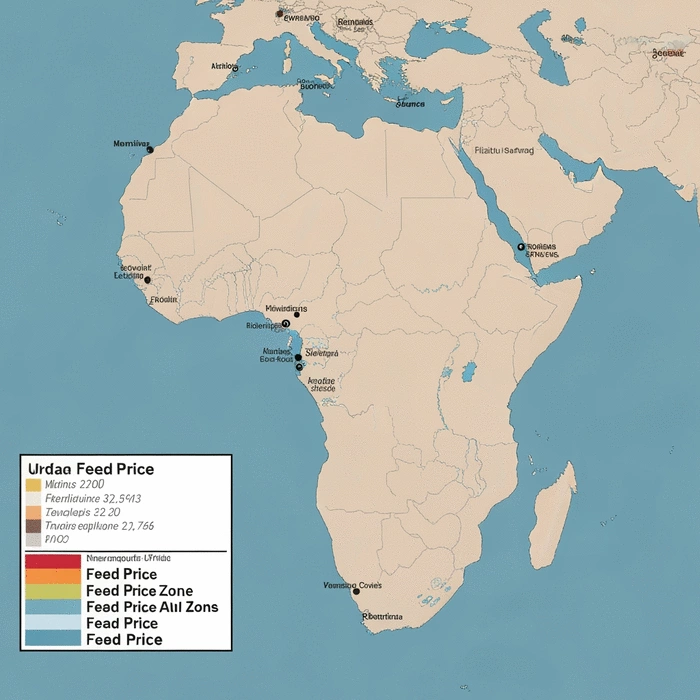
Ghana followed similar patterns but with more moderate increases, partly due to better currency stability and local feed production capacity. Accra and Tema maintained relatively lower prices (GHS 10.50-11.20 per kilogram) compared to northern regions like Tamale (GHS 12.80-13.50 per kilogram). The country's investment in local feed mills during previous years provided some buffer against global price shocks.
East Africa showed more varied patterns, with Kenya experiencing significant increases in urban areas whilst rural regions maintained more stable pricing through local production initiatives. Nairobi feed prices peaked at KES 135 per kilogram, whilst farmers in western Kenya near Lake Victoria accessed locally-produced feeds at KES 95-105 per kilogram. This difference reflected both transportation costs and the success of regional feed production cooperatives.
| Region | Jan 2025 | Peak Price | Dec 2025 | % Increase |
|---|---|---|---|---|
| Lagos, Nigeria | ₦385 | ₦580 | ₦545 | 42% |
| Kano, Nigeria | ₦420 | ₦650 | ₦590 | 40% |
| Accra, Ghana | GHS 8.50 | GHS 11.20 | GHS 10.80 | 27% |
| Nairobi, Kenya | KES 95 | KES 135 | KES 125 | 32% |
| Cape Town, SA | ZAR 18.50 | ZAR 24.80 | ZAR 23.20 | 25% |
South Africa maintained the most stable feed prices across regions, reflecting better infrastructure and more mature local feed industries. However, even there, inland regions like Gauteng experienced 20-25% higher prices than coastal areas due to transportation costs and market concentration. The country's well-developed road and rail networks minimised regional price disparities compared to other African countries.
Feed Demand by Fish Species
Catfish farmers bore the brunt of feed price increases in 2025 because catfish require high-protein feeds throughout their growth cycle. With protein-rich feeds experiencing the steepest price increases, catfish operations saw their feed costs rise by 45-55% across most regions. A catfish farmer in Oyo State calculated that feed price increases alone reduced his profit margin from 28% to 12% without any operational changes.
Tilapia farmers experienced more moderate impacts because tilapia can utilise lower-protein feeds, especially during later growth stages. Many tilapia operations switched to graduated feeding programmes, using high-protein starter feeds for the first 8-10 weeks, then transitioning to lower-protein, less expensive feeds for the remainder of the growing period. This strategy reduced feed costs by 15-20% whilst maintaining acceptable growth rates.
Ornamental fish farmers faced unique challenges because their feeds require specialised ingredients and smaller production volumes, making them inherently more expensive. Koi and goldfish feed prices increased by 60-70% in some regions, forcing many ornamental farmers to explore alternative feeding strategies or consider switching to food fish production.
The most successful farmers adjusted their species mix based on feed price dynamics. A farmer in Abeokuta gradually shifted from 80% catfish to 60% tilapia and 40% catfish, reducing his overall feed costs by ₦280,000 per cycle whilst maintaining similar revenue levels through improved market positioning.
Local Market Dynamics and Influences
Local market dynamics created significant price variations even within individual countries. In Nigeria, states with active feed manufacturing like Ogun and Lagos maintained lower prices than states dependent on distant suppliers. Kano State, despite its large agricultural sector, lacked sufficient feed manufacturing capacity, resulting in prices 15-20% higher than southern states.
Competition levels dramatically affected regional pricing. Markets with multiple feed suppliers maintained more competitive pricing even during peak demand periods. Ibadan, with five major feed distributors, saw maximum prices of ₦565 per kilogram, whilst smaller towns with single suppliers experienced prices reaching ₦680 per kilogram for identical products.
Transportation infrastructure played a crucial role in price determination. Regions with good road networks and reliable transportation services maintained smaller price premiums over manufacturing centres. Areas with poor roads or unreliable transport saw feed prices increase by ₦80-120 per kilogram simply due to logistics challenges and higher transportation risks.
Regional Price Factors
- Manufacturing Proximity: ₦40-80/kg price difference
- Transportation Quality: ₦30-60/kg impact on final price
- Local Competition: ₦50-100/kg variation based on supplier count
- Storage Infrastructure: ₦20-40/kg difference in handling costs
- Financing Costs: ₦15-35/kg variation based on local credit access
Currency policies and foreign exchange access created additional regional variations. States with better access to foreign exchange for importing feed ingredients maintained more stable pricing, whilst regions with limited forex access experienced more volatile pricing patterns. This factor particularly affected northern Nigerian states and some East African regions with limited banking infrastructure.
Strategies for Managing Feed Costs Effectively
Managing feed costs in 2025 required a fundamental shift from reactive purchasing to strategic feed management. The farmers who maintained profitability weren't necessarily those with the lowest feed costs, but those who maximised the value from every kilogram of feed through improved storage, precise feeding, and waste reduction strategies.
You cannot simply buy cheaper feed and expect the same results—lower-quality feeds often result in poor feed conversion ratios that eliminate any cost savings. Instead, successful cost management focuses on optimising feed utilisation, reducing waste, and timing purchases to take advantage of price fluctuations whilst maintaining fish health and growth performance.
The most effective approach combines multiple strategies: improved storage to prevent spoilage, precise feeding schedules to minimise waste, bulk purchasing during price dips, and alternative feed sources to reduce dependence on commercial feeds. A farmer in Osun State implemented all these strategies and reduced his effective feed costs by 22% whilst actually improving his fish growth rates.
Best Practices in Feed Management
Proper feed storage became critical when feed prices doubled, as spoilage now represented much larger financial losses. You need moisture-proof storage facilities that maintain feed quality for extended periods, allowing you to take advantage of bulk purchasing opportunities without risking spoilage. A farmer in Kwara State invested ₦180,000 in improved storage facilities and saved ₦320,000 annually by purchasing feed in larger quantities during price dips.
Feed handling practices directly impact your costs through waste reduction. Feeding fish in shallow areas where you can observe consumption prevents overfeeding and allows you to adjust portions based on actual appetite. Many farmers discovered they were overfeeding by 15-20%, wasting ₦200,000-300,000 worth of feed per cycle simply through poor feeding practices.
Temperature and timing optimisation can improve feed conversion ratios significantly. Fish appetite and digestion rates vary with water temperature and time of day. Feeding during optimal temperature periods (typically early morning and late afternoon) improves feed utilisation by 10-15%, effectively reducing your feed costs per kilogram of fish produced.
Feed Waste Reduction Strategies
- Proper Storage: Prevents 5-8% losses from spoilage and pests
- Precise Feeding: Eliminates 10-15% waste from overfeeding
- Optimal Timing: Improves FCR by 8-12% through better digestion
- Water Quality: Maintains fish appetite, preventing 5-10% waste
- Size Grading: Ensures appropriate pellet sizes, reducing 3-5% waste
Regular monitoring of feed conversion ratios helps identify problems before they become expensive. You should calculate FCR weekly and investigate any deterioration immediately. A gradual increase in FCR from 1.8 to 2.2 might seem minor, but it represents ₦232 additional feed cost per kilogram of fish produced at ₦580 per kilogram feed prices.
Adjusting Feeding Regimens Based on Price Changes
When feed prices spiked above ₦550 per kilogram, many successful farmers adjusted their feeding strategies to maintain profitability without compromising fish health. This involved reducing feeding rates by 10-15% whilst extending growing periods, effectively trading time for feed costs whilst maintaining final fish weights.
Graduated feeding programmes became essential for cost management. Instead of using expensive high-protein feeds throughout the entire growing cycle, you can use premium feeds during critical growth phases (first 6-8 weeks) then transition to lower-cost alternatives for the finishing period. This approach can reduce total feed costs by 18-25% with minimal impact on final fish weights.
Seasonal feeding adjustments help optimise costs based on fish metabolism and market timing. During cooler months when fish metabolism slows, you can reduce feeding rates without affecting growth significantly. A farmer in Plateau State reduced his feed costs by ₦150,000 per cycle by adjusting feeding rates based on seasonal temperature variations.
The key is monitoring fish response closely when implementing feeding adjustments. You need to watch for signs of stress, reduced growth rates, or health problems that indicate your cost-cutting measures are going too far. Successful farmers established minimum feeding thresholds below which they wouldn't reduce feeding, regardless of feed prices. Understanding hidden costs helps you make better feeding decisions.
Technology Solutions for Feed Cost Management
Digital feed management systems emerged as valuable tools for cost control in 2025. Simple spreadsheet-based tracking systems help you monitor feed consumption, calculate real-time FCR, and identify trends that indicate problems or opportunities. A farmer in Delta State using basic digital tracking identified feeding inefficiencies that were costing him ₦180,000 per cycle.
Automated feeding systems, whilst requiring initial investment, can improve feed utilisation by delivering precise amounts at optimal times. These systems prevent overfeeding and ensure consistent feeding schedules that improve fish growth and feed conversion. The investment typically pays for itself within 2-3 production cycles through improved feed efficiency.
Mobile apps for feed price tracking help you time purchases optimally. Several farmers developed informal networks sharing feed price information via WhatsApp groups, allowing them to identify the best purchasing opportunities across different suppliers and regions. This collaborative approach saved participating farmers an average of ₦80,000-120,000 per cycle.
| Technology Solution | Initial Cost | Annual Savings | Payback Period |
|---|---|---|---|
| Digital Tracking System | ₦15,000-25,000 | ₦150,000-250,000 | 1-2 months |
| Automated Feeder | ₦180,000-350,000 | ₦200,000-400,000 | 10-18 months |
| Price Tracking App | ₦5,000-10,000 | ₦80,000-120,000 | 1 month |
| Water Quality Monitor | ₦45,000-80,000 | ₦100,000-180,000 | 4-8 months |
Water quality monitoring technology indirectly supports feed cost management by maintaining optimal conditions for feed utilisation. Poor water quality reduces fish appetite and feed conversion efficiency, effectively increasing your feed costs per kilogram of fish produced. Automated monitoring systems help maintain optimal conditions that maximise feed efficiency.
| Key Points | Details |
|---|---|
| Feed Costs Surge | In 2025, feed costs increased from ₦385 to ₦580/kg in Nigeria, consuming 70-80% of production budgets. This matters because it directly impacts profit margins, making cost management crucial. |
| Importance of Budgeting | Farmers need to adjust budgets dynamically. A fixed budget could lead to a shortfall of up to ₦1.1 million unexpectedly. Flexible budgets can help maintain profitability. |
| Feed Conversion Ratio (FCR) | Improving FCR can save significant costs; a small change from 2.4 to 1.6 can save ₦928,000 per production cycle. This is vital for boosting profitability. |
| Regional Price Variability | Feed prices vary by region, affecting profitability. Understanding local dynamics can lead to better operational decisions and potentially higher profit margins. |
| Technology Implementation | Investing in digital tracking and automated feeding can save ₦200,000-400,000 annually. This investment is essential for maintaining competitive edge. |
| Alternative Feed Sources | Plant-based proteins and insect meals can reduce costs by 15-30%. Switching strategically to alternatives addresses dependency on volatile commercial feed markets. |
| Storage and Waste Reduction | Proper storage prevents 5-8% losses; precise feeding eliminates 10-15% waste. Combined, these strategies can save ₦200,000-300,000 per cycle. |
| Forward Contracting | Locking in feed prices for 3-6 months can save ₦200,000-500,000 per cycle. This strategy provides cost certainty crucial for cash flow planning. |
Conclusion
The feed price changes of 2025 represent more than a temporary market disruption—they signal a fundamental shift in fish farming economics that demands strategic adaptation. When feed costs jump from 60% to 75-80% of your production expenses, maintaining profitability requires more than simply absorbing higher costs.
You've seen how feed prices varied dramatically across regions and species, creating both challenges and opportunities for strategic farmers. Those who maintained profitability weren't necessarily those with the lowest feed costs, but those who maximised value from every kilogram through improved storage, precise feeding, and waste reduction strategies.
The most critical lesson from 2025 is that feed cost management requires a multi-faceted approach. You cannot rely on single solutions—instead, you need to combine bulk purchasing during price dips, alternative feed sources, improved feed conversion ratios, and strategic timing of production cycles. Farmers who implemented comprehensive strategies reduced their effective feed costs by 18-28% whilst maintaining or improving fish performance.
Moving forward into 2026, you should focus on three immediate priorities: establishing relationships with multiple feed suppliers to ensure competitive pricing and supply security, implementing precise feeding protocols that eliminate waste and improve FCR, and exploring alternative feed sources that reduce dependence on volatile commercial feeds. Each strategy contributes 5-10% in cost savings, but combined they can maintain your profitability despite elevated feed prices.
Start by calculating your current feed conversion ratio and identifying opportunities for improvement. Even a small FCR improvement from 2.0 to 1.8 saves ₦116 in feed costs per kilogram of fish at current prices—savings that multiply rapidly across your entire production volume. Then develop relationships with local feed mills or alternative protein suppliers to diversify your sourcing options and reduce exposure to future price shocks.
Frequently Asked Questions
Why did feed prices increase so dramatically in 2025 compared to previous years?
Feed prices in 2025 increased by 28-51% across African markets due to several converging factors: global fishmeal shortages driving raw material costs up by 38%, currency devaluations making imported ingredients more expensive, and supply chain disruptions creating regional shortages. Unlike previous years' gradual 8-12% increases, 2025 saw rapid, unpredictable price spikes that caught most farmers unprepared.
How does improving my feed conversion ratio help manage rising feed costs?
Your feed conversion ratio (FCR) determines how much feed you need to produce each kilogram of fish. When feed costs ₦580 per kilogram, improving your FCR from 2.4 to 1.6 reduces your feed cost per kilogram of fish from ₦1,392 to ₦928—a savings of ₦464 per kilogram. For a 2,000kg production cycle, this FCR improvement saves you ₦928,000 in feed costs.
What are the most viable alternative feed sources for African fish farmers?
Plant-based proteins like soybean meal (₦280-320/kg) and groundnut cake (₦250-290/kg) offer the most accessible alternatives, whilst insect-based proteins from black soldier fly larvae provide excellent nutrition at competitive prices. Locally-sourced ingredients can reduce feed costs by 15-30% whilst decreasing dependency on imported commercial feeds, though you must ensure proper nutritional balance.
How can I time my feed purchases to take advantage of price fluctuations?
Feed prices typically follow seasonal patterns, with lowest prices in November-February and peaks in August-October. You should monitor multiple suppliers, establish relationships for price information, and purchase 3-6 months' supply during price dips if you have proper storage. Forward contracting with suppliers can lock in prices for extended periods, providing cost certainty for budgeting.
What's the difference between managing feed costs for catfish versus tilapia operations?
Catfish require high-protein feeds throughout their growth cycle, making them more vulnerable to feed price increases—with feed costs rising 45-55% in 2025. Tilapia can utilise lower-protein feeds, especially during later growth stages, allowing you to implement graduated feeding programmes that reduce costs by 15-20%. Tilapia farmers have more flexibility to switch to plant-based alternatives without compromising growth rates.

Yomi Adisa
Yomi Adisa is the lead researcher at Fish Farming Business, where he studies what makes aquaculture ventures profitable across Africa. His research focuses on market patterns, buyer preferences, and the business decisions that determine success or failure in fish farming.