
Setting Up a Fish Farm
Posted on: 2025-10-18
By: Yomi Adisa
Setting up a fish farm requires careful planning, appropriate infrastructure, and understanding of the practical steps involved in establishing a productive aquaculture operation. Whether you're planning a small-scale venture to supplement household income or a commercial operation, getting the fundamentals right from the start significantly improves your chances of success and helps you avoid costly mistakes that derail many beginning farmers.
Table of Contents
This comprehensive guide will walk you through the essential steps of establishing your fish farm, from initial planning and site selection to infrastructure construction, sourcing inputs, and preparing for your first production cycle.
You'll learn what you need to consider at each stage, what costs to expect, and how to make informed decisions that suit your specific circumstances and goals.
By the end of this guide, you'll have a clear understanding of what's involved in setting up a fish farm and be better prepared to make the transition from planning to actual operation.
Remember that successful fish farming is a journey—starting with solid foundations through proper setup gives you the best platform for learning, improving, and eventually expanding your operations. For comprehensive business planning, consider crafting a detailed fish farming plan before you begin construction.
What You Will Learn
- How to plan your fish farming venture systematically before investing in infrastructure
- Essential criteria for selecting the right site for your fish farm
- Different infrastructure options including earthen ponds, lined ponds, and tank systems
- Water supply requirements and management systems for successful fish farming
- How to source quality fingerlings, feeds, and essential equipment
- Legal requirements and permits needed to operate your fish farm
- Realistic cost breakdowns for different scales and types of fish farms
- Practical steps for preparing your farm and beginning operations
Planning Your Fish Farm Venture
Before you excavate your first pond or purchase any equipment, you need to develop a clear plan for your fish farming venture. Proper planning helps you make informed decisions, anticipate challenges, allocate resources effectively, and set realistic expectations for what you can achieve. Many fish farming failures trace back to inadequate planning rather than poor technical management.
Defining Your Goals and Scale
Start by clarifying what you want to achieve with your fish farm. Are you seeking supplementary income to support your household whilst maintaining other activities? Do you plan to gradually transition to full-time fish farming as your primary livelihood? Are you establishing a commercial operation from the outset with employees and significant production? Your goals dramatically influence the appropriate scale, species choice, and infrastructure decisions.
Small-scale fish farming might involve 1-3 ponds of 100-200 square metres each, producing perhaps 1,000-3,000 kilogrammes annually. This scale allows you to learn whilst managing the farm alongside other responsibilities, requires modest capital (perhaps 500,000-1,000,000 Kenyan Shillings or 2-4 million Naira for setup), and can generate meaningful supplementary income without overwhelming time demands.
Medium-scale operations typically involve 10-20 ponds or tanks, producing 10,000-30,000 kilogrammes annually. At this scale, fish farming becomes a primary occupation requiring daily attention and management. You'll need stronger business systems, reliable markets, and substantially more capital—perhaps 5-10 million Kenyan Shillings or 20-40 million Naira depending on your system intensity and infrastructure choices.
Large commercial operations with 50+ production units operate as full businesses with employees, sophisticated management systems, and substantial capital requirements running into tens of millions of shillings or naira. Unless you have significant experience and capital, starting at this scale is rarely advisable—most successful large-scale farmers built up gradually from smaller beginnings.
Choosing Your Fish Species
Your species choice fundamentally shapes every other aspect of your setup. Different species have different infrastructure requirements, feed needs, management demands, and market potential. In East Africa, tilapia dominates due to strong market acceptance, environmental suitability, and relative ease of management. In West Africa, catfish reigns supreme, particularly in Nigeria where market demand remains consistently strong.
Consider multiple factors when choosing your species. Does your climate suit the species year-round, or will seasonal temperature variations affect production? Can you access quality fingerlings reliably? Are appropriate feeds available locally at reasonable costs? Most importantly, do strong local markets exist that will purchase your fish at profitable prices? Growing fish nobody wants to buy guarantees failure regardless of how well you manage production.
For beginning farmers, starting with proven species that thrive in your region makes sense. Tilapia in East Africa or catfish in West Africa benefit from established production knowledge, available fingerlings and feeds, and proven markets. Once you've mastered basics with a mainstream species, you can experiment with alternatives if opportunities emerge. For detailed species guidance, review our comprehensive article on selecting fish species for aquaculture.
Assessing Your Resources
Honestly evaluate the resources you can commit to fish farming. Capital availability determines your feasible scale and system type. Land availability affects whether you can build ponds or must consider tank systems. Water availability—both quantity and quality—may be your primary constraint in some locations. Time availability influences whether you can manage an intensive operation requiring daily attention or need a more extensive system with lower management demands.
Don't overextend yourself initially. Starting smaller than you could theoretically afford allows you to learn whilst stakes are lower. You can always expand based on demonstrated success, but recovering from an oversized failed initial venture is difficult. Many successful fish farmers started with just 1-2 ponds, used early profits to add more ponds, and gradually built substantial operations over 3-5 years.
Planning Checklist
- Goals: Define whether you're seeking supplementary income or full-time farming
- Species: Choose species suited to your climate, market, and experience level
- Scale: Start at manageable size allowing learning without overwhelming risks
- Capital: Calculate realistic costs and secure necessary financing before starting
- Timeline: Plan 6-12 months for setup, permitting, and preparation before stocking
- Learning: Attend training, visit operating farms, connect with experienced farmers
- Market: Research buyers and develop preliminary market relationships
Site Selection Criteria
Selecting the right location for your fish farm is one of the most important decisions you'll make, as it's largely irreversible once you've invested in infrastructure. A poor site choice can handicap your operation permanently, whilst a well-chosen site provides advantages that support success. Take time to evaluate potential sites thoroughly before committing.
Water Availability and Quality
Water is obviously fundamental to fish farming, and you need both adequate quantity and suitable quality. Assess your potential water sources carefully. Borehole water offers predictable quality and year-round availability, but flow rates may limit production scale—a borehole yielding 5,000 litres per hour can support several ponds but might not suffice for dozens of tanks. River or stream water provides abundant volume but quality varies seasonally and you'll need appropriate permits for abstraction.
Test water quality before committing to a site. Key parameters include pH (ideally 6.5-8.5 for most species), temperature (suitable for your chosen species), dissolved oxygen (preferably above 5 mg/L at source), and absence of pollutants or toxic substances. If water requires treatment—perhaps removing iron, adjusting pH, or aerating to increase oxygen—factor treatment costs into your planning.
Consider water availability during dry seasons. A spring or stream that flows abundantly during rains might reduce to a trickle during dry months, potentially forcing you to reduce stocking or even harvest prematurely. Year-round water security is essential for reliable production cycles.
Soil Type and Topography
If you're planning earthen ponds, soil type becomes critical. Clay soils hold water excellently and are ideal for pond construction. You can excavate, compact the bottom and sides, and fill with confidence that water will remain contained. Sandy soils allow water to seep through, requiring plastic or clay liners that add 100,000-200,000 shillings or naira per pond to construction costs.
Conduct simple soil tests before purchasing land for pond construction. Dig test holes to 1-1.5 metres depth, observing soil composition at different levels. Clay content increases with depth in many soils, so surface sandiness doesn't necessarily disqualify a site. You can also perform a simple percolation test: dig a hole, line it with plastic or clay, fill with water, and observe how quickly water level drops over 24 hours. Minimal drop indicates good water-holding capacity.
Topography affects excavation costs and water management. Gentle slopes (1-3%) are ideal, allowing gravity-fed water systems where you can fill ponds from uphill sources and drain downhill. Flat land works but may require pumping for water circulation. Steep slopes dramatically increase excavation costs as you're moving much more soil to create level pond bottoms.
Accessibility and Infrastructure
Your farm needs reasonable access for transporting inputs (fingerlings, feed) and outputs (harvested fish). A remote site might seem affordable, but if poor roads prevent feed delivery during rainy seasons or make transporting fish to market difficult, the isolation creates ongoing challenges. Ideally, your site should have all-weather road access, though some seasonality is manageable if you plan around it.
Proximity to markets influences profitability. Transport costs and time affect fish quality and your competitive position. If you're 200 kilometres from your nearest city market, you face higher transport costs and fish quality challenges compared to a farm 20 kilometres from the same market. However, very close proximity to large cities often means expensive land, so you're balancing trade-offs between accessibility and land costs.
Power availability matters for intensive operations using pumps, aerators, or mechanized feeders. Grid electricity is ideal, though solar power systems are increasingly viable for fish farms, particularly in sunny regions. If power is unavailable, you're limited to extensive pond systems that don't require mechanical equipment, which may suit your goals but constrains your options.
Security and Environmental Factors
Security considerations vary by location but can be significant. In some areas, theft of fish near harvest time is common enough to require guards, fencing, or harvesting fish slightly smaller than optimal size to avoid losses. Evaluate local security conditions and factor protection measures into your planning if needed.
Environmental hazards can threaten fish farms. Is your site prone to flooding during heavy rains? Floodwaters can wash away fish, damage infrastructure, and contaminate ponds with sediment or pollutants. Sites on floodplains or near rivers prone to flooding require protective measures—elevated pond walls, diversion channels—or may be unsuitable for fish farming. Conversely, ensure your farm won't significantly impact local ecosystems, particularly if near natural water bodies or sensitive habitats.
Legal and Regulatory Considerations
Verify that fish farming is permitted on your proposed site. Zoning regulations, water rights, environmental protection laws, and local ordinances may restrict or prohibit aquaculture in certain areas. Check with local authorities before purchasing land or signing long-term leases. Discovering regulatory obstacles after investing in land acquisition and construction is an expensive mistake.
If you don't own the land, ensure you have secure tenure through purchase or long-term lease. Investing in pond construction on land you might lose access to creates unacceptable risk. Get any rental or lease agreements in writing, preferably with terms of at least 5-10 years to justify infrastructure investments.
Infrastructure Requirements and Options
Fish farm infrastructure varies from simple earthen ponds to sophisticated tank systems with recirculating water and automated controls. Your choice depends on your goals, budget, available land and water, and intended production intensity. Understanding the options, their costs, and trade-offs helps you make appropriate decisions for your circumstances.
Earthen Pond Construction
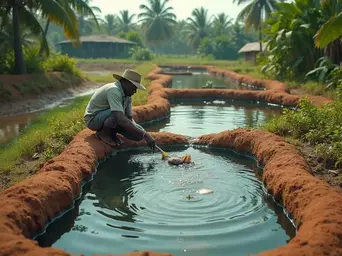
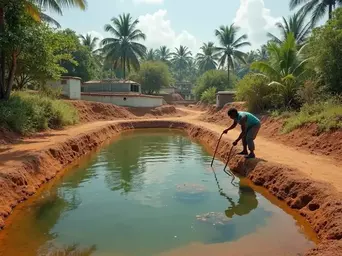
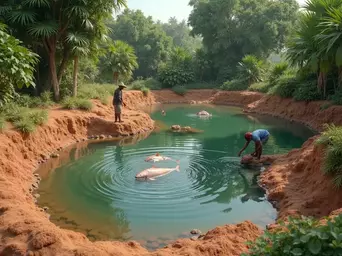
Earthen ponds represent the most accessible and widely used fish farming infrastructure across Africa. You excavate a depression in the ground, compact the bottom and sides, and fill with water—conceptually simple, though proper execution requires attention to detail.
Pond dimensions typically range from 100-500 square metres for small to medium-scale operations. A common size might be 10 metres wide by 20 metres long (200 square metres), with depth of 1-1.5 metres. Deeper ponds don't necessarily improve production and make harvesting more difficult. Sides should slope at roughly 45 degrees or 1:1 to prevent collapse—vertical walls in earthen ponds will eventually fail.
Construction costs vary substantially by location, soil type, and labour rates. In Kenya, excavating a 200-square-metre pond might cost 80,000-150,000 Kenyan Shillings depending on soil conditions and whether you use hand labour or machinery. In Nigeria, similar ponds might cost 300,000-500,000 Naira. Rocky soil dramatically increases costs as excavation becomes more difficult, whilst sandy soil may require lining, adding 100,000+ shillings or naira per pond.
Inlet and outlet structures are essential components. The inlet—where water enters—should be positioned to allow easy control of water flow. The outlet—where you drain the pond—typically sits at the lowest point, allowing complete drainage for harvesting and pond maintenance. Many farmers use simple PVC pipes with valves or standpipes, whilst more sophisticated setups include monk structures allowing precise water level control.
Pond preparation before filling involves levelling and compacting the bottom, removing any sharp stones or roots that might harbor pests or injure fish, and sometimes treating the soil with lime (agricultural limestone) to adjust pH and kill parasites or predators. Budget 10,000-20,000 shillings or naira per pond for these preparation activities.
Lined Pond Systems
If your soil doesn't hold water well, you may need to line ponds with plastic sheeting or clay. Plastic liners—typically heavy-duty polyethylene or specialized pond liner material—create a waterproof barrier between soil and water. Clay lining involves importing clay soil and compacting it over sandy native soil to create an impermeable layer.
Plastic liners cost approximately 500-800 shillings or naira per square metre for quality materials, so lining a 200-square-metre pond adds 100,000-160,000 shillings or naira to construction costs. Installation requires care to avoid punctures and ensure proper overlap and sealing at seams. Liners typically last 5-10 years before requiring replacement, so factor this into long-term planning.
Clay lining is more labour-intensive but potentially more durable. You excavate slightly deeper than your final pond depth, spread a 15-20cm layer of clay, compact it thoroughly using machinery or manual labour, then add a protective layer of soil over the clay before filling. Costs depend on clay availability—if you must transport clay from distant sources, expenses rise quickly.
Concrete and Plastic Tank Systems
Tank systems offer advantages in intensive production: higher stocking densities, easier management, better biosecurity, and suitability for locations where ponds aren't feasible. However, they require substantially higher capital investment and typically higher operating costs due to pumping and aeration needs.
Concrete tanks can be constructed in various shapes—rectangular, circular, or square—with depths of 1-1.5 metres. A 20-square-metre concrete tank might cost 200,000-400,000 Kenyan Shillings or 800,000-1,500,000 Naira including materials, labour, plumbing, and drainage. Circular tanks provide better water circulation and are preferred for intensive culture, but rectangular tanks are simpler to construct and arrange efficiently.
Plastic tanks—large fibreglass or heavy-duty plastic containers—offer portability and faster installation. A 5,000-10,000 litre tank costs 50,000-150,000 shillings or naira depending on quality and supplier. You can begin production quickly with plastic tanks, though they're generally less durable than concrete and may not be cost-effective at larger scales.
Tank systems require robust water supply and drainage. You'll need pumps to fill tanks and possibly to circulate water for aeration. Drainage must handle sudden large volumes during harvesting. Aeration systems—blowers and diffusers or paddle wheels—become necessary at higher stocking densities, adding 50,000-200,000 shillings or naira per tank depending on system sophistication.
| Infrastructure Type | Cost Range (200m² equivalent) | Best For |
|---|---|---|
| Earthen Pond (clay soil) | 80,000-150,000 KSh / 300,000-500,000 NGN | Beginners, low-moderate intensity |
| Lined Pond (sandy soil) | 180,000-310,000 KSh / 400,000-700,000 NGN | Poor soil conditions |
| Concrete Tanks (20m²) | 200,000-400,000 KSh / 800,000-1,500,000 NGN | Intensive production, urban areas |
| Plastic Tanks (multiple) | 100,000-300,000 KSh / 400,000-1,200,000 NGN | Quick start, flexibility, testing |
Water Supply and Management Systems
Reliable water supply and effective water management systems are fundamental to successful fish farming. You need not only adequate water quantity but also appropriate quality, plus systems to control water flow, maintain levels, and enable efficient drainage when needed.
Water Source Development
If using borehole water, you'll need a functional borehole with adequate yield and a pumping system. Borehole drilling costs vary by depth and geological conditions but typically range from 200,000-800,000 Kenyan Shillings or 800,000-3,000,000 Naira for depths of 20-80 metres. Test yield by running the pump for several hours and measuring flow rate—you need consistent output sufficient for your planned production scale.
Surface water sources—rivers, streams, or springs—require intake structures that protect against debris whilst allowing adequate flow. A simple intake might involve a screened pipe extending into the water source, costing perhaps 20,000-50,000 shillings or naira. More sophisticated intakes with settling basins and multiple screens to remove sediment might cost 100,000-300,000 shillings or naira but provide cleaner water requiring less maintenance.
Rainwater harvesting can supplement other sources or serve as a primary source in high-rainfall areas. Collecting runoff from roofs or prepared catchment areas into storage tanks or directly into ponds reduces pumping costs and provides generally good quality water. However, rainfall seasonality means you'll need storage capacity or alternative sources during dry periods.
Pumping and Distribution Systems
Unless your water source sits uphill from your ponds allowing gravity flow, you'll need pumping systems. Pump selection depends on required flow rate, vertical lift (how high you're pumping), and horizontal distance. For fish farming, you typically need pumps that can move large volumes (thousands of litres per hour) against moderate head pressure (5-20 metres).
Centrifugal pumps are most common for fish farms. A 2-3 horsepower pump sufficient for filling several ponds costs 30,000-80,000 Kenyan Shillings or 120,000-300,000 Naira. Larger operations need multiple pumps or more powerful units. Solar-powered pumps are increasingly viable, particularly in sunny regions—a solar system adequate for pond filling might cost 150,000-400,000 shillings or naira but eliminates ongoing electricity costs and provides independence from grid power.
Distribution piping conveys water from source to ponds. PVC pipes are standard, with diameters of 50-100mm typical for farm-scale operations. Budget approximately 1,000-2,000 shillings or naira per metre of installed piping including fittings and labour. Proper pipe sizing prevents pressure drops and ensures adequate flow—undersized pipes save initial costs but create ongoing frustration with slow fill times.
Drainage and Water Management
Effective drainage allows you to harvest fish efficiently, dry ponds for maintenance, and manage water levels during production. Each pond needs an outlet system allowing controlled water release. Simple systems use PVC pipes with valves positioned at the pond's lowest point. More sophisticated monk structures—vertical standpipes with removable boards—allow precise water level control whilst preventing fish escape.
Plan for drainage water disposal. Releasing large volumes of nutrient-rich pond water directly into natural water bodies can cause pollution. Many farms use drainage channels leading to settling ponds or vegetated areas where nutrients are absorbed before water reaches streams or rivers. This environmental responsibility also complies with regulations in most jurisdictions.
Water storage tanks provide buffering capacity, allowing you to fill tanks during off-peak electricity hours (if on time-of-use tariffs) or collect water for use during maintenance of primary sources. A 10,000-litre storage tank costs 50,000-100,000 shillings or naira, whilst larger tanks of 50,000+ litres cost 200,000-500,000 shillings or naira. Storage is optional but provides operational flexibility worth considering.
Sourcing Quality Inputs and Equipment
Your fish farm's success depends significantly on the quality of inputs you use—fingerlings, feeds, and equipment. Establishing relationships with reliable suppliers before you begin production prevents scrambling for inputs when you desperately need them.
Finding Fingerling Suppliers
Quality fingerlings are fundamental—poor fingerlings doom your venture regardless of how well you manage other aspects. Start by identifying reputable hatcheries in your region. Contact your national or regional fisheries department for lists of registered hatcheries. Ask other fish farmers about their fingerling sources and which hatcheries they trust for healthy, consistent stock.
Visit potential hatchery suppliers before making purchase commitments. Observe their facilities—are they clean and well-organized? Do fingerlings appear active and healthy, swimming vigorously? Are different size groups kept separated? Can the hatchery provide information about their broodstock management, health screening practices, and quality control procedures? Quality hatcheries maintain good biosecurity, keep detailed records, and stand behind their product.
Fingerling prices vary by species, size, and supplier. Tilapia fingerlings in Kenya typically cost 5-10 Kenyan Shillings each for 10-20g fish, whilst catfish fingerlings in Nigeria cost 15-25 Naira for similar sizes. Larger fingerlings cost more but may reach market size faster. Calculate the trade-offs between fingerling cost and time to harvest when deciding what size to purchase.
Plan fingerling purchases well in advance, particularly during peak seasons when quality hatcheries often sell out. Establish relationships with 2-3 hatcheries rather than relying on a single source—this provides alternatives if your primary supplier can't meet your needs at critical times.
Selecting Feed Suppliers
Feed quality dramatically affects growth rates, health, and ultimately profitability. Research feed manufacturers and suppliers in your region, asking farmers about their experiences with different brands regarding fish performance, consistency, and value. Quality feeds might cost 350-450 Naira or 80-120 Kenyan Shillings per kilogramme but deliver faster growth and better feed conversion than cheaper alternatives.
Evaluate feeds based on guaranteed nutrient analysis (protein content, fat, fibre), ingredient quality, manufacturing date, and storage conditions. Buy feed manufactured within the previous 2-3 months when possible—vitamins and nutritional quality degrade over time, particularly in hot, humid conditions. Inspect bags for damage or signs of moisture, mould, or insect infestation.
Establish accounts with feed suppliers offering good prices for bulk purchases. Buying feed one bag at a time costs more than purchasing 500kg or 1,000kg at once. However, don't buy more feed than you'll use within 2-3 months—savings from bulk discounts are lost if feed degrades in storage. Calculate your feed needs per production cycle and work with suppliers on delivery schedules that balance cost savings against quality maintenance.
Essential Equipment and Tools
Beyond ponds or tanks and water systems, you need various equipment and tools for daily farm operations. Basic requirements include:
Nets: Multiple sizes for different purposes—seine nets for harvesting (20,000-80,000 shillings or naira depending on size), dip nets for sampling and moving fish (3,000-10,000 shillings or naira), and cast nets for selective harvesting (15,000-40,000 shillings or naira).
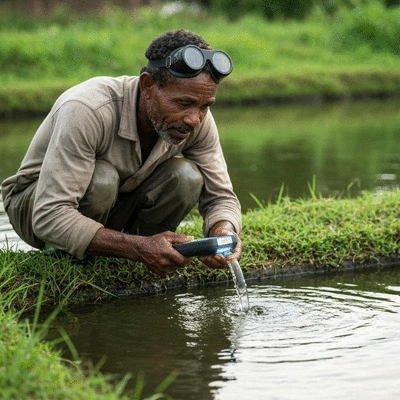
Water Quality Testing Equipment: At minimum, you need dissolved oxygen meters (15,000-50,000 shillings or naira), pH meters or test kits (5,000-20,000 shillings or naira), and ammonia test kits (3,000-8,000 shillings or naira). More comprehensive kits including nitrite, nitrate, and hardness tests cost 30,000-80,000 shillings or naira but provide valuable diagnostic capability.
Feeding Equipment: Buckets and scoops for manual feeding (minimal cost), possibly automated feeders for larger operations (20,000-100,000 shillings or naira per feeder depending on sophistication).
General Tools: Scales for weighing fish (5,000-25,000 shillings or naira depending on capacity and accuracy), buckets and containers for various tasks (5,000-15,000 shillings or naira for a basic set), rubber boots and protective gear (3,000-10,000 shillings or naira), and basic hand tools for maintenance and repairs.
Record Keeping Materials: Notebooks or record books for tracking feeding, growth, water quality, and observations (minimal cost but essential for learning and improvement), possibly digital tools or software for larger operations.
Budget approximately 100,000-300,000 Kenyan Shillings or 400,000-1,200,000 Naira for essential equipment when starting a small to medium-scale operation. You can acquire some items gradually rather than purchasing everything before your first stocking, but have the basics ready before fingerlings arrive.
Legal Requirements and Compliance
Operating a fish farm requires navigating various legal and regulatory requirements. Whilst specific regulations vary by country and sometimes by region within countries, certain common themes exist across African aquaculture that you'll need to address. Compliance protects your investment, avoids penalties, and establishes your legitimacy in the community.
Business Registration and Licensing
You need to register your fish farming operation as a business entity. In most African countries, this involves registering with national or regional business registries, obtaining a tax identification number, and potentially registering for VAT if your revenue exceeds certain thresholds. Registration costs vary but typically range from 5,000-30,000 shillings or naira depending on your business structure and jurisdiction.
Many countries require specific aquaculture licences or permits beyond general business registration. Fisheries departments or aquaculture directorates issue these permits after reviewing your plans and ensuring compliance with regulations. Application processes vary—some are straightforward and quick, others involve detailed applications, site inspections, and extended waiting periods. Start this process early, as delays in obtaining permits can postpone your planned start date.
Environmental Permits and Assessments
Environmental regulations aim to prevent aquaculture operations from harming surrounding ecosystems or communities. Depending on your scale and location, you may need environmental impact assessments or approvals before establishing your farm. In Kenya, for instance, the National Environment Management Authority (NEMA) reviews aquaculture projects, examining water source and discharge plans, potential effects on neighbours, and waste management proposals.
These assessments can take weeks or months and involve fees ranging from 10,000-100,000+ shillings or naira depending on project scale and assessment complexity. For small-scale operations, requirements may be minimal or waived, but verify this with authorities rather than assuming exemption. Operating without required environmental approvals risks closure orders, fines, or both.
Water Rights and Abstraction Permits
Using water from rivers, boreholes, or other sources often requires water abstraction licences. Water resources authorities manage these permissions to prevent over-extraction that might harm downstream users or ecosystems. You'll typically declare your intended water use, perhaps pay fees based on volume, and comply with conditions about discharge quality and timing.
Even using your own borehole may require permits in some jurisdictions, particularly for commercial operations. Rainwater harvesting usually faces fewer restrictions, but verify local requirements. Water rights can be complex, especially where traditional or customary water uses exist alongside formal licensing systems. Engaging with local water user associations and authorities helps navigate these complexities.
Health and Food Safety Standards
If you're producing fish for human consumption, health and food safety regulations apply. Health departments or food safety authorities may inspect your farm, examining handling practices, water quality, and disease control measures. Requirements typically include maintaining sanitary conditions, preventing contamination, and keeping records of production activities.
If you plan to sell to supermarkets, hotels, or export markets, you'll face more stringent requirements potentially including certification schemes like GlobalGAP, BAP (Best Aquaculture Practices), or organic certification. These certifications involve costs—application fees, annual audits, infrastructure improvements—but open premium markets and can command better prices that justify the investment. For comprehensive guidance on legal requirements, review our article on mastering legal compliance for fish farming startups.
Legal Compliance Checklist
- Register business with appropriate authorities and obtain tax identification
- Apply for aquaculture licences or permits from fisheries departments
- Obtain environmental approvals or complete required assessments
- Secure water abstraction licences or rights for your water sources
- Understand and comply with health and food safety regulations
- Verify zoning allows fish farming on your chosen property
- Maintain required records and be prepared for inspections
- Budget 50,000-200,000+ KSh or NGN for permits, registrations, and compliance costs
Financial Planning and Budgeting
Thorough financial planning helps you understand your capital requirements, anticipate cash flow patterns, and set realistic expectations for profitability. Fish farming involves substantial upfront investment before any revenue, followed by ongoing expenses for 4-6 months before first harvest. Understanding these financial dynamics prevents running out of money mid-cycle.
Startup Capital Requirements
Your initial capital needs include land acquisition or lease, infrastructure construction, equipment purchases, and initial operating costs for your first production cycle. For a small-scale operation with 3 earthen ponds in Kenya, total startup requirements might look like this:
| Expense Category | Cost Range (KSh) |
|---|---|
| Land (purchase or lease deposit) | 200,000-500,000 |
| Pond construction (3 ponds × 200m²) | 240,000-450,000 |
| Water supply system (borehole or intake) | 100,000-400,000 |
| Equipment and tools | 80,000-150,000 |
| Permits and registrations | 30,000-80,000 |
| First cycle fingerlings (6,000 fish) | 30,000-60,000 |
| First cycle feed (1,200-1,800kg) | 100,000-180,000 |
| Working capital buffer | 50,000-100,000 |
| TOTAL | 830,000-1,920,000 |
For Nigerian catfish farming with 10 concrete tanks, costs scale up substantially, potentially requiring 15-30 million Naira or more for complete setup including land, construction, equipment, and first cycle operating expenses. Accurate costing for your specific situation requires obtaining local quotations from contractors, suppliers, and service providers.
Operating Expenses and Cash Flow
After startup, ongoing operating expenses include fingerlings for each new stocking, feed throughout the growing cycle, electricity or fuel for pumping, labour if hiring workers, maintenance and repairs, and marketing costs. Feed dominates operating expenses—typically 60-70% of total costs—making feed management critical for profitability.
Cash flow patterns in fish farming differ from many businesses. You spend money continuously for 4-6 months (tilapia) or 4-5 months (catfish) before receiving any revenue. Then you harvest, sell your fish, and suddenly have substantial cash inflow. This creates feast-or-famine cash flow unless you stagger production cycles across multiple ponds to generate more regular harvests.
Budget for your first complete cycle including some buffer for unexpected expenses or lower-than-planned survival rates. Many beginning farmers run out of money in months 4-5 when fish are nearly market size but feed costs remain high. Having adequate working capital to complete your first cycle without financial stress is essential.
Funding Sources and Financial Access
Few farmers have sufficient savings to fund fish farming startup entirely from personal resources. Understanding available financing options helps you access needed capital whilst managing debt responsibly. Options include:
Agricultural Banks: Many countries have agricultural development banks offering loans at subsidized interest rates for farmers. Terms are often favourable—lower interest, longer repayment periods—but application processes can be complex and slow. Research what's available in your country and prepare applications thoroughly.
Commercial Banks: Mainstream banks offer business loans, though they may view aquaculture as risky and demand higher interest rates or substantial collateral. Preparing professional business plans and demonstrating market demand improves your chances of approval.
Microfinance Institutions: These serve small-scale entrepreneurs who might not qualify for bank loans. Interest rates are typically higher than banks but lower than informal moneylenders, and collateral requirements may be more flexible. Loan sizes are usually smaller, suitable for modest-scale operations.
Government and NGO Programmes: Various government ministries, development agencies, and NGOs offer grants or subsidized loans for aquaculture development, sometimes combined with training and technical support. These programmes have eligibility criteria and application processes but can provide valuable support for qualifying farmers.
Cooperative Financing: Joining farmer cooperatives may provide access to group lending, shared infrastructure costs, or bulk purchasing discounts that effectively increase your capital efficiency even without direct loans.
Whatever financing you use, borrow conservatively relative to your projected revenues. Debt amplifies both success and failure—borrowed capital helps you grow faster when things go well but accelerates disaster when problems arise. For your first venture into fish farming, minimize debt and start at a scale you can sustain even if results disappoint.
Preparing Your Farm and Beginning Operations
With infrastructure complete, permits obtained, and inputs sourced, you're ready to prepare your farm for actual fish production. These final preparation steps, done carefully, set you up for a successful first production cycle.
Preparing Ponds or Tanks
New earthen ponds benefit from a preparation period allowing natural pond ecology to establish before stocking fish. After filling with water, wait 1-2 weeks whilst beneficial bacteria, algae, and microorganisms colonize the pond. Some farmers add organic fertilizer—cattle manure or compost—to stimulate plankton growth that will provide natural food for fish, though this is optional.
If your water source contains chlorine (municipal water), you must treat it before stocking fish, as chlorine is toxic to fish. You can use chemical dechlorinators (sodium thiosulfate) or simply let water stand for 24-48 hours allowing chlorine to dissipate naturally through aeration and exposure to air.
Test water quality before stocking—temperature, pH, dissolved oxygen, ammonia. Ensure conditions fall within acceptable ranges for your chosen species. If parameters are problematic, address them before fingerlings arrive. Once fish are in your ponds, correcting major water quality problems becomes much more difficult.
Stocking Procedures
When your fingerlings arrive from the hatchery, proper stocking procedures minimize stress and mortality. Transport stress, temperature shock, and handling injuries kill many fingerlings if you're not careful. Follow these practices for successful stocking:
Acclimate temperature gradually: Float sealed bags containing fingerlings in your pond for 20-30 minutes, allowing water temperatures to equalize. Sudden temperature changes shock fish, potentially causing high mortality over the following days even if fish appear fine initially.
Mix water gradually: After temperature equalization, open bags and gradually add small amounts of pond water to the bags over 10-15 minutes. This helps fish adjust to any differences in pH, hardness, or other water chemistry parameters between hatchery and pond water.
Stock during cool periods: Early morning or late afternoon are best times for stocking. Hot midday sun and high temperatures increase stress on fish already stressed from transport and handling.
Handle gently: When releasing fingerlings, pour them gently from bags rather than dumping abruptly. Avoid exposing fish to air or rough handling. Some farmers add salt to stocking water (1-2kg per cubic metre) as a mild antiseptic helping prevent infections during this vulnerable period.
Count carefully: Verify fingerling numbers if possible, counting as you stock or sampling to estimate total numbers. Knowing exactly how many fish you stocked helps you calculate survival rates and feeding rates accurately as production progresses.
Establishing Management Routines
Successful fish farming requires consistent daily management. Establish routines from the beginning that ensure your fish receive proper care and you stay informed about their condition. Essential routines include:
Daily feeding: Feed at consistent times—typically 2-3 times daily for most species. Morning (8-9am), afternoon (2-3pm), and evening (5-6pm) feeding times work well. Consistency improves feed utilization and makes fish behavior more predictable. Observe fish during feeding—eager feeding indicates healthy fish, whilst poor appetite suggests problems requiring investigation.
Water quality monitoring: Test dissolved oxygen at least weekly, more frequently in intensive systems. Early morning (before sunrise) oxygen levels are most critical, as this is when concentrations are lowest. Check pH weekly and ammonia/nitrite if you have test kits. Record all measurements—tracking trends helps you identify developing problems before they become serious.
Growth sampling: Every 2-4 weeks, catch a representative sample of fish (perhaps 20-30 fish), weigh them, calculate average weight, and adjust feeding rates accordingly. This sampling also allows you to check fish condition, observe any health issues, and estimate how long until harvest size. Release sampled fish carefully to minimize injury.
Record keeping: Maintain detailed records of all activities—dates and quantities of feeding, water quality measurements, growth sampling results, observations of fish behavior or pond conditions, mortality if any occurs, and any interventions or treatments applied. These records are invaluable for improving your management over time and diagnosing problems if they arise.
Regular inspections: Walk your ponds daily, looking for anything unusual—dead fish, changes in water appearance, damaged infrastructure, evidence of predators or theft. Early detection of problems allows quicker response, potentially preventing minor issues from becoming major losses.
First Production Cycle Success Tips
- Start with stocking densities at the lower end of recommended ranges—you can increase in subsequent cycles
- Use quality commercial feeds appropriate for your species and fish size—this isn't where you cut costs
- Don't overstock hoping for faster profits—overcrowding increases stress, disease risk, and mortality
- Keep detailed records from day one—you'll use this information to improve future cycles
- Connect with other farmers for advice and support—their experience helps you avoid common mistakes
- Be patient—fish farming has a learning curve, and your first cycle teaches lessons no training can fully convey
- Plan your harvest and marketing before fish reach market size—scrambling to find buyers at harvest leads to poor prices
Frequently Asked Questions
How much capital do I need to start a fish farm in Africa?
Capital requirements vary dramatically based on your chosen scale, species, and infrastructure type. A small-scale operation with 2-3 earthen ponds (200m² each) might require 800,000-2,000,000 Kenyan Shillings or 3-8 million Naira including land lease or purchase, pond construction, water supply systems, equipment, permits, and first cycle operating expenses for fingerlings and feed. Medium-scale operations with 10-20 ponds or tanks typically require 5-15 million Kenyan Shillings or 20-60 million Naira. Tank systems generally cost 2-3 times more than equivalent earthen pond capacity due to construction costs and required pumping and aeration equipment. Begin with the smallest scale that makes sense for your goals, allowing you to learn whilst managing financial risk. Many successful commercial farmers started with just 1-2 ponds, used profits to gradually expand, and built substantial operations over 3-5 years rather than attempting to establish large operations immediately.
What size should my fish ponds be, and how many fish can I stock?
Pond sizes typically range from 100-500 square metres for small to medium-scale operations, with 200-400 square metres being most common. Depth should be 1-1.5 metres—deeper ponds don't necessarily improve production and make harvesting more difficult. Stocking densities depend on your species, system intensity, and management capability. For tilapia in earthen ponds with minimal aeration, stock 1-3 fish per square metre (200-600 fish in a 200m² pond). With better water management and aeration, you can increase to 5-10 fish per square metre. Catfish tolerates higher densities due to its air-breathing capability—intensive tank culture might stock 50-100 catfish per square metre, though earthen pond densities are lower. Begin at conservative stocking densities for your first cycle, allowing you to maintain good water quality and observe fish performance. You can increase stocking in subsequent cycles as you gain experience and confidence. Overstocking creates more problems than understocking—stressed fish, poor water quality, higher disease risk, and ultimately lower survival and growth rates that reduce rather than increase production.
How long does it take to set up a fish farm before I can start production?
Setting up a fish farm typically requires 3-6 months from beginning planning to stocking your first fish, though timelines vary based on site conditions, permitting processes, and infrastructure complexity. If you're purchasing land, that alone might take 1-2 months for legal processes. Site preparation and infrastructure construction takes 1-3 months depending on whether you're building simple earthen ponds (faster) or concrete tanks (slower), your access to contractors and materials, and weather conditions during construction. Obtaining necessary permits and licences requires anywhere from a few weeks to several months depending on your country's regulatory processes and how organized your applications are. Water system installation (boreholes, pumps, piping) adds 2-6 weeks. After infrastructure completion, allow 1-2 weeks for ponds to mature and stabilize before stocking. Plan conservatively when estimating your timeline, as delays in permitting, construction, or equipment delivery are common. Starting the process during dry seasons when construction is easier often proves faster than beginning during rainy periods when excavation and construction face weather delays.
What are the most common mistakes beginners make when setting up fish farms?
Several common mistakes plague beginning fish farmers and can be avoided with proper planning. Overstocking is perhaps the most frequent error—new farmers often stock too many fish hoping for faster profits, but overcrowding creates poor water quality, stress, disease outbreaks, and ultimately disappointing results. Starting too large before gaining experience with a manageable-scale operation often leads to being overwhelmed by management demands and financial pressures, whilst starting small allows learning with lower stakes. Inadequate water supply planning causes problems when you discover your water source can't reliably fill and maintain your ponds, forcing you to reduce stocking or face chronic water quality issues. Skipping proper soil testing before pond construction leads to discovering too late that your soil doesn't hold water, requiring expensive lining. Neglecting legal compliance results in operating without necessary permits, risking closure orders or fines after investing in infrastructure. Insufficient working capital means running out of money in months 4-5 when fish are nearly ready to harvest but feed costs remain high. Poor market research results in producing fish nobody wants to buy or selling at prices that don't cover costs. Starting without adequate training or mentorship from experienced farmers means learning everything through expensive trial and error rather than benefiting from others' experience.
Should I build ponds or tanks for my fish farm?
The choice between ponds and tanks depends on your specific circumstances, goals, and available resources. Earthen ponds are generally most suitable for beginners and extensive to moderate-intensity production. They're typically less expensive to construct (80,000-150,000 KSh or 300,000-500,000 NGN for a 200m² pond in suitable soil), require less pumping and aeration, benefit from natural pond ecology (algae, microorganisms) that supplements fish nutrition, and are forgiving of management errors. Ponds work best where you have suitable land with good water-holding soil, adequate space, and sufficient water supply for filling and maintaining multiple ponds. Tank systems are better for intensive production, urban or peri-urban locations with limited land, poor soil conditions making pond construction impractical, or situations where biosecurity and disease control are paramount. Tanks cost substantially more to construct (200,000-400,000 KSh or 800,000-1,500,000 NGN for 20m² concrete tanks), require pumping and usually aeration, demand more precise management, but allow higher stocking densities and production per unit of surface area. For most beginning farmers in Africa with access to suitable land, earthen ponds represent the most practical starting point. You can always add tanks later once you've mastered basics with pond culture, but reversing this sequence (starting with tanks then trying ponds) is less common and more challenging.
Moving Forward with Your Fish Farm Setup
Setting up a fish farm represents a significant undertaking requiring careful planning, appropriate investment, and realistic expectations. By now, you understand the major components involved—from site selection and infrastructure construction to sourcing inputs, navigating regulations, and preparing for actual production. The information provided here gives you a foundation for making informed decisions, but remember that every fish farming situation is unique, and you'll need to adapt general principles to your specific circumstances.
The most successful fish farmers are those who plan thoroughly before starting, start at manageable scales that allow learning without overwhelming risk, and remain committed to continuous improvement based on experience. Your first production cycle will teach lessons that no amount of reading or training can fully convey. Expect challenges, occasional setbacks, and a learning curve as you develop the judgment and skills that come only through hands-on experience.
Don't hesitate to seek help and guidance. Visit operating fish farms in your region, observing different systems and talking with experienced farmers about their choices and experiences. Many farmers are surprisingly generous with advice when approached respectfully. Connect with local farmer associations or cooperatives that can provide peer support, market access, and collective bargaining power for inputs. Engage with fisheries extension officers or agricultural advisors who can provide technical guidance and help you navigate regulatory requirements.
Start conservatively with your initial setup. Build fewer ponds or tanks than you think you ultimately want, allowing you to perfect your management before expanding. Use the first production cycle as an intensive learning experience rather than expecting optimal profits immediately. Document everything carefully—your records from this first cycle become invaluable reference material for improving subsequent cycles. Calculate your actual costs, yields, and profits rather than relying on assumptions, and use this data to refine your planning.
Remember that fish farming offers genuine opportunities for income generation, food production, and livelihood development across Africa. The sector is growing rapidly, driven by increasing demand for fish protein, declining wild fish catches, and recognition of aquaculture's potential. Your well-planned and properly executed fish farm can capture a share of this growing market whilst contributing to food security in your community. Take the time to set up correctly, commit to learning and improving continuously, and you position yourself for success in this promising field.

Yomi Adisa
Yomi Adisa is the lead researcher at Fish Farming Business, where he studies what makes aquaculture ventures profitable across Africa. His research focuses on market patterns, buyer preferences, and the business decisions that determine success or failure in fish farming.