
Why Effective Water Management Could Be the Key to Slashing Fish Deaths and Boosting Your Farm Profits
Posted on: 2025-11-09
By: Yomi Adisa
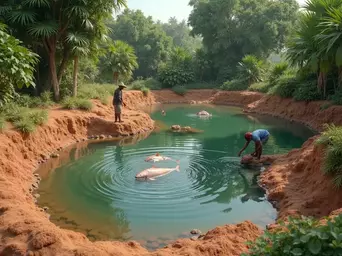
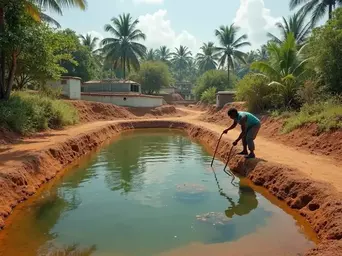
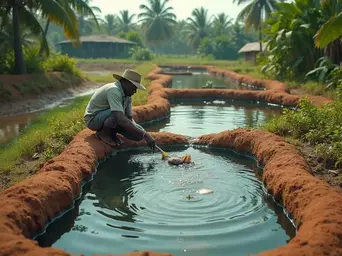
Picture this: you walk into your fish pond one morning and find dozens of dead catfish floating on the surface. The water looks cloudy, smells off, and your remaining fish are gasping at the edges. Six months of careful feeding, sleepless nights monitoring growth, and ₦500,000 invested—all potentially lost because of something you could have prevented.
This scenario plays out across fish farms in Lagos, Kaduna, and countless other locations every month. Farmers who know how to feed fish, manage growth rates, and handle basic pond maintenance still lose thousands of naira to one critical oversight: water management.
Here's what most farmers don't realise: the difference between a farm that consistently profits ₦200,000 per cycle and one that barely breaks even often comes down to water quality decisions made weeks before any fish show signs of distress.
Poor water management doesn't just kill fish—it quietly erodes your profit margins through reduced growth rates, increased feed conversion ratios, and higher mortality before you even notice the problems.
The financial stakes are higher than most farmers calculate. A Kano-based farmer recently shared how overlooking dissolved oxygen levels cost him ₦800,000 in a single weekend when his entire 2,000-fish stock suffocated. Meanwhile, farms implementing proper water management systems report 30-40% lower mortality rates and significantly faster growth cycles.
What you're about to discover will show you exactly why water management could be the missing piece between your current results and the profitability you're targeting—and what successful farmers are doing differently to protect their investments.
What You Will Learn
- How effective water management can significantly reduce fish mortality rates.
- The key water quality parameters that most farmers overlook.
- Proven strategies used by successful farmers to enhance profitability.
- The importance of preventive monitoring versus reactive management.
- How technology can support optimal water conditions and boost farm efficiency.
What You Didn't Know About Water Quality Management
You think you understand water quality because you test pH and check for obvious problems like algae blooms or foul odours. Most farmers stop there, believing they've covered the essentials. What they miss are the invisible factors that slowly compromise fish health and drain profits long before any visible symptoms appear.
The water parameters that separate thriving farms from struggling ones aren't the obvious ones most farmers monitor. While you're checking pH levels, successful farmers are tracking dissolved oxygen fluctuations, ammonia spikes, and bacterial loads that can devastate your stock within 48 hours. These hidden factors determine whether your fish convert feed efficiently or waste expensive nutrients fighting stress.
Consider what happens when you ignore these invisible threats. Your fish appear healthy, feeding normally, growing at expected rates—until suddenly they're not. By the time you notice reduced appetite or sluggish behaviour, water quality problems have been building for days or weeks, quietly reducing your profit margins through poor feed conversion and increased susceptibility to disease.
The Hidden Factors That Affect Your Fish Health
Turbidity isn't just about water looking murky—it directly impacts how efficiently your fish breathe and feed. When suspended particles increase beyond 25 NTUs (Nephelometric Turbidity Units), your fish expend more energy filtering water through their gills and struggle to locate food efficiently. A farmer in Ogun State discovered this when his fish growth rates dropped 20% despite consistent feeding, simply because clay runoff from nearby construction was increasing water turbidity.
You need to understand that microbial balance in your pond determines whether beneficial bacteria break down waste or harmful bacteria multiply and create toxic conditions. Most farmers focus on adding probiotics without realising that water temperature, pH fluctuations, and organic load all influence which bacterial populations dominate. When the balance tips toward harmful bacteria, your fish face constant immune system stress that reduces growth and increases mortality.
Alkalinity levels buffer your water against pH swings that can kill fish within hours. While pH tells you current conditions, alkalinity tells you how stable those conditions will remain. Low alkalinity means your pH can crash overnight, especially during heavy feeding periods when bacterial activity increases. You want alkalinity between 80-120 mg/L, but most farmers never test for it until they experience unexplained fish deaths.
Critical Parameters Most Farmers Miss
- Dissolved oxygen at dawn - when levels hit dangerous lows
- Ammonia during peak feeding - when toxic spikes occur
- Nitrite accumulation - the silent killer that builds gradually
- Carbon dioxide levels - especially in high-density systems
- Total dissolved solids - affecting fish osmoregulation
Hardness levels affect how well your fish can regulate their internal salt balance. Soft water (below 50 mg/L) stresses fish because they must work harder to maintain proper electrolyte levels, leading to reduced growth and increased disease susceptibility. Hard water (above 300 mg/L) can interfere with gill function and reduce oxygen uptake efficiency.
The timing of these measurements matters more than most farmers realise. Testing pH at midday gives you different readings than testing at dawn when carbon dioxide levels peak. You need to understand daily fluctuation patterns to identify problems before they become crises.
Why Most Farmers Underestimate Water Quality Issues
You see healthy-looking fish and assume your water quality is adequate. This thinking costs farmers thousands because water quality problems develop gradually, and fish are remarkably good at hiding stress until conditions become critical. By the time you notice behavioural changes, internal damage has already occurred that will affect growth rates and feed conversion for weeks.
Most farmers test water only when problems appear—fish gasping at the surface, unusual mortality, or poor feeding response. This reactive approach means you're always fighting crises instead of preventing them. A farmer in Katsina learned this lesson when he lost ₦300,000 worth of fish to nitrite poisoning that had been building for three weeks while his fish appeared perfectly normal.
The cost of ignorance compounds quickly. Poor water quality doesn't just kill fish outright—it reduces immune function, slows growth, increases feed conversion ratios, and makes your stock vulnerable to diseases that healthy fish would resist. You might attribute poor performance to feed quality, genetics, or bad luck when the real culprit is water conditions you never measured.
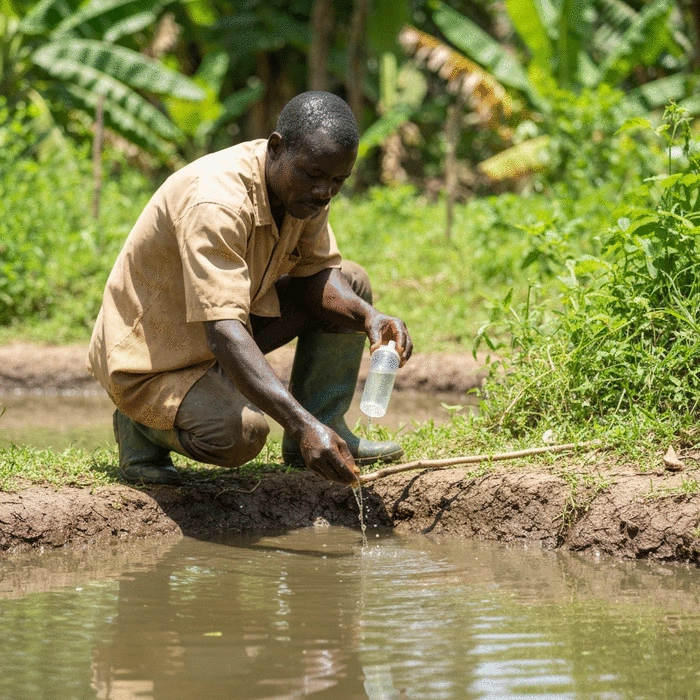
You underestimate water quality because the effects aren't immediately visible. Unlike a broken aerator or diseased fish, poor water chemistry works silently. Your fish may survive but grow 30% slower, requiring 40% more feed to reach market size, and show higher mortality during transport—all traced back to chronic water quality stress you never detected.
| Water Issue | Hidden Cost | When You Notice |
|---|---|---|
| Low dissolved oxygen | 20-30% slower growth | Fish gasping at surface |
| High ammonia | Gill damage, poor feed conversion | Reduced appetite, lethargy |
| pH fluctuations | Chronic stress, disease susceptibility | Erratic behaviour, mortality spikes |
| Nitrite buildup | Reduced oxygen transport | Brown blood, sudden deaths |
The farmers who consistently profit understand that water quality management is preventive medicine for their investment. They know that spending ₦15,000 monthly on comprehensive water testing prevents losses that could exceed ₦500,000 in a single incident. They track trends, not just current readings, because patterns reveal problems before fish do.
What separates successful farmers from struggling ones isn't just knowing these parameters exist—it's understanding how they interact, when to measure them, and what the readings mean for your specific system and stocking density. You need to know not just what to test, but when your readings indicate trouble is coming.
What Happens When You Neglect Best Aquaculture Practices
You think you're following good practices because your fish are eating and growing. But beneath the surface, small shortcuts and overlooked details are quietly undermining your entire operation. The difference between farms that consistently profit and those that struggle often comes down to practices that seem minor until they compound into major losses.
Most farmers focus on the obvious—feeding schedules, pond cleaning, basic health monitoring. What they miss are the interconnected systems that determine whether their fish thrive or merely survive. When you neglect these foundational practices, you're not just risking fish deaths—you're guaranteeing reduced profitability through poor growth rates, increased disease susceptibility, and inefficient resource utilisation.
The cost of neglecting best practices isn't always immediate fish mortality. More often, it's the slow erosion of your profit margins through problems you don't connect to your management decisions. Your fish grow slower, require more feed, show higher stress levels, and become vulnerable to diseases that proper practices would prevent.
The Silent Killers in Your Aquaculture System
Overcrowding is the mistake that destroys more fish farms than any single disease. You stock 2,000 fingerlings in a pond designed for 1,500 because you want to maximise production, not realising you've created a death trap. When fish compete for oxygen, space, and food, stress hormones suppress their immune systems and growth rates plummet. A farmer in Anambra State lost ₦450,000 when overcrowding led to a bacterial outbreak that killed 60% of his stock within five days.

You need to understand that carrying capacity isn't just about space—it's about your system's ability to maintain water quality under biological load. Every fish produces waste, consumes oxygen, and contributes to ammonia levels. Exceed your system's processing capacity, and water quality crashes faster than you can correct it. The extra fish you thought would increase profits become the reason your entire crop fails.
Poor waste management creates toxic conditions that kill fish slowly through chronic poisoning. Uneaten feed, fish waste, and dead organic matter accumulate on pond bottoms, creating anaerobic zones that produce hydrogen sulphide and consume oxygen. Most farmers see this as a cleaning issue, not realising it's systematically poisoning their water and reducing their fish's ability to grow efficiently.
Warning Signs of System Overload
- Fish gasping at surface - especially during early morning hours
- Reduced feeding response - fish showing less interest in food
- Uneven growth rates - some fish thriving while others lag significantly
- Increased aggression - fish competing more intensely for resources
- Frequent disease outbreaks - recurring health problems despite treatment
Inadequate aeration forces your fish to live in a state of chronic oxygen stress. You might think your aerator is sufficient because fish aren't dying, but insufficient oxygen levels reduce feed conversion efficiency by 25-40%. Your fish spend energy struggling to breathe instead of growing, extending production cycles and increasing feed costs significantly.
The timing of aeration matters more than most farmers realise. Running aerators only during daylight hours ignores the fact that oxygen levels crash at night when photosynthesis stops and biological oxygen demand peaks. Fish stressed by overnight oxygen depletion show reduced appetite and growth the following day, creating a cycle of poor performance you might not connect to your aeration schedule.
Temperature fluctuations that seem minor to you represent major stress for your fish. A 5°C temperature swing that occurs over several hours can suppress immune function for days, making your fish vulnerable to diseases they would normally resist. You focus on average temperatures while ignoring daily fluctuations that determine whether your fish maintain optimal metabolic function.
Why Your Feeding Strategies Could Be Compromising Your Water Quality
You feed your fish the same amount at the same times every day, thinking consistency equals good management. What you're actually doing is ignoring how feeding affects water chemistry, oxygen levels, and waste production. Poor feeding strategies don't just waste expensive feed—they create water quality problems that reduce the effectiveness of the feed your fish do consume.
Overfeeding is the fastest way to destroy water quality while thinking you're helping your fish grow faster. Every gram of uneaten feed becomes organic pollution that consumes oxygen during decomposition and releases ammonia as it breaks down. A farmer in Oyo State discovered this when his well-intentioned heavy feeding schedule created an ammonia spike that killed 300 fish worth ₦180,000.
You need to understand that feed timing affects more than fish growth—it determines when your pond's biological load peaks. Feeding during the hottest part of the day, when dissolved oxygen is already low, forces your fish to digest food while competing for limited oxygen. This reduces feed conversion efficiency and increases the risk of digestive problems that slow growth for weeks.
| Poor Practice | Water Quality Impact | Financial Cost |
|---|---|---|
| Overfeeding by 20% | Ammonia spikes, oxygen depletion | ₦50,000+ in wasted feed monthly |
| Feeding during peak heat | Reduced oxygen, digestive stress | 30% slower growth rates |
| Inconsistent feeding times | Irregular waste production | Poor feed conversion ratios |
| Wrong feed particle size | Increased waste, poor utilisation | 25% feed wastage |
Feed quality deterioration happens faster than most farmers realise, especially in humid conditions common across Nigeria and Ghana. You store feed for weeks without proper protection from moisture, not knowing that rancid fats and mould toxins in deteriorated feed stress fish livers and reduce their ability to process nutrients efficiently. Your fish may eat the feed, but they're getting less nutrition while their organs work harder to process toxins.

The particle size of your feed determines how efficiently fish can consume it and how much waste enters your system. Feed particles too large for your fish size create waste as fish struggle to consume them. Particles too small pass through fish quickly without proper digestion, contributing to water pollution while providing minimal nutrition.
Feeding frequency affects both fish growth and water quality stability. Feeding large amounts twice daily creates massive spikes in biological oxygen demand and waste production. Your pond's biological systems can't process these sudden loads efficiently, leading to water quality swings that stress fish and reduce growth performance.
You want to understand that successful farmers view feeding as water quality management, not just nutrition delivery. They adjust feeding rates based on water temperature, oxygen levels, and biological load. They know that the best feed in the world becomes worthless if water conditions prevent efficient digestion and nutrient absorption.
What Successful Farmers Are Doing Differently
You walk into a profitable fish farm and immediately notice something different—the water is clearer, the fish are more active, and there's a systematic approach to everything from feeding schedules to equipment maintenance. These farmers aren't just lucky or better funded. They've made specific decisions about water management that separate them from farms that struggle to break even.
The difference isn't always obvious technology or expensive equipment. Often, it's how they think about water as a living system that requires constant attention and adjustment. While struggling farmers react to problems, successful farmers prevent them through systematic monitoring and proactive management strategies.
What you're about to discover are the specific practices and technologies that consistently profitable farms use to maintain optimal water conditions. These aren't theoretical concepts—they're proven strategies that reduce mortality, improve growth rates, and increase profit margins across different farm sizes and locations.
The Technologies Transforming Water Management in Aquaculture
Automated monitoring systems are revolutionising how successful farmers manage water quality without being physically present 24/7. These systems continuously track dissolved oxygen, pH, temperature, and ammonia levels, sending alerts to your phone when parameters drift outside safe ranges. A farmer in Ogun State installed a ₦150,000 monitoring system and reduced his fish losses by 70% in the first year, saving over ₦400,000 in replacement costs.
You need to understand that real-time data allows you to catch problems during their early stages, when corrections are simple and inexpensive. Instead of discovering low oxygen levels when fish are gasping at the surface, automated systems alert you when levels drop to 4 mg/L—still safe, but trending toward danger. This early warning gives you time to increase aeration or reduce feeding before stress affects your fish.
IoT sensors connected to cloud-based platforms provide insights that manual testing can't match. These systems track trends over weeks and months, revealing patterns that help you predict when problems are likely to occur. You can see how feeding affects oxygen levels, how weather changes impact pH, and when your biological load approaches dangerous levels.
Technology Investment vs. Returns
- Basic monitoring system (₦100,000-200,000) - prevents losses exceeding ₦500,000 annually
- Automated aeration controls (₦80,000-150,000) - reduces electricity costs by 30-40%
- Water quality sensors (₦50,000-100,000) - eliminates guesswork in management decisions
- Mobile alerts and data logging - enables immediate response to emerging problems
Automated aeration systems adjust oxygen levels based on real-time measurements, not fixed schedules. These systems increase aeration when dissolved oxygen drops and reduce it when levels are adequate, saving electricity while maintaining optimal conditions. You're not running aerators constantly or guessing when fish need more oxygen—the system responds to actual conditions.
The data logging capabilities of modern systems provide insights that transform your management approach. You can identify which weather patterns affect your water quality, how different feed types impact waste production, and when seasonal changes require management adjustments. This historical data becomes your guide for preventing problems before they occur.

Remote monitoring means you can manage multiple ponds or respond to emergencies even when you're not on-site. Successful farmers use mobile apps to check water conditions, adjust equipment settings, and receive alerts about developing problems. This capability is especially valuable during critical periods like hot weather or heavy feeding when conditions can change rapidly.
The Unsung Heroes: Biofilters and Their Role in Profitability
Biological filtration systems are the secret weapon that allows successful farmers to maintain higher stocking densities without compromising water quality. These systems use beneficial bacteria to convert toxic ammonia and nitrites into less harmful compounds, essentially expanding your pond's carrying capacity. You can stock more fish per cubic metre while maintaining the water quality that supports optimal growth.
You need to understand that biofilters aren't just equipment—they're living systems that require proper management to function effectively. The beneficial bacteria that power these systems need specific conditions to thrive: adequate oxygen, proper pH, and regular nutrient supply. When managed correctly, biofilters can process waste loads that would overwhelm natural pond systems.
Moving bed biofilm reactors (MBBR) represent the most efficient biological filtration technology available to commercial fish farmers. These systems provide massive surface area for beneficial bacteria while requiring minimal maintenance. A farmer in Lagos installed an MBBR system for ₦300,000 and increased his stocking density by 60% while reducing water exchange requirements by 80%.
The economic impact of effective biofiltration extends beyond just supporting more fish. Reduced water exchange saves pumping costs, less frequent water changes reduce labour requirements, and stable water quality means fewer disease outbreaks and medication costs. Your fish grow faster in stable conditions, reaching market size weeks earlier than fish in poorly managed systems.
| Biofilter Type | Initial Cost | Capacity Increase | Maintenance |
|---|---|---|---|
| Trickling filter | ₦150,000-250,000 | 30-40% | Weekly cleaning |
| MBBR system | ₦300,000-500,000 | 50-70% | Monthly inspection |
| Fluidised bed | ₦200,000-350,000 | 40-60% | Bi-weekly backwash |
| Constructed wetland | ₦100,000-200,000 | 25-35% | Seasonal plant management |
Nitrification efficiency in well-designed biofilters can exceed 95%, meaning almost all toxic ammonia gets converted to less harmful compounds. This efficiency allows you to maintain stable water chemistry even during peak feeding periods when waste production is highest. Your fish experience less stress, show better appetite, and convert feed more efficiently.
The startup period for biofilters requires patience and proper management. Beneficial bacteria colonies take 4-6 weeks to establish fully, during which you must carefully monitor ammonia and nitrite levels. Many farmers abandon biofilter projects during this critical period, not realising they're weeks away from dramatically improved water quality and increased profitability.
Maintenance requirements for biofilters are minimal compared to their benefits, but they must be consistent. Regular backwashing removes accumulated solids, periodic testing ensures bacterial populations remain healthy, and proper aeration maintains the oxygen levels beneficial bacteria require. Neglect these simple maintenance tasks, and your biofilter becomes a source of water quality problems rather than a solution.
You want to understand that biofilter sizing must match your system's biological load. Undersized biofilters become overwhelmed during peak production periods, while oversized systems waste money and space. Successful farmers calculate biofilter capacity based on maximum feeding rates, peak stocking densities, and safety margins for unexpected load increases.
The return on investment for biofilter systems typically occurs within 12-18 months through increased production capacity, reduced mortality, and lower operating costs. You're not just buying equipment—you're investing in the ability to stock more fish, maintain better water quality, and achieve more predictable production outcomes that translate directly into higher profits.
Summary Table
| Key Points | Details |
|---|---|
| Understanding Water Quality Management | Farmers often test basic parameters but miss crucial factors like dissolved oxygen and ammonia. Ignoring these can lead to hidden stress and profit loss before visible symptoms appear. For instance, low dissolved oxygen can cost a farmer ₦800,000 in lost stock. Monitoring trends proactively saves money and protects investments. |
| Turbidity's Impact | High turbidity levels can reduce fish growth rates by over 20%. A farmer learned this the hard way when clay runoff from construction affected his pond. Regular water testing and managing runoff are essential steps to avoid this issue. |
| Preventing Overcrowding | Overcrowding can lead to significant fish mortality due to stress and disease. A farmer lost ₦450,000 when his pond was overstocked. Understanding and respecting carrying capacity is vital for maintaining water quality and maximising profits. |
| Investing in Technology | Automated monitoring systems can reduce fish losses significantly. For example, a ₦150,000 system helped one farmer save over ₦400,000 in a year. Investing in technology helps prevent problems and enhances profitability by ensuring optimal water conditions. |
| Importance of Biofilters | Biofilters can increase stocking density by 50-70% while maintaining water quality. A farmer invested ₦300,000 in a biofilter system, leading to reduced water change needs and faster fish growth. This investment can lead to significant long-term savings and profitability. |
| Proactive vs. Reactive Management | Farmers who monitor water proactively avoid costly losses and improve their profit margins. The choice between reactive and proactive management determines long-term success, with proactive management often leading to ₦200,000+ per cycle in profit. |
Where Do You Go From Here?
You now understand why water management separates profitable farms from struggling ones. The farmers losing ₦500,000 to preventable fish deaths aren't unlucky—they're managing water reactively instead of proactively. The farmers consistently earning ₦200,000+ per cycle have made water quality their foundation, not an afterthought.
The choice ahead of you is straightforward: continue managing water the way most farmers do, testing only when problems appear and hoping for the best. Or start thinking like successful farmers who view water management as profit protection—monitoring trends, preventing problems, and using technology to maintain optimal conditions even when they're not physically present.
Your investment in proper water management—whether it's ₦150,000 for monitoring systems or ₦300,000 for biofilter technology—isn't an expense. It's insurance against the kind of catastrophic losses that destroy farms overnight and the slow profit erosion that keeps farms barely breaking even cycle after cycle.
The farmers who thrive understand that water management knowledge isn't optional in commercial aquaculture. They know which parameters to monitor, when readings indicate trouble, and how different management decisions affect their water quality weeks before problems become visible.
You need to decide whether you want to keep guessing about your water conditions or start managing them with the precision that profitable farming requires. The difference between these approaches determines whether your next production cycle generates the profits you're targeting or the disappointments you're trying to avoid.
Frequently Asked Questions
Why is effective water management so critical for fish farm profitability?
Effective water management is crucial because poor water quality quietly erodes profit margins through reduced growth rates, increased feed conversion ratios, and higher fish mortality even before visible problems appear. It can lead to losses of hundreds of thousands of naira in a single incident, directly impacting your farm's financial viability.
What "hidden factors" of water quality do most fish farmers overlook?
Many farmers overlook critical invisible factors like dissolved oxygen fluctuations, ammonia spikes, bacterial loads, and nitrite accumulation. They also miss the importance of turbidity, microbial balance, alkalinity, and hardness levels, all of which significantly impact fish health and growth long before visible symptoms occur.
Why do poor feeding strategies compromise water quality and fish health?
Poor feeding strategies, such as overfeeding, feeding during peak heat, and using incorrect feed particle sizes, directly degrade water quality. Uneaten feed and inefficiently digested particles become organic pollution, consuming oxygen, releasing ammonia, and causing water quality swings that stress fish and reduce feed conversion efficiency.
What technologies are successful fish farmers using to improve water management?
Successful farmers are adopting automated monitoring systems with IoT sensors for real-time data on dissolved oxygen, pH, temperature, and ammonia. They also use automated aeration systems that adjust oxygen levels as needed, and remote monitoring via mobile apps to manage ponds and respond to alerts from anywhere.
What role do biofilters play in boosting fish farm profitability?
Biofilters use beneficial bacteria to convert toxic ammonia and nitrites into less harmful compounds, significantly expanding your pond's carrying capacity. This allows you to stock more fish, reduces water exchange requirements and associated costs, and leads to faster growth rates due to stable, optimal water conditions, thereby increasing overall profitability.

Yomi Adisa
Yomi Adisa is the lead researcher at Fish Farming Business, where he studies what makes aquaculture ventures profitable across Africa. His research focuses on market patterns, buyer preferences, and the business decisions that determine success or failure in fish farming.