
Enhancing Fish Production Efficiency with Aquaculture Technology in Africa

Posted on: 2025-11-06
By: Yomi Adisa
Enhancing fish production efficiency in Africa is a pressing concern, as many farmers face challenges that hinder their profitability. You may think that understanding aquaculture technology is straightforward, but the reality is far more complex. Are you aware of the nuances and innovations that could revolutionise your fish farming business?
The current landscape of aquaculture in Africa is evolving, and markets are adapting to new technologies and practices. As you navigate this changing environment, it's crucial to explore how automation and efficient systems can boost your productivity and sustainability. This blog post will guide you through the essential aspects of aquaculture technology and automation, revealing what you need to know to make informed decisions that can transform your fish production.
What You Will Learn
- The importance of integrating aquaculture technology to enhance efficiency and profitability.
- How automation can reduce manual labour and improve feeding consistency.
- Common misconceptions about aquaculture technology and their impact on adoption.
- The benefits of lean production systems in minimising waste and maximising output.
- Insights into modern aquaculture practices, such as Recirculating Aquaculture Systems (RAS).
- The significance of training and capacity building for successful technology implementation.
Why Your Understanding of Aquaculture Technology Might Be Overly Simplistic
You walk into most fish farming discussions in Nigeria or Ghana, and technology talk centres around pond liners and aerators. That's where most farmers stop thinking about innovation. Meanwhile, successful operations across Africa are quietly adopting systems that automate feeding, monitor water quality in real-time, and reduce labour costs by 60%.
The gap between what you think aquaculture technology means and what it actually encompasses could be costing you thousands of naira every production cycle. Most farmers see technology as expensive gadgets for large commercial operations. The reality is far more nuanced and accessible than you realise.
You need to understand that aquaculture technology isn't just about buying expensive equipment. It's about integrated systems that work together to optimise every aspect of your production. A farmer in Ogun State recently discovered this when his manual feeding routine was consuming four hours daily across his six ponds. He assumed automation meant installing costly imported feeders.
What he found instead was a locally-adapted system combining simple timers, gravity feeders, and smartphone monitoring that cut his daily labour to 30 minutes. His feed conversion ratio improved from 1.8 to 1.4, saving him 180,000 naira per cycle on a 2,000kg production run. Understanding common fish farming mistakes helps you avoid similar costly oversights.
Technology Integration Levels You Need to Consider
Modern aquaculture technology operates on multiple interconnected levels:
- Basic automation: Timer-controlled feeding and aeration systems
- Monitoring systems: Water quality sensors and mobile alerts
- Data integration: Production tracking and performance analytics
- Advanced systems: Recirculating aquaculture and biofloc technology
The complexity lies not in individual components but in how they interact. You might install an automatic feeder but miss the water quality monitoring that tells you when fish aren't eating properly. You could invest in aeration systems without understanding how they integrate with feeding schedules and stocking densities.
You're operating in a market where technology adoption varies dramatically across regions and farm sizes. In Kenya, smallholder farmers are using solar-powered aerators and mobile-based monitoring systems. In Nigeria, some operations still rely entirely on manual processes while others have implemented sophisticated recirculating systems.
This disparity creates both opportunities and challenges you need to navigate carefully. You can't simply copy what works in South African commercial operations and expect it to function in a smallholder setup in Ghana. The technology needs to match your specific context, budget, and operational capacity.
| Technology Level | Investment Range (Naira) | Typical Applications |
|---|---|---|
| Basic Automation | 50,000 - 200,000 | Timer feeders, basic aeration |
| Monitoring Systems | 150,000 - 500,000 | Water quality sensors, mobile alerts |
| Integrated Systems | 800,000 - 2,500,000 | RAS, biofloc, full automation |
The current landscape also includes a growing ecosystem of local suppliers and service providers. You're no longer dependent entirely on expensive imports. Nigerian companies are manufacturing pond liners, aerators, and feeding systems adapted to local conditions and budgets.
You need to recognise that African aquaculture markets are adapting to technology at different speeds and in unique ways. In Ghana, mobile money integration with automated systems allows farmers to monitor and control operations remotely. Kenyan farmers are combining traditional pond systems with modern water quality management.
The adaptation isn't just about adopting Western technology wholesale. It's about creating hybrid systems that leverage local knowledge with modern efficiency. A farmer in Kaduna State developed a gravity-fed system using locally-sourced materials that delivers consistent feeding while reducing labour costs by 70%.
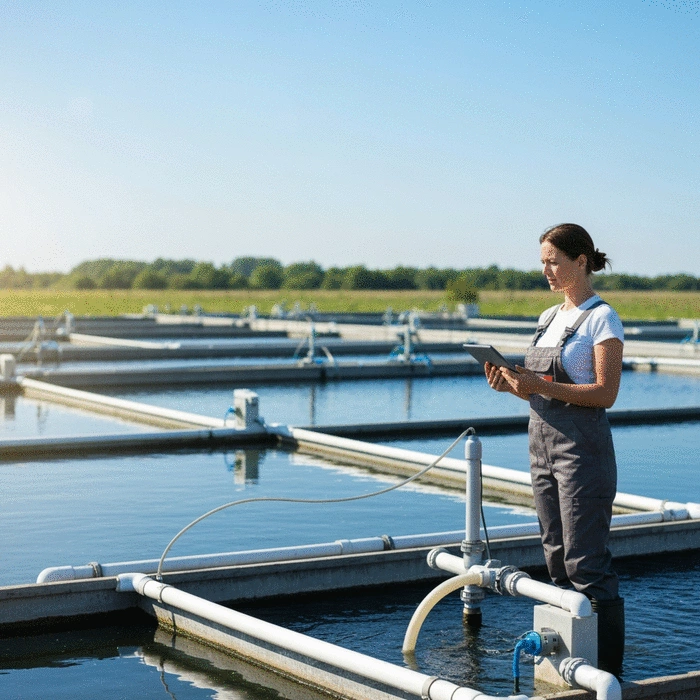
Market demands are also driving technological adoption. Buyers increasingly want traceability, consistent quality, and reliable supply schedules. You can't meet these requirements with entirely manual systems. The farmers who understand this early are positioning themselves for premium market access.
Your challenge isn't deciding whether to adopt technology—it's determining which technologies align with your specific situation, market demands, and growth objectives. The farmers who get this decision right are building sustainable competitive advantages that compound over multiple production cycles. Proper market research for fish farming helps you identify which technologies your target customers value most.
| Key Points | Details |
|---|---|
| Complexity of Aquaculture Technology | Technology goes beyond simple gadgets; integrated systems optimise production. |
| Automation Benefits | Automation reduces labour by up to 60% and improves feed conversion ratios. |
| Local Adaptation | Local suppliers are creating affordable technologies tailored to African conditions. |
| Lean Production Systems | Focus on minimising waste and maximising productivity for better profitability. |
| Training Importance | Proper training enhances technology utilisation and improves farm performance. |
| Recirculating Aquaculture Systems (RAS) | RAS offers water savings and better growth conditions for fish. |
| Market Adaptation | Farmers are combining local knowledge with technology to meet market demands. |
| Data-Driven Metrics | Tracking KPIs enhances decision-making and operational efficiency. |
Why You Should Care About Lean Production Systems in Aquaculture
You need to understand that traditional fish farming practices can be rife with waste. Many farmers overlook aspects that drain resources—time, money, and fish health. Lean production systems focus on minimising waste while maximising productivity.
When you incorporate lean principles, you're not just streamlining operations but also enhancing your bottom line. This approach can help you identify inefficiencies that may be costing you dearly over time.
Think about your current practices. Are you manually overfeeding, or are your resources being wasted on unnecessary inputs? You might be surprised by the hidden costs associated with operational inefficiencies.
Here are some common areas where waste occurs: overfeeding through inconsistent feeding habits leads to excess feed waste, poor water quality management from irregular monitoring can result in health issues and losses, and labour inefficiencies from manual processes consume time that could be used more productively.
Key Information
By adopting a lean approach, you can significantly reduce waste in your operations:
- Identify and eliminate overfeeding practices.
- Implement continuous monitoring of water quality.
- Automate labour-intensive tasks to free up time.
A fish farmer in Benin City adopted lean production methods, focusing on optimising feed distribution and reducing labour hours. By using automatic feeders, he reduced his daily feeding time from three hours to just 30 minutes, allowing him to focus on other important tasks.
This shift also improved his feed conversion ratio significantly, resulting in higher profits. You can achieve similar results by assessing your current methods and identifying areas for improvement. Implementing fish farming techniques for entrepreneurs can help you systematically identify and eliminate waste in your operations.
You want to look at strategies that can help streamline your operations: embrace automation by investing in systems that manage feeding and monitoring, focus on continuous improvement by regularly assessing processes and making necessary adjustments, and emphasise quality control by monitoring fish health and growth consistently.
You can start small by evaluating your current practices and determining where you can implement lean principles. By focusing on efficiency, you're not just saving costs; you're building a more sustainable and profitable fish farming operation.
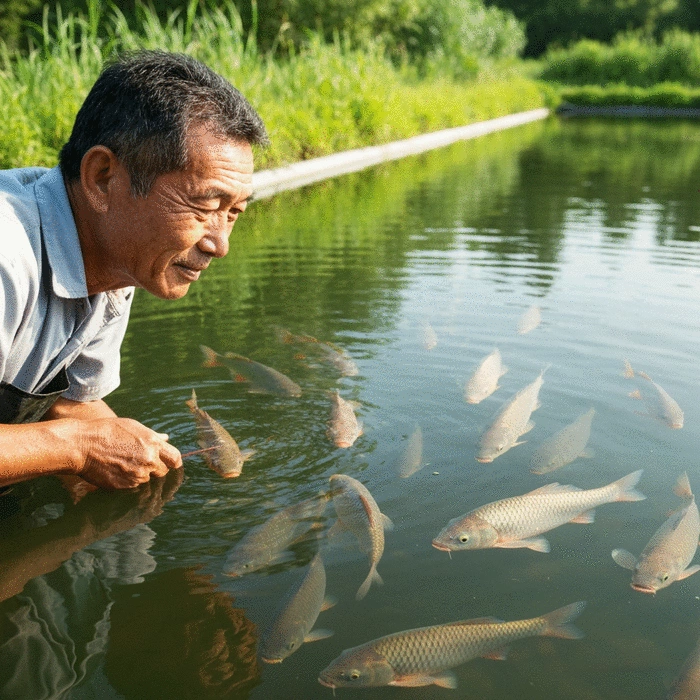
Lean production aligns closely with sustainable agriculture. By minimising waste, you're also reducing the environmental impact of your farm. This approach fosters a healthier ecosystem while ensuring that you meet the growing demand for sustainable fish products.
When you adopt lean practices, you enhance both your operational efficiency and your commitment to environmental sustainability. This dual focus can set you apart in a competitive market.
What You Need to Know About Recirculating Aquaculture Systems (RAS)
You might have heard about Recirculating Aquaculture Systems (RAS) but dismissed them as complex or costly. However, this technology has the potential to transform your fish farming operations, particularly concerning water savings and environmental sustainability.
You need to understand the benefits and how ignoring this technology may limit your production capabilities.
Overlooking RAS technology can result in several setbacks: higher water usage as traditional systems can waste significant amounts of water, inconsistent growth conditions because manual systems often fail to provide optimal conditions, and lower market competitiveness since farmers using RAS can better meet market demands for sustainability.
If you disregard RAS, you could miss out on the opportunity to produce high-quality fish while conserving vital resources.
A farmer in Kisumu implemented RAS after struggling with water quality issues in his traditional pond system. The shift not only saved water but also improved fish health and growth rates.
Within a year, his production increased by 40%, positioning him favourably in the market. You can replicate this success by evaluating your current set-up and considering whether RAS is right for you.
RAS allows smallholders to maintain control over water quality and fish health, leading to better yields. By using smaller, more efficient systems, you're not locked into large capital investments. Instead, you can start with manageable setups and scale gradually.
It's essential to weigh the initial costs of RAS against long-term benefits. Many farmers find that the upfront investment is quickly offset by savings in water and improved production efficiency.
You need to seek out local suppliers who can provide affordable RAS solutions tailored to your needs. Collaborative efforts or partnerships may also help mitigate costs.
With increasing pressure on water resources, RAS offers a practical solution. You can produce fish sustainably while conserving water. This method not only meets market demands but also enhances your farm's environmental credentials.
As consumers become more environmentally conscious, you'll find that adopting sustainable practices like RAS can attract premium prices for your fish products.
What Happens When Training and Capacity Building Are Ignored?
You may believe that simply investing in equipment will solve your problems, but without proper training, you risk underutilising your technology. Capacity building is essential for maximising the benefits of any new systems you adopt.
By ignoring training, you could find yourself facing avoidable challenges that hinder productivity and profitability.
When farmers lack training, they may struggle with technological misuse where underutilising equipment leads to poor performance, water management issues as poor water quality can threaten fish health, and operational inefficiencies since without proper knowledge, processes remain labour-intensive.
These issues can cause reduced output and lower profit margins. You need to address these gaps proactively.
Consider the training programme initiated in Uganda, where farmers learned about effective aquaculture practices. Participants reported a 30% increase in yields within the first year, significantly boosting their profitability.
You can look for similar opportunities in your region, either through local agricultural organisations or online resources tailored to your needs.
Farmers in Tanzania who participated in training sessions on fish nutrition and water quality management noted substantial improvements. They realised that knowledge is just as crucial as technology in achieving better results.
You need to invest time in training to ensure you're making the most of your resources.
A farmer in Zambia who attended workshops on RAS technology improved his production practices. He successfully transitioned to a recirculating system, enhancing his farm's sustainability and profitability.
You can learn from these examples and seek out training opportunities that suit your operational context.
Empowering farmers through education creates a ripple effect in the community. As more farmers adopt efficient practices, the overall industry benefits, leading to greater market stability and improved fish quality.
You should advocate for training initiatives in your area, as this can uplift not just your farm but also those around you.
Are You Prepared for the Challenges of Sustainability and Scalability?
You may want to grow your fish farming business, but are you truly prepared for the challenges that come with sustainability and scalability? Understanding the barriers can help you navigate them more effectively.
You need to consider both financial and policy-related factors that can impact your expansion plans.
You face several barriers that could hinder your progress: financial constraints where you need to be ready to invest in necessary technology, and policy gaps concerning what regulations affect your ability to adopt new systems.
By identifying these barriers, you can work on strategies to overcome them.
Many farmers hesitate to invest, fearing high initial costs. You should evaluate the potential return on investment (ROI) from new technologies. Calculate how improvements might increase your yields and profits.
Engage with local authorities to understand the policy landscape. Advocate for better support for aquaculture, such as subsidies or grants for technology adoption. This support can make a significant difference in your ability to scale effectively.
You should explore opportunities for public-private partnerships that can facilitate access to technology and training. Collaborating with organisations focused on sustainable aquaculture can provide resources and expertise to help you succeed.
By leveraging these partnerships, you can enhance your capacity and drive growth in your fish farming operations.
What Happens When You Fail to Address Automation Content Gaps?
You may not realise that overlooking automation content gaps can have serious repercussions. Staying updated on innovations is crucial for maintaining competitiveness in the aquaculture industry.
You need to actively seek out information on new technologies and practices to avoid falling behind.
Inadequate knowledge about disease management can devastate your stock. You should keep informed about the latest innovations and technologies in disease control. Failure to do so can result in significant losses.
Regular attendance at workshops and conferences can help you stay abreast of important developments.
When choosing equipment or practices, it's essential to conduct thorough comparisons. Consider the long-term implications of your decisions: demand feeders vs. automatic feeders and their efficiency gains, and RAS vs. traditional pond systems to determine which system aligns better with your goals.
You need to weigh these options carefully to make informed decisions that will benefit your farm.
Demand feeders can optimise feed distribution, reducing waste compared to manual feeding. You need to evaluate which system offers the best return in your context.
While traditional systems may seem familiar, RAS offers significant advantages in terms of water conservation and disease management. You should carefully assess the trade-offs before making a decision.
A farmer in Nigeria ignored the potential of automated systems, relying solely on manual processes. Over time, this decision led to reduced productivity and ultimately, financial losses.
You need to learn from these experiences and strive to embrace innovation before it's too late.
How Data-Driven Metrics Are Shaping the Future of Aquaculture
You should be aware that data-driven metrics can significantly enhance your decision-making process. Understanding key performance indicators (KPIs) will help you monitor your farm's efficiency and profitability.
You need to track the right metrics to gain valuable insights into your operations.
Focus on measuring feed conversion ratio which is essential for determining efficiency, growth rates to monitor how quickly your fish reach market size, and mortality rates where lower rates indicate better management practices.
These metrics can guide your operational adjustments and improve overall performance.
Calculate your return on investment by tracking initial costs including investments in technology and equipment, ongoing expenses such as regular costs associated with production, and profit margins representing your earnings relative to costs.
By keeping a close eye on these numbers, you can make informed decisions that enhance your profitability.
Consider the case of a fish farmer in South Africa who adopted data-driven practices. By tracking key metrics, he improved his feed conversion ratio from 2.0:1 to 1.5:1 over several cycles, boosting his profitability significantly.
You can achieve similar results by committing to data-driven decision-making in your own operations.
Where Do You Go From Here? The Future of Aquaculture in Africa
You stand at a crossroads in your fish farming journey. The choices you make now will shape your business's future. Embracing new technologies and practices will be crucial for your success.
You need to start planning your next steps carefully.
Stay informed about emerging technologies in aquaculture. Innovations such as smart monitoring systems and advanced breeding techniques can provide competitive advantages.
You should actively seek opportunities to integrate these advancements into your operations.
Engage with policymakers to ensure that your needs as a fish farmer are considered. Push for supportive regulations that facilitate technology adoption and training initiatives.
You can make your voice heard, helping to shape a more supportive environment for aquaculture development.
Recognise that technology is not merely an option; it's a necessity. As markets evolve and demand for sustainable practices grows, you need to keep pace with technological advancements to remain competitive.
You should embrace change, leveraging technology to enhance your operational efficiency and profitability.
What Happens When You Overlook Automation in Your Fish Farming Business?
You wake up at 4 AM to feed your fish, then return at noon, then again at 6 PM. Every single day. You test water quality manually, hoping you catch problems before they kill your stock. You're working harder than any employee you could hire, yet your profit margins remain thin. This is what happens when you treat fish farming like it's still 1990.
Most African fish farmers resist automation because they think it's too expensive or too complicated for their operations. They continue with manual feeding schedules, visual water quality assessments, and reactive management approaches. Meanwhile, their competitors who embrace even basic automation are producing more fish with less labour, achieving better feed conversion ratios, and sleeping through the night.
Your manual feeding routine costs you more than just time. When you feed by hand, you're guessing at quantities, timing, and distribution patterns. Fish in one corner of your pond might get twice the feed while others go hungry. This uneven feeding creates size variations that reduce your market value—buyers pay premium prices for uniform fish, not mixed sizes.
Consider the mathematics of manual water testing. You test pH and dissolved oxygen once daily, maybe twice if you're diligent. But water quality changes throughout the day, especially during hot seasons or when fish density increases. By the time you notice problems through visual observation—fish gasping at the surface, reduced feeding activity—you've already lost days of optimal growth conditions.
Hidden Costs of Manual Operations
Manual processes create expenses you might not calculate:
- Labour costs: 3-4 hours daily for feeding and monitoring
- Feed waste: 15-20% overconsumption from inconsistent portions
- Growth delays: 2-3 weeks longer production cycles
- Mortality losses: 5-10% higher death rates from delayed problem detection
- Size variations: 20-30% price reduction for non-uniform fish
The labour trap becomes obvious when you calculate hourly wages. If you're spending four hours daily on feeding and monitoring, that's 120 hours monthly. Even at modest wage rates, you're investing significant labour costs that automation could eliminate while improving results.
You need to understand what's possible when farmers stop doing everything manually. The transformation isn't just about installing equipment—it's about fundamentally changing how fish farming operates as a business.
A farmer in Kumasi installed demand feeders in his tilapia ponds after struggling with inconsistent growth rates. Previously, his manual feeding schedule meant fish went 12-14 hours without food overnight, then received large meals that many couldn't consume efficiently. Feed conversion ratios hovered around 2.2:1—acceptable but not competitive.
The automated system allowed fish to trigger feeding when hungry, distributing smaller portions throughout the day. Within two production cycles, his feed conversion improved to 1.6:1. More importantly, harvest weights became predictable. Instead of fish ranging from 300g to 800g, 85% of his harvest fell between 450g and 550g—exactly the size local restaurants preferred.
| Metric | Manual Feeding | Automated System |
|---|---|---|
| Feed Conversion Ratio | 2.2:1 | 1.6:1 |
| Size Uniformity | 60% within target range | 85% within target range |
| Daily Labour Hours | 4 hours | 1 hour |
| Production Cycle | 7 months | 5.5 months |
The financial impact extended beyond feed savings. Shorter production cycles meant he could complete two harvests annually instead of 1.5, effectively increasing his annual production capacity by 33% using the same pond space.
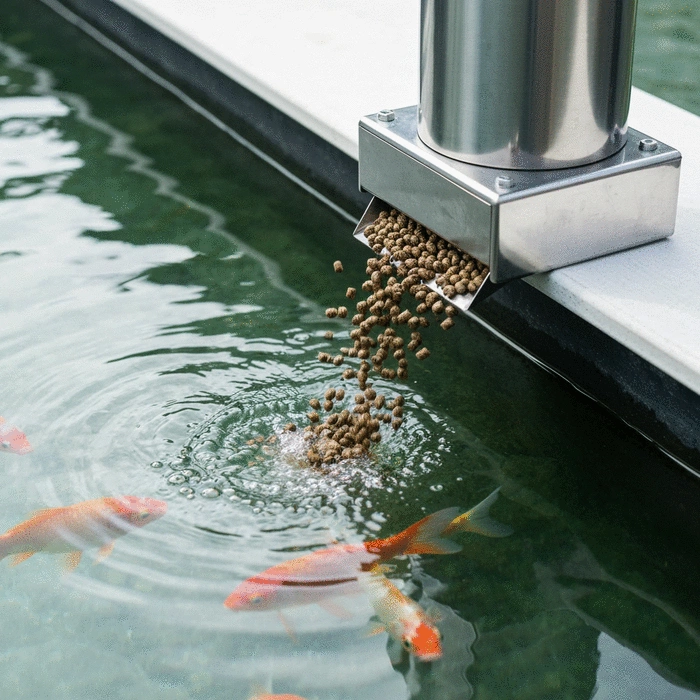
Water quality automation reveals problems you never knew existed. A catfish farmer in Lagos installed continuous monitoring systems after experiencing unexplained mortality events that cost him 200,000 naira in lost stock. The manual testing routine—checking parameters twice daily—missed critical overnight fluctuations.
The automated monitoring revealed that dissolved oxygen levels dropped dangerously low between 2 AM and 5 AM, especially during cloudy weather when photosynthesis decreased. His fish were experiencing chronic stress that weakened immune systems and reduced growth rates. Manual testing at 8 AM and 6 PM never detected these overnight crashes.
With automated aeration triggered by oxygen sensors, mortality rates dropped from 8% to under 2% per cycle. More significantly, growth rates increased because fish weren't wasting energy coping with stress. What previously required 6.5 months to reach market size now took 5.5 months.
You probably believe automation requires massive capital investment and technical expertise you don't possess. These misconceptions keep profitable farmers stuck in labour-intensive routines while their competitors gain advantages through basic automation.
The "too expensive" myth ignores the mathematics of labour costs and efficiency gains. A simple automated feeder costs less than three months of hired labour for manual feeding. The payback period typically ranges from 6-12 months through feed savings alone, before calculating labour cost reductions and improved growth rates.
Automation Myths vs Reality
Common misconceptions that limit adoption:
- Myth: "Too complex for small farms" - Reality: Basic systems require minimal technical knowledge
- Myth: "Only for large commercial operations" - Reality: Small-scale solutions exist for every budget
- Myth: "Eliminates jobs" - Reality: Shifts labour from routine tasks to management and expansion
- Myth: "Unreliable in African conditions" - Reality: Modern systems designed for challenging environments
The "too complicated" excuse often masks fear of change rather than actual technical barriers. Most automated feeding systems operate with simple timers and portion controls. Water quality monitors display readings digitally. You don't need engineering degrees to operate equipment designed for farmers, not technicians.
The real barrier isn't cost or complexity—it's the mindset that fish farming must remain labour-intensive to be authentic or affordable. This thinking keeps farmers trapped in low-margin operations while automated competitors capture premium markets through consistent quality and efficient production.
Closing Thoughts
You've explored the crucial role aquaculture technology and automation play in improving fish production efficiency in Africa. Understanding these elements is vital for your success.
The choice now lies with you: will you embrace innovation and drive your fish farming business towards sustainability and profitability? Make the decision to invest in your future, and you'll find that the path to success is within your grasp.
Frequently Asked Questions
What is the minimum investment needed to start automating my fish farm?
You can begin with basic automation for as little as 50,000-200,000 naira, starting with timer-controlled feeders and simple aeration systems. The key is to start small and gradually expand your automation as you see returns on your initial investment.
How do I know if RAS technology is suitable for my small-scale operation?
RAS works well for small-scale operations if you face water scarcity issues, want better control over fish health, or need to maximise production in limited space. Consider your local water costs, available space, and target market requirements when evaluating RAS suitability.
What are the most critical metrics I should track to improve my farm's efficiency?
Focus on feed conversion ratio (should be below 1.8:1 for most species), mortality rates (aim for under 5%), growth rates, and daily labour hours. These metrics directly impact your profitability and help identify areas for improvement.
How can I access training on modern aquaculture technologies in my area?
Look for programmes offered by agricultural extension services, local universities, aquaculture associations, and NGOs focused on fish farming. Many organisations also offer online training modules specifically designed for African fish farmers.
What should I prioritise first: automation equipment or training?
You should prioritise training first, as proper knowledge ensures you select the right equipment and use it effectively. Without adequate training, even the best automation equipment may be underutilised or misused, reducing your return on investment.

Yomi Adisa
Yomi Adisa is the lead researcher at Fish Farming Business, where he studies what makes aquaculture ventures profitable across Africa. His research focuses on market patterns, buyer preferences, and the business decisions that determine success or failure in fish farming.