
Fish Farming Techniques for Entrepreneurs

Posted on: 2025-10-18
By: Kwame Adom
Three fish farmers in Lagos started within the same month. Same pond size, same species, same location. Six months later, one had harvested 800kg and was taking orders for the next cycle. Another managed 450kg and barely broke even. The third lost 60% of his stock to poor water quality and gave up. They all worked hard. They all fed their fish. So what separated the winner from the ones who struggled?
Table of Contents
It wasn't luck. It was technique—the specific methods and practices that turn effort into results. In fish farming, the difference between profit and loss often comes down to how you do things, not just what you do.
Why Technique Matters More Than You Think
You want to understand this upfront: fish farming isn't just about building ponds and throwing in fingerlings.
The techniques you use—how you stock, feed, manage water, and handle growth—determine whether you're farming profitably or just keeping expensive pets.
I've watched farmers in Ogun State operate identical concrete tanks. One consistently produces 25% more fish per cycle than his neighbour. Same water source, same fingerling supplier, similar feed brands. The difference? His feeding schedule accounts for temperature fluctuations.
He adjusts portions based on observed feeding behaviour rather than following a rigid formula. He monitors dissolved oxygen at strategic times and knows exactly when to increase aeration.
These aren't secrets. They're techniques—learnable, replicable methods that separate effective farmers from those who struggle.
The challenge is that many farmers don't realise which techniques matter most for their specific situation. They copy what they see others doing without understanding why those methods work or whether they're appropriate for different scales or species.
The Business Impact of Technical Choices
Every technical decision has financial consequences. Stock too densely and you'll spend more on aeration and risk disease outbreaks that wipe out your investment. Stock too sparsely and you're not maximising the productive capacity you've already paid for. Feed aggressively and you might achieve faster growth—but if that growth doesn't translate to premium pricing, you've just inflated your costs. Feed conservatively and you extend your production cycle, tying up capital longer and potentially missing market windows.
A catfish farmer in Ibadan learned this the hard way. He read that high-protein feed accelerates growth, so he invested in premium 45% protein feed at ₦18,000 per 15kg bag.
His fish did grow faster—reaching 1kg in 4.5 months instead of 5.5 months. But when he calculated his actual profit, he discovered he'd spent ₦720,000 on feed to produce 800kg of fish that sold for ₦2,000/kg (₦1,600,000 revenue).
His neighbour, using standard 35% protein feed at ₦12,000 per bag, took longer but spent only ₦480,000 on feed for 750kg of fish—achieving better margins despite lower volumes.
Neither approach was wrong. But the first farmer hadn't chosen his technique based on his market reality. His buyers didn't pay premiums for faster-grown fish. He needed the technique that optimised for cost-per-kilogramme, not speed. Understanding how different techniques align with your business model matters as much as mastering the techniques themselves.
Stocking Density: The Foundation Decision
Before you feed a single fish, you make a decision that shapes everything else: how many fish per cubic metre of water. This isn't just a production question—it's a business strategy question. Your stocking density determines your capital intensity, risk profile, labour requirements, and profit potential.
The Density-Intensity Trade-off
Stock 10 catfish fingerlings per square metre in an earthen pond and you're practising extensive aquaculture. Your fish grow well with minimal intervention. Water quality remains stable. Disease risk is low. But you're producing maybe 2-3 tonnes per hectare per cycle—good for food security, not necessarily optimal for commercial returns. Your land is productive, but probably not as productive as it could be.
Increase that to 25-30 fingerlings per square metre—still in ponds—and you've moved to semi-intensive culture. Now you need better feeding practices, possibly supplemental aeration, more frequent water quality monitoring. Your production might reach 5-8 tonnes per hectare. You're using the same land more intensively, but with correspondingly higher input costs and management demands.
Move into concrete tanks at 100-150 fish per cubic metre and you're in intensive aquaculture territory. Production per unit area is dramatically higher—you might produce 50kg from a small 3m × 3m tank. But now you need constant aeration, careful waste management, precise feeding, and rigorous water quality control. One equipment failure or management mistake can cost you the entire stock.
What This Means for You
Higher stocking densities offer higher returns per square metre—but also higher risk and higher capital requirements. Most successful commercial operations in Nigeria and Kenya operate in the semi-intensive range (20-40 fish/m² in ponds, 50-80/m³ in tanks). This sweet spot balances productivity with manageable risk. The farmers who push into truly intensive systems usually have years of experience, reliable infrastructure, and markets that justify the extra investment.
A tilapia farmer near Kisumu experimented with density levels across five identical ponds. At 15 fish/m², he harvested 650kg per pond with minimal issues. At 25 fish/m², he reached 950kg but needed supplemental aeration during hot months. At 35 fish/m², he achieved 1,150kg but faced recurring water quality challenges that required constant attention. His most profitable pond? The one stocked at 25 fish/m²—not the highest yield, but the best return on labour and input costs.
You want to match your stocking density to your actual management capacity and market access, not to theoretical maximum production. The techniques for managing high-density systems are well-documented, but your ability to implement them consistently matters more than knowing they exist. Understanding the different fish farming systems available helps you choose the approach that matches your operational capabilities.
Feeding Strategies That Affect Your Bottom Line
Feed represents 60-70% of your operating costs in commercial fish farming. How you feed—not just what you feed—directly determines whether those costs generate adequate returns. Yet I've watched farmers treat feeding as a simple daily chore rather than a strategic management activity.
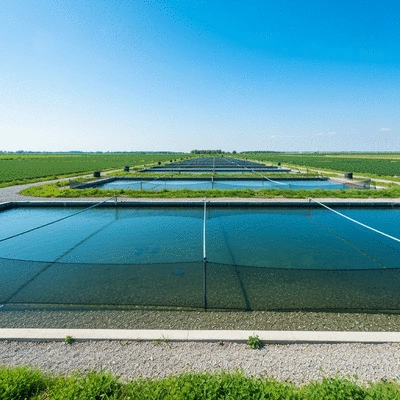
Fixed Schedule vs Demand-Based Feeding
Many beginners feed on rigid schedules: 3% of body weight daily, divided into three meals at 9am, 1pm, and 5pm. It's simple. It's consistent. And it's probably costing you money.
Fish don't eat the same amount every day. Weather affects appetite—catfish feed less on cold mornings. Growth stage matters—fingerlings need more frequent feeding than near-market fish. Water quality influences consumption—fish in stressed conditions won't feed normally.
A more profitable approach involves demand-based feeding. You observe your fish's feeding behaviour. When they consume their ration within 10-15 minutes, eagerly breaking the surface, you know appetite is strong.
When feed remains uneaten after 20 minutes, you're overfeeding—wasting money and degrading water quality. Adjusting portions based on actual consumption rather than formulas can reduce feed waste by 15-20% whilst maintaining or even improving growth rates.
One farmer in Abeokuta tracks his feed conversion ratio (FCR) weekly. He weighs sample fish every week and calculates how many kilograms of feed it takes to produce one kilogramme of growth. When his FCR climbs above 1.5:1 for catfish, he knows something's wrong—either water quality issues, disease stress, or feed quality problems. He adjusts immediately rather than continuing to throw expensive feed at fish that aren't converting it efficiently.
The Protein Content Decision
Walk into any feed shop and you'll see options ranging from 28% protein to 45% protein, with prices varying accordingly. Beginners often assume higher protein means faster growth and better results. Sometimes yes. Sometimes no.
High-protein feeds (42-45%) accelerate growth in the early stages when fingerlings are developing rapidly. Using them throughout the entire cycle, however, often represents poor economics. Once fish reach 200-300g, their protein requirements decrease. Feeding expensive high-protein feed to near-market fish wastes money—they don't need it for maintenance and slower growth at that stage.
Smart farmers use protein strategically: high-protein starter feeds for fingerlings, moderate-protein grower feeds (35-38%) for the middle period, and sometimes even lower-protein finisher feeds for the last 4-6 weeks. This approach optimises both growth rates and feed costs.
The specific formulation depends on your target market—if you're selling by weight to processors who don't pay premiums for larger fish, your feeding strategy should focus entirely on cost-per-kilogramme rather than maximum growth speed.
Water Management Techniques
Water quality determines whether your fish thrive or merely survive. Poor water management is the silent profit killer—it doesn't announce itself dramatically like disease outbreaks, but it consistently reduces growth rates, increases disease susceptibility, and extends production cycles. All of which hurt your returns.
The Parameters That Actually Matter
You'll read about dozens of water quality parameters—pH, dissolved oxygen, ammonia, nitrite, nitrate, temperature, hardness, alkalinity, and more. As a practical farmer, you need to focus on the ones that actually affect your profitability.
Dissolved oxygen (DO) is your priority. Fish need oxygen to breathe, grow, and convert feed efficiently. When DO drops below 4-5 mg/L (parts per million), catfish growth slows. Below 3 mg/L, they stop feeding and gasp at the surface. Extended periods of low oxygen stress fish, making them susceptible to disease and poor feed conversion. Yet measuring DO consistently remains one of the most neglected practices I see across African fish farms.
A farmer near Nakuru invested ₦180,000 in a dissolved oxygen meter and probes. Within two months, he identified that his DO crashed every night, dropping to 2.5 mg/L by 5am before sunrise. He'd been feeding at 8am, wondering why his fish showed poor appetite in the mornings. Now he runs paddle-wheel aerators for three hours before sunrise during warmer months. His FCR improved from 1.7:1 to 1.4:1—that improvement alone recovered his meter cost in one cycle through reduced feed waste.
Water Exchange vs Water Conservation
Traditional pond farming relied on flow-through systems—continuously adding fresh water whilst draining old water. This works beautifully if you have abundant, reliable water. But in much of Africa, water is scarce or expensive to pump. The technique that works depends entirely on your water situation.
If water is limited, you want techniques that minimise water use whilst maintaining quality. This might mean settling tanks to remove solids before returning water to ponds, biological filters to convert ammonia, or constructed wetlands that naturally clean water before discharge. A farmer in Limpopo reduced his water needs by 70% using a simple settling tank and biofilter system—crucial given his borehole's limited yield.
If water is abundant, you might optimise for simplicity rather than conservation. Frequent partial water exchanges (replacing 10-20% daily) dilute waste products and maintain quality with minimal equipment. The technique that's "best" depends on your resources, not on abstract principles.
Growth Optimization Methods
Beyond feeding and water management, several techniques influence how quickly and efficiently your fish reach market size. These aren't magic solutions, but they're the practical methods that separate consistent performers from those who struggle with extended production cycles and poor returns.
Size Grading and Segregation
Stock 1,000 fingerlings in a pond and within weeks, you'll notice size variation. Some fish grow faster, becoming dominant. They get to the feed first, eat more, grow even faster. The smaller fish get pushed aside, receiving less food, growing slower. Left unchecked, this size variation expands—after four months, you might have fish ranging from 300g to 900g in the same pond.
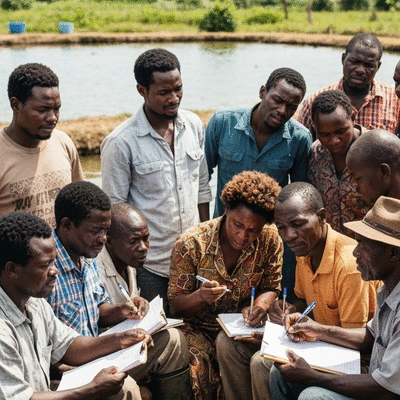
This creates business problems. You can't harvest efficiently—half your fish are market-ready whilst the other half need another month. You're feeding at rates suitable for 600g fish, but that's too much for the small ones (waste) and not enough for the large ones (slowed growth).
Your market wants uniform sizes; you're delivering mixed lots that might fetch lower prices.
Size grading addresses this. At 6-8 weeks, you seine the pond, sort fish into two or three size classes, and stock each group separately. Now each pond contains similar-sized fish. You can feed appropriately for their size, and they reach market weight at roughly the same time. This allows efficient, complete harvests and consistent product quality.
The technique isn't free—grading takes labour and temporarily stresses fish. But farmers who grade consistently report 15-20% improvements in overall growth rates and significantly easier harvest management. A commercial operation in Ghana grades every batch at 8 weeks and 14 weeks, considering it essential to maintaining the uniformity their wholesale buyers demand.
Environmental Enhancement Techniques
Temperature management represents another profit opportunity in regions with significant seasonal temperature variation. Catfish grow optimally at 28-30°C. In cooler months, when temperature drops to 20-22°C, growth slows by 30-40%. If your production cycle spans both warm and cool seasons, those cool months dramatically extend your time-to-harvest.
Some farmers use simple greenhouse covers over tanks or small ponds during cool periods, elevating water temperature by 3-5°C through solar heating. Others position tanks in sheltered locations that retain warmth. These aren't sophisticated techniques, but they can shorten production cycles by several weeks—weeks during which you're not spending money on feed and labour without generating revenue.
Water depth also influences temperature stability. Deeper ponds (1.5-2m) maintain more stable temperatures than shallow ones (0.8-1m), experiencing less dramatic daily fluctuations. This stability supports more consistent feeding and growth. The tradeoff? Deeper ponds cost more to excavate and are more difficult to harvest completely. Again, the "right" technique depends on your specific circumstances and priorities.
Choosing Techniques for Your Situation
This is where many farmers stumble. They learn about various techniques—intensive stocking, demand-based feeding, automated systems, water recirculation—and try to implement everything simultaneously. Or they stick rigidly to one approach because "that's how it's done" in their region, never questioning whether it's optimal for their situation.
Effective fish farming techniques aren't one-size-fits-all solutions. They're tools, and like any tools, their value depends on the job and the person using them. A sophisticated RAS system is magnificent if you have reliable electricity, technical expertise, and markets that justify the investment. It's a disaster if you're in a rural area with frequent power outages and limited technical support.
Simple pond culture with modest stocking densities might seem primitive to some, but it's highly profitable if you have abundant land, reliable water, and markets that absorb your production.
The Decision Framework
Start by understanding your constraints. What do you actually have reliable access to? Good quality water in limited quantities suggests water-conserving techniques. Abundant cheap labour but limited capital favours less mechanised approaches. Expensive land in urban areas pushes you toward intensive systems that maximise production per square metre.
Consider your markets. Are you selling to wholesalers who buy large uniform lots and pay modest prices? Your techniques should optimise for volume and cost-per-kilogramme. Are you selling direct to consumers or restaurants who'll pay premiums for freshness and quality? You can justify techniques that produce better fish at higher costs. Before you invest heavily in production techniques, make sure you understand your market dynamics thoroughly.
Match techniques to your management capacity. A feeding regime that requires observations three times daily only works if you or reliable staff will actually be present three times daily. Sophisticated water quality monitoring helps only if you understand the data and know how to respond. The best technique is the one you can implement consistently, not the one that sounds most impressive.
The Reality Check
I've seen beautiful fish farms with all the latest techniques—automated feeders, sophisticated aeration, advanced monitoring systems—that struggle to break even. And I've seen simple pond operations using basic techniques that consistently generate healthy profits.
The difference isn't the sophistication of the techniques. It's whether the techniques match the farm's actual situation and whether they're implemented consistently and well. Master the fundamentals first, then add complexity only where it demonstrably improves your specific business outcomes.
The Implementation Challenge
Knowing about techniques and actually implementing them consistently are very different things. I can explain demand-based feeding in five minutes. Actually observing your fish carefully every day, adjusting portions based on what you see rather than what the formula says, recording results, and learning from patterns—that takes discipline and attention over months.
This is why visiting successful farms in your region matters so much. You're not there to copy their techniques blindly. You're there to see how they actually implement those techniques day-to-day. How do they handle feeding on a busy morning when staff are late? What do they do when water quality starts deteriorating? How do they manage the tedious consistency that separates successful farming from struggling through cycles?
The techniques themselves are fairly straightforward. The challenge is building the systems and habits that let you apply them reliably over the 4-6 months of a production cycle, across multiple cycles, through the inevitable disruptions and challenges. That's where the real skill lies, and it's developed through practice, not just reading. Understanding how to structure your operations systematically helps you implement techniques consistently rather than sporadically.
Moving Forward With Effective Techniques
Fish farming techniques determine whether your farm thrives or merely survives. But they're not mysterious secrets or complex innovations beyond reach. They're practical methods—choices about stocking, feeding, water management, and growth optimization—that you implement consistently based on your specific situation.
The farmers who succeed aren't necessarily using the most advanced techniques. They're using appropriate techniques matched to their resources, markets, and management capacity. They understand why they're doing what they're doing, not just following instructions they've heard. They pay attention to results, adjusting their methods based on what works in their specific context rather than rigidly following generic advice.
You want to start by mastering the fundamentals. Get good at stocking decisions that match your management capacity. Develop feeding practices that optimise cost and growth for your situation. Build water management routines that maintain quality consistently. Observe your fish, measure results, and learn from each cycle. These aren't glamorous techniques, but they're the foundation of profitable operations.
As you gain experience and proven profitability, you can explore more sophisticated approaches. But sophistication for its own sake rarely improves business outcomes. The goal isn't to use every technique available—it's to use the right techniques for your situation, implemented well, consistently producing the results that make your fish farming venture sustainably profitable.
That's the real technique that matters most: matching method to reality and executing consistently. Everything else is detail.
Key Takeaways
- Technique matters more than equipment: How you farm determines results more than what infrastructure you have.
- Stocking density shapes your business model: Higher densities offer higher returns but require proportionally higher management capacity and risk tolerance.
- Feeding is strategic, not routine: Feed represents 60-70% of costs; demand-based approaches typically outperform rigid schedules.
- Water quality enables growth: Consistent monitoring and management of dissolved oxygen prevents the silent profit losses from poor conditions.
- Match techniques to your constraints: The best technique for your situation depends on your water access, capital, labour, markets, and management capacity—not on what sounds most advanced.
- Implementation beats knowledge: Knowing about techniques matters less than building systems that let you apply them consistently over complete production cycles.
Frequently Asked Questions About Fish Farming Techniques
What stocking density should I use for catfish in earthen ponds?
Most profitable commercial operations in Nigeria and Kenya use semi-intensive stocking densities of 20-40 catfish per square metre in earthen ponds. This range balances productivity with manageable risk and input costs. Beginners should start at the lower end (20-25/m²) and increase density only after demonstrating consistent management success. Higher densities require proportionally more sophisticated water quality management and feeding precision.
How can I improve my feed conversion ratio?
Improving FCR requires addressing multiple factors: ensure dissolved oxygen stays above 5 mg/L throughout the day (low DO dramatically worsens FCR), feed based on observed demand rather than fixed formulas to prevent waste, maintain optimal water temperature for your species, grade fish by size to ensure uniform feeding, and monitor for disease or stress that reduces feed efficiency. Track your FCR weekly—when it deteriorates, investigate and correct the underlying cause immediately.
Should I use high-protein feed throughout the entire production cycle?
No, in most cases. High-protein feeds (42-45%) benefit rapidly growing fingerlings but become economically inefficient for larger fish with slower growth rates. More profitable approach: use high-protein starter feeds until fish reach 150-200g, switch to moderate-protein grower feeds (35-38%) for the mid-cycle, and potentially use lower-protein finisher feeds in the final 4-6 weeks. This matches protein levels to actual requirements, reducing feed costs without sacrificing growth.
What water quality parameters should I monitor regularly?
Priority for commercial farmers: dissolved oxygen (daily, especially early morning), temperature (daily), and pH (weekly). These three parameters have the most direct impact on growth and survival. Ammonia and nitrite become important in intensive systems or if you notice feeding problems or stress. Don't obsess over measuring every possible parameter—focus on the ones that actually affect your profitability and take action when readings indicate problems.
What's more important: sophisticated equipment or good management practices?
Management practices matter far more than equipment sophistication. Simple ponds with consistent feeding schedules, regular water quality monitoring, appropriate stocking densities, and attention to fish behaviour typically outperform sophisticated operations with inconsistent management. Master fundamental techniques first—appropriate stocking, demand-based feeding, basic water quality control—before investing in advanced equipment. Equipment can enhance good management but cannot compensate for poor fundamentals.

Yomi Adisa
Yomi Adisa is the lead researcher at Fish Farming Business, where he studies what makes aquaculture ventures profitable across Africa. His research focuses on market patterns, buyer preferences, and the business decisions that determine success or failure in fish farming.