
Enhancing Feed Management for Growth in African Fish Farms
Posted on: 2025-11-06
By: Yomi Adisa
Optimising feed management is crucial for anyone involved in fish farming, yet many farmers find themselves uncertain about the best practices. Are you confident that your feeding strategies are truly maximising the growth rates of your fish? Ignoring the nuances of feed quality and costs can lead to significant setbacks, impacting both the health of your fish and the profitability of your farm.
In this blog post, we will explore practical techniques to enhance your feed management processes. From sourcing local ingredients to understanding the nutritional needs of your fish, you'll discover how thoughtful adjustments can lead to better outcomes. Join us as we unravel the complexities of feed management and provide you with insights that can help drive success in your fish farming venture.
What You Will Learn
- How to identify and select quality feed that meets your fish's nutritional needs.
- Strategies for sourcing local ingredients to reduce feed costs and improve growth rates.
- The importance of establishing a consistent feeding schedule for optimal fish health.
- Techniques for evaluating feed quality and performance before purchase.
- How to implement split feeding practices to enhance feed utilisation and growth.
- Effective ways to monitor and manage feed waste to improve profitability.
Why Does Feed Management Leave You Guessing?
You walk to your pond expecting to see healthy, growing fish. Instead, you find sluggish catfish barely responding to feeding time, their growth rates far below what you projected. Your feed costs are climbing, but your fish aren't gaining weight proportionally.
This scenario plays out across fish farms from Lagos to Kumasi, where farmers struggle with feed management decisions that directly impact their bottom line. Most farmers approach feeding like a daily chore rather than a strategic business decision.
You scatter pellets at roughly the same time each day, estimate quantities by eye, and hope for the best. Meanwhile, your feed conversion ratio—the amount of feed needed to produce one kilogram of fish—creeps higher each month, eating into profits you counted on. Understanding common fish farming mistakes can help you avoid these costly errors.
The difference between profitable farms and struggling ones often comes down to feed management precision. You need to understand not just what to feed, but when, how much, and why each decision matters to your specific operation.
The Consequences of Ignoring Feed Quality
You purchase 50 bags of fish feed at 8,500 naira per bag, thinking you've secured a good deal. Three weeks later, your fish show poor growth rates, and some develop health issues that require expensive treatments. A farmer in Ogun State faced exactly this situation when he chose cheaper feed without examining protein content or storage conditions.
Poor feed quality creates a cascade of problems you might not immediately connect to your feeding choices. Your fish require more feed to achieve the same weight gain, extending your production cycle and increasing costs. Weak fish become susceptible to diseases, leading to mortality rates that can devastate months of investment.

Feed Quality Warning Signs
You need to watch for these indicators that suggest feed problems:
- Fish growth rates declining despite consistent feeding
- Increased mortality without obvious disease symptoms
- Feed conversion ratios exceeding 1.8:1 for catfish or 2.0:1 for tilapia
- Fish showing reduced appetite or feeding response
- Unusual behaviour like gasping at the surface after feeding
The financial impact extends beyond immediate feed costs. You face longer production cycles, higher mortality rates, and potentially unmarketable fish that fail to reach target sizes. Your projected six-month harvest becomes an eight-month ordeal, with carrying costs accumulating daily.
What Most Farmers Overlook About Feed Costs
You calculate feed costs based on bag prices, but miss the hidden expenses that determine actual profitability. Feed represents 60-70% of your total production costs, yet many farmers focus only on the purchase price rather than feed efficiency and conversion rates.
Consider this scenario: Farmer A buys feed at 8,000 naira per bag, while Farmer B pays 9,500 naira per bag. Farmer A appears to save money initially, but his fish require 2.2kg of feed to gain 1kg of weight. Farmer B's higher-quality feed achieves a 1.6:1 conversion ratio.
Over a full production cycle, Farmer B's "expensive" feed actually costs less per kilogram of fish produced. Developing a comprehensive fish farming business plan helps you understand these cost relationships better.
| Feed Scenario | Cost per Bag | Conversion Ratio | Cost per kg Fish |
|---|---|---|---|
| Cheap Feed | ₦8,000 | 2.2:1 | ₦704 |
| Quality Feed | ₦9,500 | 1.6:1 | ₦608 |
You also need to factor in storage losses, which can reach 15-20% in humid conditions without proper storage facilities. Feed that degrades loses nutritional value and becomes less palatable to fish, further reducing your return on investment. The "bargain" feed that seemed economical becomes expensive when you account for waste, poor conversion, and extended production cycles.
Your feed management decisions ripple through every aspect of your operation, from cash flow timing to market positioning. You cannot optimise profitability without understanding these interconnected costs and their impact on your specific farming conditions.
| Key Points | Details |
|---|---|
| Importance of Feed Management | Effective feed management is essential for maximising growth rates and profitability in fish farming. |
| Consequences of Poor Feed Quality | Low-quality feed can lead to poor growth, higher mortality rates, and increased production costs. |
| Evaluating Feed Costs | Focus on feed efficiency and conversion ratios instead of just purchase prices to assess true profitability. |
| Sourcing Local Ingredients | Local ingredients can reduce costs but may have inconsistent quality; testing and reliable suppliers are crucial. |
| Tailoring Nutrition | Adjust feed formulations according to the specific dietary needs of fish at different growth stages. |
| Feeding Schedule Importance | Consistent feeding routines can improve growth rates and reduce waste, benefiting overall productivity. |
| Monitoring and Quality Control | Regular assessment of feed quality and conversion ratios is vital to prevent financial losses. |
| Utilising Technology | Adopting automatic feeders and data analytics can streamline operations and enhance feed management efficiency. |
| Community Collaboration | Sharing knowledge among farmers can lead to improved practices and increased profitability. |
| Action Steps | Farmers should assess current practices, seek training, and connect with local networks to optimise feed management. |
What Your Fish Actually Need to Thrive
You may think you're feeding your fish well just because you're providing them with pellets. But what if I told you that many farmers overlook vital nutritional gaps? Your fish have specific dietary requirements that can significantly impact their growth and overall health.
Understanding these needs is essential. For instance, Tilapia and catfish require different protein sources and levels as they grow. Failing to meet these requirements can lead to slower growth rates and health complications, costing you more in the long run.
The Nutritional Gaps You Might Not Be Aware Of
You might believe that all fish feed is created equal. However, this misconception can lead you to make costly feeding decisions. Most commercial feeds are formulated for general species, which means they might not cater to the specific nutritional needs of your local fish varieties.
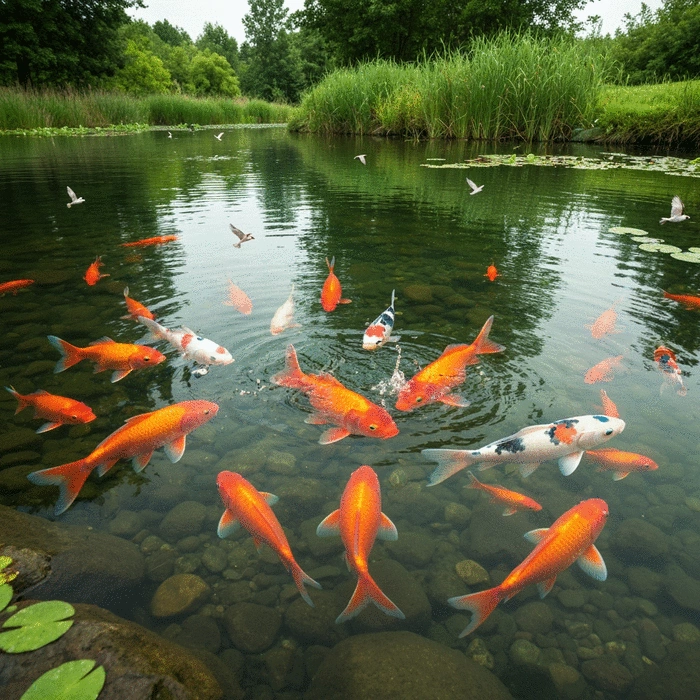
You need to pay attention to protein quality, essential fatty acids, vitamins, and minerals. A farmer in Kumasi learned this the hard way when he used a generic feed that lacked adequate protein levels for his catfish. The result? Growth rates plummeted, prompting him to seek better formulations.
Key Nutritional Considerations
- Ensure protein content aligns with your fish species' growth stage.
- Include essential fatty acids for optimal development.
- Incorporate vitamins and minerals to boost immunity.
You can adapt your feed formulations to include local ingredients rich in essential nutrients. This not only reduces costs but also enhances growth rates—if done correctly. Testing feed for nutritional adequacy should be a consistent part of your feeding strategy.
Why You Should Tailor Feed for Each Stage of Growth
Your fish go through distinct growth phases, and their nutritional needs change as they grow. Feeding the same diet throughout can hinder their potential. A farmer in Ogun State switched to a tailored feeding strategy that adjusted protein levels based on his fish's age and size.
The result? A remarkable increase in harvest weight over six months. Targeted nutrition leads to better feed conversion ratios and reduced production cycles. By monitoring your fish's growth stages, you can optimise their diets to ensure they receive what they need to thrive.
Growth Stage Nutritional Focus
- Fry (0-2 weeks): High protein, high fat for rapid growth.
- Fingerlings (2 weeks - 2 months): Balanced protein and vitamins.
- Growing fish (2 months - harvest): Lower protein, higher energy feeds.
Tailoring your feed according to growth stages is not just a suggestion; it's a necessity to maximise your fish farming success. Understanding current market trends can also help you time your feeding strategies for optimal profitability.
Recognising Feeding Patterns: Are You Feeding Right?
You might think it doesn't matter when and how often you feed your fish. But inconsistent feeding can throw your growth rates off balance. Erratic schedules can lead to overfeeding or underfeeding, both of which can hamper fish growth.
A study in a local farm revealed that a consistent feeding routine improved fish growth by 15% in just three months. Regular schedules align with your fish's natural feeding instincts and maximise their uptake of nutrients.
The Hidden Costs of Inconsistent Feeding Practices
You might underestimate the financial impact of irregular feeding. When you feed sporadically, you could end up wasting feed or not providing enough, resulting in poor growth. Consider a farmer in Lagos who often missed feeding times due to scheduling conflicts.
His fish suffered, and he faced losses as production slowed. By implementing a strict feeding schedule and sticking to it, he saw his growth rates improve significantly, demonstrating that routine feeding is key.
Benefits of a Consistent Feeding Schedule
- Improved growth rates and health of fish.
- Reduced feed wastage and costs.
- Better management of feeding techniques.
You'll find that establishing a feeding routine is one of the simplest yet most effective strategies for enhancing growth rates.
The Surprising Benefits of Split Feeding Techniques
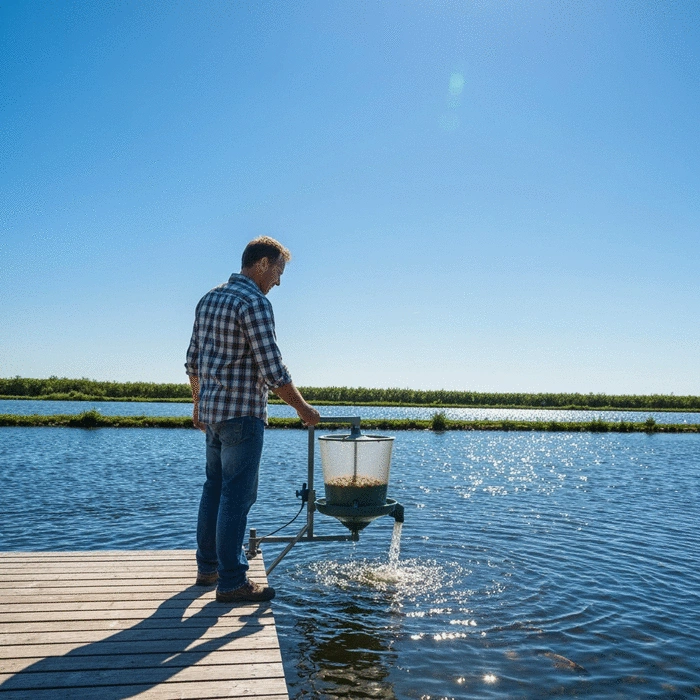
You might not have considered split feeding—providing smaller meals more frequently throughout the day. This method can lead to improved growth rates because it mimics natural feeding habits. Fish are more likely to consume more feed throughout the day, utilising nutrients more effectively.
A farmer in Ghana adopted this strategy after realising that his fish showed more active behaviour and better growth. By splitting his daily feed into smaller portions, he optimised feeding times based on fish behaviour, leading to faster weight gain.
Benefits of Split Feeding
- Enhanced feed utilisation and growth rates.
- Reduced competition for food among fish.
- Improved water quality from less uneaten feed.
You need to assess your current feeding practices and consider whether adopting split feeding could benefit your operations.
What Happens When Feed Management Goes Awry
You face significant risks when your feed management strategies fail. It's not just about wasted resources; it can lead to health issues and financial losses. You need to be aware of how a poor feeding approach can derail your farming endeavours.
You need to understand that feed waste and inefficiencies can snowball, leading to substantial financial fallout. A farmer in Ogun State experienced this firsthand when he failed to monitor his feed conversion rates. Wasted feed led to erratic growth, resulting in higher production costs.
The Financial Fallout of Feed Waste
The costs associated with feed waste can accumulate quickly. If you find that your feed conversion ratio is consistently over 2:1 for catfish, you're likely losing money. You should track these metrics closely.
A farmer in Lagos initially overlooked feed waste, leading to expenses that outweighed profits. With strategic adjustments, he identified the sources of waste and improved his feed efficiency. The result was a more profitable operation.
Managing Feed Waste
- Regularly monitor feed conversion ratios.
- Identify feeding practices that lead to waste.
- Adjust feeding strategies based on performance metrics.
You cannot afford to ignore the financial implications of poor feed management. It can make the difference between a successful farming operation and a struggling one.
Quality Control: When Feed Doesn't Meet Standards
You need to be vigilant about feed quality. Subpar feed can have detrimental effects on your farm. If you're not conducting thorough quality checks, you risk introducing feed that could lead to health issues and reduced growth.
A farmer in Kumasi discovered that his supplier was providing low-quality feed with high ash content. Initially, he didn't recognise the signs until he faced high mortality rates. By switching suppliers and enforcing stricter quality checks, he turned his farm around.
Essential Quality Control Practices
- Regularly assess feed quality through testing.
- Demand nutritional analysis certificates from suppliers.
- Implement strict storage practices to maintain feed quality.
You must ensure that your feed consistently meets the required standards if you want to optimise your farm's performance.
The Future: Are You Ready for Feed Management Innovations?
You may wonder how modern technology can enhance your feed management strategies. Innovations in this field can provide solutions that lead to more efficient operations. You need to stay informed about these advancements to remain competitive.
Many farmers are now adopting automatic feeders that dispense precise amounts of feed at scheduled times. This reduces waste and improves growth rates. A farmer in Kenya reported that his investment in automatic feeding systems led to improved fish health and reduced manual labour.
How Technology Is Changing Feed Management
Integrating technology can streamline your feeding processes. You can use data analytics to optimise feed efficiency and track growth patterns. This not only enhances decision-making but also allows you to adapt your strategies based on real-time data.
You should look for ways to incorporate these technologies into your operations. Understanding their benefits can help you maximise your farm's productivity.
Key Technological Advancements
- Automatic feeders for precise feeding management.
- Data analytics for tracking growth rates and feed efficiency.
- Remote monitoring systems to oversee feeding practices.
You must remain proactive about incorporating these innovations to enhance your feed management.
The Role of Community Collaboration in Advancing Techniques
You should not overlook the importance of community collaboration. Many successful farms have benefitted from sharing knowledge and resources. By connecting with fellow farmers, you can learn more about effective feed management practices.
A group of farmers in Ghana formed a cooperative to share insights on feed sourcing and management. This collective effort led to improved practices and increased profitability across the board.
Benefits of Community Collaboration
- Shared knowledge leads to better practices.
- Strengthened purchasing power for quality feed.
- Increased support and motivation among farmers.
Engaging with your local farming community can provide invaluable insights that improve your feed management techniques.
Where Do You Go From Here?
You may now be wondering how to take action after learning about these insights. The reality is, your choices define your farm's potential. You need to recognise the areas where improvement is necessary.
Think about the changes you can implement immediately. Whether it's adjusting your feeding schedules or seeking out better quality feed, taking that first step can set you on the path to greater profitability.
Your Choices Define Your Farm's Potential
You have the power to change your feeding strategies and improve your farm's performance. Recognising the need for change is the first step towards success. Don't shy away from seeking training and resources that can help you enhance your operations.
You should also take the time to assess your current practices and challenge yourself to make necessary adjustments.
Key Actions to Consider
- Review your current feeding practices.
- Seek training opportunities in feed management.
- Connect with local networks for support and collaboration.
You have the potential to transform your fish farming venture, ensuring it becomes a profitable and sustainable business.
How Will You Implement What You've Learned?
Reflect on the stories shared throughout this post. Consider how they apply to your situation and what you need to change. The lessons learned here can provide guidance on improving your feed management techniques.
Taking action is crucial. Engage with local networks and share your experiences to foster a collaborative environment that benefits all fish farmers. You can enhance your farm's operations and maximise your growth rates—starting today.
What You Need to Consider When Sourcing Feed
You walk into a feed store in Lagos with a budget of 50,000 naira, expecting to buy quality feed for your growing catfish. The seller shows you three options: imported pellets at 180 naira per kilogram, locally manufactured feed at 120 naira per kilogram, and a "special blend" using local ingredients at 80 naira per kilogram. You need to make a choice that will determine whether your fish grow efficiently or struggle for months.
Most farmers focus only on price when sourcing feed, but the cheapest option often becomes the most expensive mistake. You need to evaluate multiple factors before making your purchase decision. The quality of your feed directly impacts growth rates, feed conversion ratios, and ultimately your profit margins.
Your sourcing decisions affect everything from fish health to your bottom line. You want to understand what separates effective feed sourcing from costly guesswork that leaves you with slow-growing fish and depleted bank accounts.
The Realities of Local Ingredient Sourcing
You have access to abundant local ingredients across Africa—maize, cassava, groundnut cake, palm kernel meal, and fish meal from local processing plants. These ingredients can reduce your feed costs by 30-40% compared to imported alternatives. But you need to understand the challenges that come with local sourcing before you commit to this approach.
Quality consistency becomes your biggest challenge with local ingredients. The maize you buy in January may have different protein content than what you purchase in June. Seasonal variations, storage conditions, and processing methods all affect nutritional value.
You need reliable suppliers who understand these variations and can provide consistent quality documentation. A farmer in Ogun State reduced his feed costs from 150 naira per kilogram to 95 naira by sourcing locally, but his fish growth slowed by 20% due to inconsistent protein levels. He learned to test each batch and adjust his formulations accordingly.
Key Local Sourcing Considerations
When evaluating local ingredient suppliers, you need to assess:
- Consistency of supply throughout the year
- Storage facilities and handling practices
- Willingness to provide nutritional analysis certificates
- Processing methods and quality control measures
- Proximity to your farm for fresh delivery
You also need to consider the infrastructure requirements for local sourcing. Mixing your own feed requires equipment, storage space, and knowledge of nutritional formulations. You cannot simply combine ingredients without understanding protein requirements, amino acid profiles, and vitamin supplementation needs.
How to Evaluate Feed Quality Before Purchase
You cannot determine feed quality by appearance alone, yet many farmers make purchasing decisions based on colour, smell, and texture. Effective feed evaluation requires systematic assessment of multiple factors that directly impact fish performance and your profitability.
Physical examination provides your first quality indicator. You want pellets that maintain their shape when handled, show consistent size and colour, and have minimal dust or broken pieces. Excessive dust indicates poor binding agents or rough handling during transport.
| Quality Factor | What to Look For | Red Flags |
|---|---|---|
| Physical Appearance | Uniform size, consistent colour, firm texture | Excessive dust, crumbling pellets, colour variations |
| Smell | Fresh, mild fishy or grain-like odour | Rancid, mouldy, or chemical smells |
| Water Stability | Pellets hold shape for 15-20 minutes in water | Immediate dissolution or floating issues |
| Documentation | Manufacturing date, nutritional analysis, storage instructions | Missing labels, expired dates, vague ingredient lists |
You need to request nutritional analysis certificates from your suppliers. These documents should specify protein content, fat levels, crude fibre, ash content, and moisture levels. Reputable suppliers provide this information readily; those who hesitate or make excuses about documentation often sell substandard products.
Water stability testing reveals crucial information about feed quality. You can perform a simple test by placing pellets in a container of pond water and observing how long they maintain their shape. Quality pellets should remain intact for 15-20 minutes, giving your fish adequate time to consume them before they dissolve and pollute your water.
A farmer in Kumasi discovered that his "premium" feed dissolved within five minutes of hitting the water, creating waste and poor water quality. By switching to a supplier who demonstrated proper water stability, he reduced feed waste by 25% and improved his fish growth rates significantly. The lesson: always test feed performance in water conditions similar to your ponds.
In conclusion, effective feed management is critical for enhancing growth rates in your fish farming operations. By understanding the importance of feed quality, sourcing local ingredients, and tailoring feeding strategies to meet the specific needs of your fish, you can significantly improve both their health and your farm's profitability.
Don't overlook the costs associated with inconsistent feeding practices and substandard feed—these can lead to financial losses that are difficult to recover from. Instead, consider how implementing structured feeding schedules and innovative techniques can yield better results.
As you reflect on the insights shared in this article, think about the next steps you can take. Seek out training, engage with local networks, and continuously look for ways to optimise your feed management practices. Your choices today can define the future of your fish farming business.
Frequently Asked Questions
What is the ideal feed conversion ratio for catfish and tilapia?
For catfish, you should aim for a feed conversion ratio of 1.8:1 or better, whilst tilapia should achieve 2.0:1 or better. Ratios higher than these indicate inefficient feeding practices that reduce your profitability.
How can I tell if my fish feed is of good quality before purchasing?
You need to examine the pellets for uniform size and colour, minimal dust, and firm texture. Request nutritional analysis certificates from suppliers and test water stability by placing pellets in pond water—quality feed should maintain its shape for 15-20 minutes.
Why should I consider split feeding instead of feeding once daily?
Split feeding provides smaller, more frequent meals that mimic natural feeding patterns, leading to better nutrient utilisation and improved growth rates. This method also reduces competition among fish and minimises feed waste that can pollute your water.
What are the main challenges with sourcing local feed ingredients?
Quality consistency becomes your biggest challenge, as seasonal variations and storage conditions affect nutritional content. You need reliable suppliers who provide consistent quality documentation and understand proper handling practices to maintain ingredient integrity.
How do feeding requirements change as fish grow from fry to harvest size?
Fry require high protein and fat content for rapid growth, fingerlings need balanced protein with vitamins for development, whilst growing fish benefit from lower protein, higher energy feeds. You must adjust your feeding strategy to match these changing nutritional needs for optimal growth rates.

Yomi Adisa
Yomi Adisa is the lead researcher at Fish Farming Business, where he studies what makes aquaculture ventures profitable across Africa. His research focuses on market patterns, buyer preferences, and the business decisions that determine success or failure in fish farming.