
Scaling Up Your Fish Farm: Practical Strategies for African Farmers
Posted on: 2025-11-06
By: Yomi Adisa
You've built a successful small-scale fish farm, but now you're ready to take the next step. Scaling up your operation isn't just about adding more ponds—it's about transforming your farming approach to handle larger volumes whilst maintaining profitability. When done correctly, scaling can triple your monthly income from ₦150,000 to ₦450,000 or more.
However, many African farmers struggle during this transition. A farmer in Ogun State recently expanded from 2 to 8 ponds without proper planning, only to discover his water system couldn't handle the increased demand. He lost ₦800,000 worth of fish in three months. This happens because scaling requires different skills than starting small.
In this comprehensive guide, you'll discover the practical strategies that separate successful large-scale operations from those that collapse under their own growth. You'll learn how to assess your current infrastructure, secure funding for expansion, implement modern technologies, and build the market relationships needed to sell larger volumes consistently.
We'll examine real case studies from Ghana, Kenya, and Nigeria, showing you exactly how farmers navigated the challenges of scaling up. You'll understand the financial planning required, the sustainable practices that ensure long-term growth, and the common pitfalls that can destroy months of progress overnight.
What You Will Learn
- How to effectively assess and upgrade your farm's infrastructure for scalability
- Strategies for securing funding and managing cash flow during expansion
- Essential technologies and practices to enhance operational efficiency
- Methods for building strong market relationships to ensure profitable sales
- Common challenges faced during scaling and how to overcome them
- Case studies showcasing successful scaling strategies from other African farmers
Understanding the Scale-Up Process in Fish Farming
Scaling up your fish farm means more than simply adding extra ponds to your existing setup. You're fundamentally changing how you operate, moving from a hands-on approach where you personally monitor every detail to a systematic operation that can function efficiently at larger volumes. This transition requires different skills, more sophisticated planning, and a deeper understanding of market dynamics than most farmers initially realise.
The difference between successful scaling and expensive failure lies in understanding that larger operations face exponentially more complex challenges. Your water management system that worked perfectly for 1,000 fish may collapse when handling 10,000. Your local buyer who eagerly purchased 200kg monthly might struggle to absorb 800kg consistently. These aren't just bigger versions of small-farm problems—they're entirely different challenges that require strategic solutions.
Most importantly, scaling up demands that you shift from being a fish farmer to being a fish farming business owner. You'll need to delegate tasks, implement systems, and make decisions based on data rather than daily observation. This mental shift often proves more challenging than the technical aspects of expansion.
Definition of Scaling Up in Fish Farming
Scaling up in fish farming means systematically increasing your production capacity whilst maintaining or improving profitability per unit produced. You're not just farming more fish—you're building a larger, more efficient operation that can compete in bigger markets. True scaling involves increasing production volume, improving operational efficiency, and expanding market reach simultaneously.
The key metrics that define successful scaling include production volume (moving from hundreds to thousands of kilograms monthly), profit margins (maintaining or improving your naira earned per kilogram), and market penetration (selling to multiple buyers or larger institutional customers). A farmer in Kaduna successfully scaled from producing 500kg monthly to 2,500kg whilst increasing his profit margin from ₦200 to ₦280 per kilogram through improved efficiency and better buyer relationships.
Key Scaling Indicators
- Production Volume: 3x to 10x increase in monthly harvest
- Operational Efficiency: Lower cost per kilogram produced
- Market Diversification: Multiple buyers or institutional contracts
- System Automation: Reduced daily manual intervention required
- Financial Performance: Higher absolute profits with stable or improved margins
Scaling also means developing standardised processes that work consistently across multiple ponds or production cycles. Your feeding schedule, water quality management, and harvest timing must become systematic rather than intuitive. This standardisation allows you to maintain quality whilst increasing volume, something that separates successful large-scale operations from chaotic expansions that collapse under their own complexity.
Importance of Scaling Up for Profitability
Scaling up dramatically improves your profitability through economies of scale that simply aren't available to small operations. When you purchase feed in 10-tonne quantities instead of 500kg bags, you can negotiate prices that are ₦50-80 per kilogram lower. Your fixed costs—land rent, basic equipment, licensing fees—get spread across much larger production volumes, reducing your cost per kilogram produced.
Large-scale operations also command better market prices because they can supply consistent volumes that institutional buyers require. Hotels, restaurants, and fish processors need reliable suppliers who can deliver specific quantities on schedule. A scaled operation in Lagos secured contracts with three hotels at ₦1,400 per kilogram—₦300 above local market rates—because they could guarantee weekly deliveries of 200kg of uniform-sized fish.
| Scale Level | Monthly Production | Typical Profit Margin | Market Access |
|---|---|---|---|
| Small Scale | 200-500kg | ₦150-200/kg | Local markets only |
| Medium Scale | 1,000-3,000kg | ₦250-320/kg | Regional buyers, some institutions |
| Large Scale | 5,000kg+ | ₦300-400/kg | Institutional contracts, processors |
The financial impact of successful scaling extends beyond immediate profits. Larger operations build valuable business assets—established buyer relationships, proven systems, trained staff—that have resale value. Your scaled fish farm becomes a business that could potentially be sold or franchised, creating wealth beyond just monthly fish sales. This transformation from subsistence farming to wealth-building business ownership represents the true power of strategic scaling.
Common Challenges Faced During Scaling
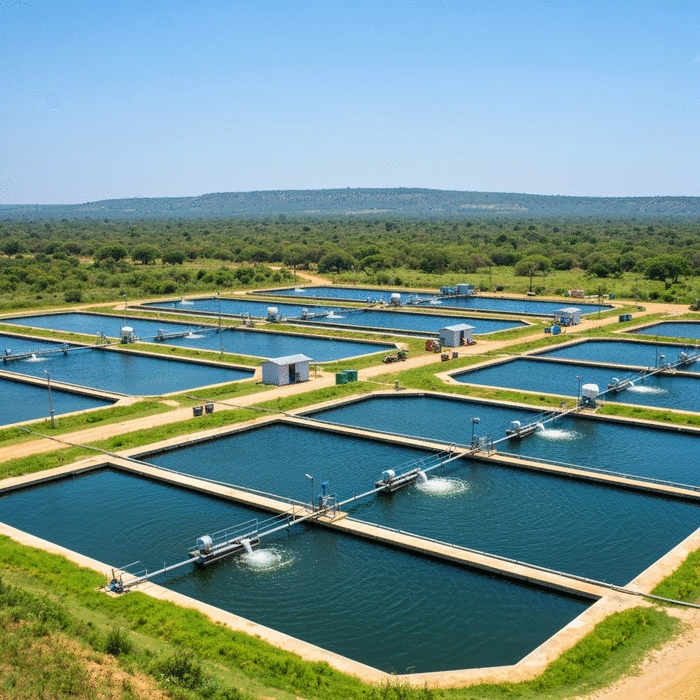
The most devastating challenge during scaling is cash flow management, because your expenses increase immediately whilst revenue growth takes months to materialise. You'll spend ₦2-3 million on infrastructure, equipment, and initial stocking before seeing any return on investment. Many farmers underestimate this cash flow gap and find themselves unable to purchase feed or maintain water quality during the critical early months of expansion.
Water management becomes exponentially more complex as you scale up. Your borehole that adequately supplied 3 ponds may fail completely when serving 12 ponds, especially during dry season. A farmer in Kano discovered this when his expanded operation suffered massive fish kills because his water source couldn't maintain adequate oxygen levels across all ponds. The technical solutions exist, but they require upfront investment and professional planning that most farmers skip.
Market absorption presents another critical challenge that catches farmers unprepared. Your local market that eagerly bought 300kg monthly may struggle to absorb 1,200kg consistently. You'll need to develop relationships with multiple buyers, potentially in different locations, before you scale production. Without this market development, you'll find yourself with excellent fish but nowhere to sell them at profitable prices.
Critical Scaling Challenges
- Cash Flow Gap: 6-12 months between investment and revenue
- Technical Complexity: Water, feeding, and disease management at scale
- Market Development: Finding buyers for 3-5x larger volumes
- Labour Management: Hiring and training reliable staff
- Quality Control: Maintaining standards across multiple production units
Labour management becomes crucial as you scale beyond what you can personally oversee daily. You'll need to hire workers and train them to maintain your quality standards, but finding reliable staff in rural areas proves challenging. Poor labour management can destroy months of investment through feeding mistakes, inadequate water monitoring, or theft. The solution involves developing clear procedures, implementing monitoring systems, and creating incentive structures that align worker interests with farm success.
Infrastructure and Technology Upgrades for Scaling
Your current infrastructure that works perfectly for small-scale production will become your biggest limitation when scaling up. The water system, pond design, and basic equipment that served you well at 500kg monthly production will create bottlenecks and failures at 2,000kg monthly. You need to think systematically about upgrading every component of your operation before you increase production volume.
Most farmers make the expensive mistake of scaling production first, then discovering their infrastructure can't support the increased load. A farmer in Oyo State expanded from 4 to 16 ponds but kept his original single borehole and basic pump system. Within two months, he lost ₦1.2 million worth of fish because his water supply couldn't maintain adequate flow rates during the dry season. The infrastructure should be upgraded before you stock additional ponds, not after problems emerge.
Technology upgrades aren't luxury additions for large-scale operations—they're essential tools that determine whether your scaling succeeds or fails. Modern fish farming technologies help you monitor multiple ponds simultaneously, automate routine tasks, and maintain consistent quality across larger production volumes. Without these technological supports, you'll find yourself overwhelmed trying to manually manage an operation that's grown beyond human capacity to oversee effectively.
Assessing Current Infrastructure Needs
You need to conduct a systematic evaluation of every component in your current operation to identify what can scale up and what requires complete replacement. Start with your water system—measure your current flow rates, test your borehole capacity during dry season, and calculate whether your existing setup can handle 3-5 times the current demand. Most small-scale setups use pumps and piping that are already operating near capacity, leaving no room for expansion.
Your pond infrastructure requires careful assessment because design flaws that cause minor inefficiencies in small operations become major problems at scale. Measure your current pond depths, evaluate drainage systems, and assess whether your pond bottoms can handle increased stocking densities. Ponds that work adequately at 2 fish per square metre may develop serious water quality issues at 4-5 fish per square metre without proper aeration and circulation systems.
Infrastructure Assessment Checklist
- Water Supply: Flow rate capacity, seasonal reliability, backup options
- Pond Design: Depth consistency, drainage efficiency, aeration potential
- Power Systems: Electrical capacity for pumps, aerators, and equipment
- Storage Facilities: Feed storage, equipment housing, processing areas
- Access Roads: Vehicle access for feed delivery and fish transport
Power supply assessment becomes critical because scaled operations require significantly more electricity for pumps, aerators, and automated systems. Your current electrical setup may handle basic pumping, but adding aerators, automated feeders, and monitoring equipment can overload circuits and create dangerous situations. Calculate your projected power needs and upgrade electrical systems before installing new equipment, not after experiencing power failures that kill fish.
Storage and handling infrastructure often gets overlooked until farmers discover they can't efficiently manage larger volumes. You'll need proper feed storage facilities that protect against moisture and pests, equipment storage areas, and fish handling systems that can process larger harvests quickly. A farmer in Kwara State lost ₦400,000 worth of feed to moisture damage because he scaled production without upgrading his storage facilities to handle bulk feed purchases.
Implementing Modern Fish Farming Technologies
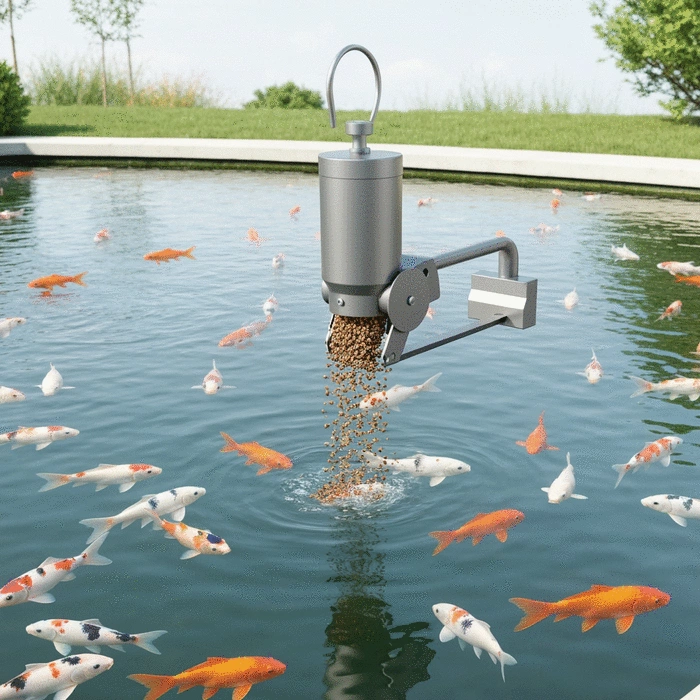
Automated feeding systems become essential when you're managing multiple ponds because manual feeding at scale creates inconsistencies that damage fish growth and waste expensive feed. Modern automatic feeders can be programmed to deliver precise amounts at optimal times, ensuring all ponds receive consistent nutrition even when you're not physically present. These systems typically cost ₦150,000-300,000 per pond but pay for themselves through improved feed conversion rates and labour savings.
Water quality monitoring technology transforms how you manage scaled operations by providing real-time data on oxygen levels, pH, and temperature across multiple ponds simultaneously. Digital monitoring systems alert you to problems before they become fish kills, allowing you to take corrective action when issues are still manageable. A farmer in Rivers State credits his digital monitoring system with preventing three potential fish kills that would have cost him ₦800,000 in losses.
| Technology | Investment Cost | Monthly Savings | Payback Period |
|---|---|---|---|
| Automatic Feeders | ₦200,000 | ₦45,000 | 4-5 months |
| Water Quality Monitors | ₦120,000 | ₦25,000 | 5-6 months |
| Aeration Systems | ₦180,000 | ₦35,000 | 5-6 months |
Aeration systems become mandatory for scaled operations because higher stocking densities require supplemental oxygen to prevent fish kills. Modern aerators not only maintain adequate oxygen levels but also improve water circulation, reducing dead zones where waste accumulates and water quality deteriorates. The investment in proper aeration—typically ₦150,000-250,000 per pond—prevents the catastrophic losses that destroy scaling attempts when fish die from oxygen depletion.
Local technology providers in Nigeria, Ghana, and Kenya now offer fish farming equipment specifically designed for African conditions and budgets. Companies like AquaTech Solutions in Lagos and Aquaculture Systems Kenya provide equipment packages, installation services, and ongoing technical support. You want to work with suppliers who understand local conditions and can provide rapid replacement parts when equipment fails during critical production periods.
Benefits of Digital Tools for Farm Management
Digital farm management tools transform your ability to track performance, identify problems, and make data-driven decisions across multiple production cycles and pond systems. Modern aquaculture management software allows you to record feeding schedules, monitor growth rates, track expenses, and analyse profitability by pond or production batch. This data becomes invaluable for optimising your operation and identifying which practices generate the highest returns.
Mobile apps designed for fish farmers provide real-time access to your farm data, allowing you to monitor operations even when travelling or managing other business activities. Apps like AquaManager and FishFarm Pro enable you to track water quality readings, feeding schedules, and growth measurements from your smartphone, ensuring you stay connected to your operation regardless of location. These tools become essential when managing larger operations that require constant oversight.
Record-keeping becomes exponentially more important as you scale because you're managing multiple variables across numerous ponds simultaneously. Digital tools automatically calculate feed conversion ratios, growth rates, and profitability metrics that would take hours to compute manually. A farmer in Anambra State discovered through digital tracking that his pond #3 consistently outperformed others, leading him to replicate those conditions across his entire operation and increase overall profitability by 23%.
Essential Digital Management Features
- Production Tracking: Growth rates, mortality, feed conversion by pond
- Financial Management: Cost tracking, profitability analysis, budget planning
- Inventory Control: Feed levels, medication stocks, equipment maintenance
- Market Intelligence: Price tracking, buyer contact management, sales history
- Compliance Records: Water quality logs, medication usage, harvest documentation
Financial tracking through digital tools provides the detailed cost analysis essential for profitable scaling. You need to know exactly how much each pond costs to operate, which production cycles generate the highest margins, and where you can reduce expenses without compromising quality. Digital tools automatically calculate these metrics and generate reports that help you make informed decisions about resource allocation and operational improvements.
Market intelligence features in modern farm management software help you track buyer preferences, price trends, and seasonal demand patterns. This information becomes crucial for timing your production cycles to meet peak demand periods and negotiating better prices with buyers. You can identify which buyers pay premium prices, which markets absorb larger volumes, and when to adjust your production schedule to maximise revenue from your scaled operation.
Financial Planning for Successful Scaling
Scaling your fish farm requires substantial upfront investment that most farmers dramatically underestimate. You'll need ₦3-8 million for infrastructure upgrades, equipment purchases, and working capital to sustain operations during the 6-12 month period before your expanded production generates revenue. Without proper financial planning, even technically sound scaling attempts fail when cash flow problems force farmers to cut corners on feed quality, skip essential maintenance, or harvest fish prematurely at lower weights.
The financial complexity of scaling extends far beyond the initial investment. You're transitioning from simple cash-in, cash-out operations to managing multiple revenue streams, complex cost structures, and seasonal cash flow variations across larger production volumes. Your small-scale operation might have survived on informal financial management, but scaled operations require detailed budgeting, cash flow projections, and financial controls that many farmers have never implemented.
Most importantly, you need to secure funding before you begin scaling, not after you've started the process. Lenders and investors want to see detailed business plans, realistic financial projections, and evidence of your current operation's profitability before committing funds. The farmers who successfully scale are those who spend months preparing their financial foundation before expanding their first pond.

Identifying Funding Sources (Grants, Loans, Cooperatives)
Government agricultural development programmes across Africa offer substantial funding opportunities specifically designed for fish farming expansion. In Nigeria, the Central Bank's Anchor Borrowers Programme provides loans at 9% interest rates for aquaculture projects, whilst Ghana's Agricultural Development Bank offers similar programmes at competitive rates. These programmes typically require detailed business plans and proof of current farming experience, but they provide access to ₦5-50 million in funding that would be impossible to secure through traditional banking channels.
Cooperative societies represent one of the most accessible funding sources for scaling fish farms because they understand agricultural cash flows and accept group guarantees that reduce individual risk. Joining or forming a fish farmers' cooperative allows you to access bulk purchasing discounts, shared equipment costs, and group lending arrangements that individual farmers cannot obtain. A cooperative in Ogun State recently secured ₦15 million in group funding that enabled 12 members to scale their operations simultaneously, reducing individual borrowing costs by 40%.
Major Funding Sources for African Fish Farmers
- Government Programmes: CBN Anchor Borrowers (Nigeria), ADB loans (Ghana), AFC funding (Kenya)
- Development Banks: Bank of Agriculture, Development Bank of Nigeria, Agricultural Finance Corporation
- International Donors: World Bank, AfDB, USAID aquaculture programmes
- Microfinance Institutions: Local MFIs with agricultural lending experience
- Private Investors: Angel investors, agricultural investment funds
International development organisations provide grants and low-interest loans specifically targeting sustainable aquaculture development in Africa. The World Bank's FADAMA programmes, African Development Bank initiatives, and various UN agency funding streams offer substantial resources for farmers who can demonstrate environmental sustainability and community impact. These funding sources often provide technical assistance alongside financial support, helping you implement best practices during your scaling process.
Private investors and agricultural investment funds increasingly recognise aquaculture's profit potential and actively seek partnership opportunities with established farmers ready to scale. These investors typically provide larger funding amounts—₦10-100 million—in exchange for equity stakes or profit-sharing arrangements. You need to present professional business plans and demonstrate strong management capabilities, but private funding can accelerate your scaling timeline significantly compared to traditional lending sources.
Microfinance institutions with agricultural lending experience offer smaller funding amounts (₦500,000-5 million) but with more flexible requirements and faster approval processes. These institutions understand seasonal cash flows and often structure repayment schedules around harvest cycles rather than fixed monthly payments. Local MFIs in your area may offer the most accessible funding for initial scaling steps, allowing you to demonstrate success before pursuing larger funding sources.
Budgeting for Infrastructure and Operational Costs
Your scaling budget must account for both one-time infrastructure investments and the increased operational costs that begin immediately but don't generate revenue for months. Infrastructure costs typically include pond construction or expansion (₦200,000-500,000 per pond), water system upgrades (₦800,000-2 million), equipment purchases (₦500,000-1.5 million), and facility improvements (₦300,000-800,000). These upfront investments create the capacity for increased production but don't generate immediate returns.
Operational cost increases begin the moment you start scaling and continue throughout your expansion period. You'll need larger quantities of fingerlings, significantly more feed, increased labour costs, higher utility bills, and expanded transportation expenses. A farmer scaling from 1,000kg to 4,000kg monthly production should budget for operational cost increases of ₦400,000-600,000 monthly during the scaling period, before any revenue increases materialise.
| Cost Category | Small Scale (500kg) | Medium Scale (2,000kg) | Scaling Investment |
|---|---|---|---|
| Infrastructure | ₦800,000 | ₦3,200,000 | ₦2,400,000 |
| Monthly Feed | ₦180,000 | ₦720,000 | ₦540,000 increase |
| Labour Costs | ₦40,000 | ₦160,000 | ₦120,000 increase |
| Working Capital | ₦300,000 | ₦1,200,000 | ₦900,000 increase |
Working capital requirements increase dramatically during scaling because you're funding larger production cycles with longer cash conversion periods. You need sufficient cash reserves to cover 3-4 months of operational expenses without relying on fish sales, because production delays, market fluctuations, or technical problems can disrupt your revenue stream. Calculate your working capital needs based on your highest monthly operational costs, not your average costs, to ensure adequate financial cushion during challenging periods.
Contingency budgeting becomes essential because scaling operations face unexpected expenses that small farms rarely encounter. Equipment failures, infrastructure repairs, disease outbreaks, and market disruptions can create sudden financial demands that destroy inadequately funded scaling attempts. Budget an additional 20-30% above your calculated costs for contingencies, and maintain this reserve fund throughout your scaling process to handle unexpected challenges without compromising your operation.
Financial Risk Management Strategies
Diversifying your revenue streams reduces the financial risk associated with scaling by ensuring that problems in one area don't destroy your entire operation. Consider adding value-added products like smoked fish, fish processing services, or fingerling production to supplement your primary fish sales revenue. A farmer in Ekiti State reduced his scaling risk by establishing a fingerling hatchery alongside his grow-out operation, generating ₦200,000 monthly in additional revenue that provided financial stability during market fluctuations.
Insurance coverage becomes crucial for scaled operations because larger investments create larger potential losses that can bankrupt farming operations overnight. Agricultural insurance policies now cover fish farming operations against disease outbreaks, natural disasters, and equipment failures. Whilst insurance costs ₦50,000-150,000 annually, it protects investments worth millions and provides peace of mind that allows you to focus on operational excellence rather than constantly worrying about catastrophic losses.
Essential Risk Management Strategies
- Revenue Diversification: Multiple products, services, or market channels
- Insurance Coverage: Comprehensive policies covering major risks
- Financial Reserves: 6-month operational expense cushion
- Staged Scaling: Gradual expansion rather than massive one-time growth
- Market Contracts: Pre-arranged sales agreements for production security
Staged scaling reduces financial risk by allowing you to test systems, refine processes, and build market relationships gradually rather than making massive investments all at once. Scale your operation in phases—perhaps doubling production every 12-18 months rather than attempting to quadruple it immediately. This approach allows you to learn from each scaling phase, adjust your strategies based on real experience, and build financial strength progressively rather than risking everything on a single massive expansion.
Forward contracting with buyers provides financial security during scaling by guaranteeing sales for your increased production before you invest in expansion. Negotiate contracts with hotels, restaurants, or fish processors that specify quantities, prices, and delivery schedules for your scaled production. These contracts reduce market risk and can often be used as collateral for securing expansion funding, because lenders view guaranteed sales agreements as strong evidence of your scaling plan's viability.
Financial monitoring systems become essential for managing the complex cash flows associated with scaled operations. Implement monthly financial reviews that track actual performance against budgeted projections, identify cost overruns early, and adjust operations before small problems become major financial crises. Use accounting software designed for agricultural operations to maintain detailed records that support loan applications, tax compliance, and performance analysis essential for successful scaling.
Sustainable Practices for Long-Term Growth
Sustainable fish farming practices aren't just environmental considerations—they're business strategies that determine whether your scaled operation thrives for decades or collapses within a few years. Unsustainable practices might boost short-term profits but create long-term problems that destroy the foundation of your business. Water pollution, soil degradation, and resource depletion can make your farm location unusable, forcing expensive relocations or complete business failure.
Climate change impacts across Africa make sustainability essential for long-term viability. Changing rainfall patterns, increasing temperatures, and more frequent extreme weather events directly affect fish farming operations through water availability, temperature stress, and infrastructure damage. Farmers who implement climate-smart practices now position themselves to maintain production whilst others struggle with environmental challenges that make traditional farming methods increasingly unreliable.
The economic benefits of sustainable practices often exceed their implementation costs within 2-3 years. Integrated farming systems, water recycling, and renewable energy reduce operational expenses whilst improving productivity. A farmer in Ghana reduced his operational costs by 35% through sustainable practices whilst increasing his production by 20%, demonstrating that environmental responsibility and business profitability work together rather than competing against each other.
Climate-Smart Aquaculture Techniques
Water conservation techniques become essential as climate change creates more frequent droughts and water scarcity across Africa. Recirculating aquaculture systems (RAS) can reduce water usage by 90% compared to traditional pond systems whilst maintaining or improving fish production. Although RAS systems require higher initial investment (₦2-5 million for a scaled operation), they provide independence from rainfall patterns and groundwater availability that increasingly threaten traditional fish farming operations.
Temperature management strategies help your fish maintain optimal growth rates despite increasing heat stress from climate change. Shade structures, deeper ponds, and aeration systems create cooler water environments that prevent the growth slowdowns and mortality that occur when water temperatures exceed optimal ranges. These adaptations cost ₦100,000-300,000 per pond but prevent production losses worth millions during extreme weather events.
Climate-Smart Aquaculture Practices
- Water Conservation: Recirculation systems, rainwater harvesting, efficient pond design
- Temperature Control: Shade structures, deeper ponds, strategic pond orientation
- Renewable Energy: Solar pumps, wind aerators, biogas from waste
- Resilient Infrastructure: Storm-resistant structures, flood-resistant pond design
- Drought Preparedness: Water storage systems, alternative water sources
Renewable energy integration reduces operational costs whilst providing energy security during power outages that can kill fish through oxygen depletion. Solar-powered aeration systems cost ₦200,000-400,000 initially but eliminate monthly electricity costs of ₦50,000-80,000 for aeration. Solar systems also provide backup power during grid failures, preventing the fish kills that destroy months of investment when power outages occur during critical periods.
Drought preparedness involves developing alternative water sources and storage systems that maintain operations during extended dry periods. Construct rainwater harvesting systems, develop multiple borehole sources, and install water storage tanks that provide 30-60 days of emergency water supply. These investments seem expensive until you consider that a single drought-related fish kill can cost ₦2-5 million in losses that proper preparation could prevent.
Weather monitoring and early warning systems help you prepare for extreme weather events before they damage your operation. Install weather stations, subscribe to meteorological services, and develop response protocols for storms, floods, and extreme temperatures. Early warning allows you to harvest fish early, secure equipment, and implement protective measures that prevent catastrophic losses during severe weather events.
Integrated Farming Systems for Efficiency
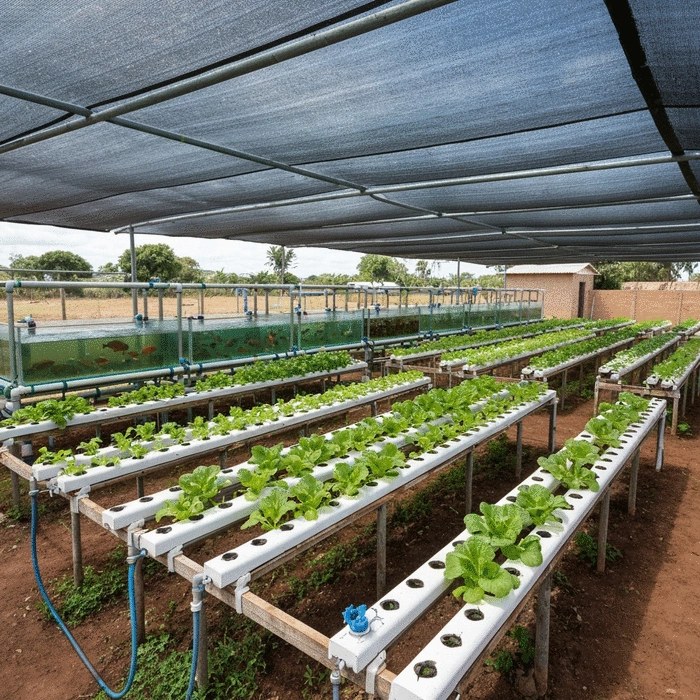
Aquaponics systems combine fish farming with vegetable production, creating two revenue streams from the same water and infrastructure investment. Fish waste provides nutrients for vegetables whilst plants filter water for fish, reducing both feed costs and water treatment expenses. A well-designed aquaponics system can generate ₦300,000-500,000 monthly from vegetable sales alongside your fish revenue, significantly improving your overall profitability per square metre of farm space.
Integrated livestock systems use fish pond water for irrigating crops or watering livestock, maximising the value extracted from your water resources. Nutrient-rich pond water eliminates fertiliser costs for crops whilst providing productive use for water that would otherwise be wasted. Farmers in Kenya report 40-60% increases in crop yields when using fish pond water for irrigation, creating additional revenue streams that improve overall farm profitability.
| Integration Type | Setup Cost | Additional Revenue | Payback Period |
|---|---|---|---|
| Aquaponics Vegetables | ₦800,000 | ₦400,000/month | 2-3 months |
| Crop Irrigation | ₦200,000 | ₦150,000/season | 4-6 months |
| Poultry Integration | ₦300,000 | ₦200,000/month | 2-3 months |
Poultry-fish integration creates synergistic benefits where chicken droppings provide natural fertiliser for fish ponds whilst fish farming provides water for poultry operations. This integration reduces feed costs for both enterprises whilst creating additional revenue streams from egg and meat sales. Properly managed integrated systems can increase overall farm profitability by 50-80% compared to single-enterprise operations.
Waste-to-energy systems convert fish farm organic waste into biogas for cooking, heating, or electricity generation. Biogas systems cost ₦150,000-400,000 to install but can provide all cooking fuel needs for farm operations whilst reducing waste disposal costs. The organic slurry remaining after biogas production serves as excellent fertiliser for crops, creating additional value from waste materials that would otherwise create disposal problems.
Feed production integration allows you to grow some of your own fish feed ingredients, reducing feed costs whilst ensuring quality control over your most expensive input. Cultivating duckweed, moringa, or other protein-rich plants can reduce commercial feed requirements by 20-40% whilst providing employment for family members. This integration requires additional land and labour but can reduce feed costs by ₦100,000-200,000 monthly for scaled operations.
Reducing Post-Harvest Losses
Proper harvesting techniques prevent the physical damage and stress that reduce fish quality and market value. Use appropriate nets, avoid overcrowding during transport, and maintain fish in clean water until processing or sale. Poor harvesting practices can reduce fish prices by ₦200-400 per kilogram due to bruising, scale loss, and mortality that buyers penalise heavily. Training your workers in proper harvesting techniques protects the investment you've made in growing healthy fish.
Cold chain management becomes essential for scaled operations because you're handling larger volumes that take longer to sell and transport to markets. Invest in ice-making equipment, insulated transport containers, and proper storage facilities that maintain fish quality from harvest to final sale. A farmer in Lagos increased his average selling price by ₦300 per kilogram by implementing proper cold chain management that delivered fresher fish to premium buyers.
Post-Harvest Loss Prevention Strategies
- Proper Harvesting: Appropriate nets, stress reduction, clean water holding
- Cold Chain: Ice production, insulated transport, temperature monitoring
- Processing Equipment: Cleaning stations, packaging materials, quality control
- Market Timing: Harvest scheduling, buyer coordination, transport efficiency
- Value Addition: Smoking, filleting, packaging for premium markets
Processing and value addition reduce post-harvest losses whilst increasing profit margins through product differentiation. Simple processing like filleting, smoking, or packaging can increase your selling price by ₦400-800 per kilogram whilst extending shelf life and expanding market opportunities. Processing equipment costs ₦200,000-500,000 but enables you to sell to restaurants, supermarkets, and export markets that pay premium prices for processed products.
Market timing coordination prevents the losses that occur when you harvest large quantities without confirmed buyers ready to purchase immediately. Develop relationships with multiple buyers, coordinate harvest schedules with market demand, and maintain holding facilities that allow flexible timing of sales. Poor market timing can force distress sales at 30-50% below normal prices, destroying the profitability of otherwise successful production cycles.
Transportation efficiency reduces losses through shorter transport times, better handling, and direct delivery to buyers rather than multiple market stops. Invest in appropriate transport vehicles, train drivers in proper fish handling, and develop direct delivery routes that minimise time between harvest and final sale. Efficient transportation can reduce mortality losses from 10-15% to under 5%, significantly improving your net revenue from scaled production volumes.
Building Market Access and Value Chains
Market access becomes your most critical challenge when scaling up because the local buyers who eagerly purchased your small-scale production may struggle to absorb 3-5 times larger volumes consistently. You need to develop relationships with institutional buyers, processors, and distributors who can handle larger quantities whilst paying prices that justify your increased investment. Without proper market development, you'll find yourself with excellent fish but nowhere to sell them profitably.
Understanding value chains helps you identify where profits are made and lost in the fish marketing system, allowing you to position your scaled operation to capture maximum value. Most farmers sell at the farm gate for convenience, but this often means accepting the lowest prices in the value chain. Scaled operations have the volume and resources to move further up the value chain, capturing profits that smaller farmers cannot access.
Building market relationships requires time and consistent performance that you must develop before scaling, not after. Buyers need confidence that you can deliver specific quantities on schedule with consistent quality. These relationships become valuable business assets that differentiate successful scaled operations from those that struggle to find profitable markets for their increased production.
Establishing Market Linkages and Partnerships
Institutional buyers represent the most stable and profitable markets for scaled fish farming operations because they need consistent supplies of specific quantities and qualities. Hotels, restaurants, schools, hospitals, and corporate catering services require regular deliveries of uniform-sized fish at predictable prices. A farmer in Abuja secured contracts with three hotels that purchase 400kg weekly at ₦1,350 per kilogram—₦250 above local market rates—because he can guarantee consistent supply and quality.
Processor partnerships allow you to sell larger volumes whilst transferring some marketing responsibilities to companies with established distribution networks. Fish processors need reliable suppliers who can provide consistent volumes of specific sizes for their smoking, filleting, or freezing operations. These partnerships often involve longer-term contracts that provide price stability and guaranteed sales volumes that support your scaling investments. Understanding fish market trends in Africa helps you identify the most profitable processing partnerships.
Key Market Partnership Opportunities
- Institutional Buyers: Hotels, restaurants, schools, hospitals, corporate catering
- Processors: Smoking operations, filleting plants, frozen fish companies
- Distributors: Wholesale markets, supermarket chains, export companies
- Cooperatives: Marketing cooperatives, farmer groups, collective bargaining
- Direct Sales: Farmers' markets, online platforms, community-supported agriculture
Distributor relationships provide access to markets beyond your local area, allowing you to sell in urban centres where prices are typically higher and demand more consistent. Distributors have established relationships with retailers, restaurants, and other buyers across wider geographic areas. Building relationships with distributors requires meeting their volume and quality requirements, but it opens markets that individual farmers cannot access efficiently.
Cooperative marketing arrangements allow you to combine your production with other farmers to meet large buyer requirements that no single farm can satisfy. Marketing cooperatives can negotiate better prices, share transportation costs, and provide the volume consistency that large buyers require. A marketing cooperative in Rivers State increased member prices by an average of ₦180 per kilogram by negotiating directly with processors and eliminating middleman margins.
Export market development represents the highest-value opportunity for scaled operations that can meet international quality and documentation standards. Export markets often pay 50-100% premiums over domestic prices, but they require consistent quality, proper documentation, and compliance with international standards. Developing export capabilities requires significant investment in processing facilities and quality systems, but it provides access to the most profitable markets available to African fish farmers.
Understanding the Fish Value Chain
The fish value chain includes multiple stages from production through final consumption, with profits distributed unevenly across these stages. Farmers typically receive 40-60% of the final consumer price, whilst processors, distributors, and retailers capture the remaining value through their services. Understanding this distribution helps you identify opportunities to capture additional value through vertical integration or strategic partnerships.
Processing adds significant value by extending shelf life, improving convenience, and meeting specific buyer requirements. Simple processing like cleaning, filleting, or smoking can increase your selling price by ₦300-600 per kilogram whilst opening new market channels. More sophisticated processing like freezing, packaging, or value-added products can increase prices by ₦800-1,500 per kilogram, but requires larger investments in equipment and facilities.
| Value Chain Stage | Typical Price (₦/kg) | Value Added | Investment Required |
|---|---|---|---|
| Farm Gate | ₦1,000-1,200 | Production | High |
| Processed (cleaned) | ₦1,400-1,600 | Convenience | Low |
| Smoked/Frozen | ₦1,800-2,200 | Preservation | Medium |
| Retail Packaged | ₦2,500-3,000 | Branding/Marketing | High |
Distribution networks determine how efficiently products move from producers to consumers, with transportation, storage, and logistics costs affecting final profitability. Efficient distribution systems reduce costs and improve product quality, whilst inefficient systems create bottlenecks that reduce farmer prices and increase consumer costs. Understanding distribution challenges helps you develop strategies to improve efficiency and capture additional value.
Market information systems provide the data needed to make informed decisions about production timing, pricing, and market selection. Access to current price information, demand forecasts, and market trends allows you to optimise your production and marketing decisions. Farmers who actively gather and use market information typically achieve 15-25% higher prices than those who rely on limited local information.
Consumer preferences drive demand patterns that determine which products command premium prices and which markets offer the best opportunities. Urban consumers increasingly prefer processed, convenient products, whilst rural consumers may prefer traditional whole fish. Understanding these preferences helps you tailor your production and processing to meet specific market demands that generate higher profits.
Strategies for Reducing Costs and Increasing Profit Margins
Bulk purchasing arrangements for feed, fingerlings, and other inputs can reduce your costs by 15-30% compared to small-quantity purchases. Coordinate with other farmers to achieve minimum order quantities that unlock wholesale pricing, or join cooperatives that negotiate group purchasing agreements. A farmer in Ogun State reduced his feed costs by ₦120 per bag by participating in a cooperative that purchases 200 tonnes monthly directly from manufacturers.
Vertical integration allows you to capture profits from multiple stages of the value chain rather than selling at the farm gate. Consider producing your own fingerlings, processing your harvest, or developing direct sales channels that eliminate middleman margins. Each stage of integration requires additional investment and expertise, but it can increase your profit margins by ₦200-500 per kilogram of fish produced.
Cost Reduction and Margin Improvement Strategies
- Bulk Purchasing: Feed, fingerlings, equipment through cooperatives or direct buying
- Vertical Integration: Fingerling production, processing, direct marketing
- Efficiency Improvements: Better feed conversion, reduced mortality, faster growth
- Premium Markets: Organic certification, speciality products, direct sales
- Cost Control: Energy efficiency, waste reduction, labour optimisation
Operational efficiency improvements reduce production costs whilst maintaining or improving product quality. Focus on improving feed conversion ratios through better feeding practices, reducing mortality through improved health management, and accelerating growth through optimal water quality management. A 10% improvement in feed conversion ratio can reduce production costs by ₦80-120 per kilogram, significantly improving profit margins across scaled production volumes.
Premium market development allows you to command higher prices by meeting specific buyer requirements for quality, sustainability, or convenience. Organic certification, speciality processing, or direct-to-consumer sales can increase your selling prices by ₦300-800 per kilogram. These premium markets require additional investments in certification, processing, or marketing, but they provide profit margins that justify the extra effort and expense.
Technology adoption reduces labour costs whilst improving consistency and quality across scaled operations. Automated feeding systems, water quality monitoring, and digital record-keeping reduce manual labour requirements whilst improving operational precision. Although technology requires upfront investment, it typically reduces operational costs by ₦50-150 per kilogram whilst improving product quality and consistency that supports premium pricing. Avoiding top financial mistakes that hurt profitability ensures your cost reduction strategies translate into actual profit improvements.
Case Studies of Successful Fish Farm Scaling in Africa
Real-world examples of successful fish farm scaling provide practical insights that theoretical advice cannot match. These case studies demonstrate how farmers overcame specific challenges, implemented effective strategies, and achieved profitable growth despite the obstacles that defeat many scaling attempts. By examining actual successes and failures, you can identify patterns and strategies that apply to your own scaling plans.
The farmers who successfully scale their operations share common characteristics: thorough planning before expansion, systematic implementation of improvements, and persistent focus on market development alongside production increases. They also demonstrate that successful scaling requires adapting strategies to local conditions rather than copying approaches that worked elsewhere without modification.
Most importantly, these case studies reveal that successful scaling is a gradual process that takes 2-4 years to complete fully. The farmers who achieve sustainable growth invest time in building foundations—market relationships, technical skills, financial systems—before making major production increases. This patient approach contrasts sharply with failed scaling attempts that try to achieve rapid growth without adequate preparation.
Lessons from Successful Farmers in Ghana
Kofi Mensah transformed his 2-pond operation in Ashanti Region into a 15-pond commercial farm generating ₦2.8 million monthly by focusing on market development before production expansion. He spent 18 months building relationships with hotels and restaurants in Kumasi, securing contracts for 800kg weekly deliveries before constructing additional ponds. This market-first approach ensured profitable sales channels existed before his production capacity increased.
His scaling strategy emphasised gradual expansion with systematic improvements at each stage. Mensah added 3-4 ponds annually whilst upgrading water systems, implementing automated feeding, and training additional workers. Each expansion phase allowed him to refine his systems and identify problems before they affected larger production volumes. This methodical approach prevented the operational chaos that destroys many rapid scaling attempts.
Mensah's Scaling Timeline and Results
- Year 1: Market development, secured hotel contracts, added 3 ponds
- Year 2: Automated feeding systems, water quality monitoring, 4 more ponds
- Year 3: Processing facility, direct sales, 5 additional ponds
- Year 4: Export certification, premium markets, 3 final ponds
- Results: 15x production increase, 280% profit margin improvement
Mensah's financial management strategy involved reinvesting 60% of profits into expansion whilst maintaining substantial cash reserves for operational security. He avoided external debt during the first two years, using retained earnings to fund gradual expansion. This conservative approach prevented cash flow problems that force many farmers to cut corners on feed quality or harvest fish prematurely during scaling transitions.
His market diversification strategy reduced risk by developing multiple sales channels rather than depending on single buyers. By year three, Mensah was selling to hotels (40%), direct consumers (30%), processors (20%), and export markets (10%). This diversification protected him from market disruptions whilst providing flexibility to optimise sales based on seasonal price variations and buyer demand patterns.
The technology adoption timeline demonstrates how successful farmers implement improvements systematically rather than attempting comprehensive modernisation immediately. Mensah prioritised technologies that provided immediate returns—automated feeders and water quality monitors—before investing in more sophisticated systems like processing equipment and export facilities. This prioritisation ensured each technology investment generated returns that funded subsequent improvements.
Innovations in Fish Farming in Kenya
Mary Wanjiku revolutionised her fish farming operation in Kiambu County by implementing aquaponics systems that generate revenue from both fish and vegetable production. Her integrated system produces 1,200kg of fish monthly alongside vegetables worth KSh 180,000, demonstrating how innovation can multiply revenue streams from the same infrastructure investment. The aquaponics approach reduced her water usage by 70% whilst eliminating fertiliser costs for vegetable production.
Her cage farming innovation in Lake Naivasha allowed expansion without purchasing additional land, reducing infrastructure costs by 60% compared to pond construction. Wanjiku developed a 20-cage system producing 2,500kg monthly with investment costs 40% lower than equivalent pond-based production. This approach demonstrates how innovative farmers adapt technologies to local conditions and resource constraints.
| Innovation | Investment Cost | Revenue Impact | Payback Period |
|---|---|---|---|
| Aquaponics System | KSh 800,000 | +KSh 180,000/month | 4.5 months |
| Cage Farming | KSh 1,200,000 | +KSh 350,000/month | 3.5 months |
| Solar Aeration | KSh 400,000 | +KSh 85,000/month | 4.7 months |
Wanjiku's solar-powered aeration system eliminated electricity costs whilst providing backup power during grid failures that previously caused fish kills. The solar system cost KSh 400,000 but saves KSh 45,000 monthly in electricity costs whilst preventing losses worth KSh 300,000-500,000 during power outages. This innovation demonstrates how renewable energy investments provide both cost savings and risk reduction for scaled operations.
Her mobile app-based farm management system tracks production data, monitors water quality, and manages sales across multiple production sites. The digital system cost KSh 150,000 to implement but improved operational efficiency by 25% whilst providing the detailed records needed for accessing agricultural loans and export certifications. This technology adoption shows how digital tools become essential for managing complex scaled operations.
The cooperative marketing approach Wanjiku developed with 12 other farmers created collective bargaining power that increased prices by an average of KSh 35 per kilogram. The cooperative also shares transportation costs, bulk purchasing discounts, and technical knowledge that individual farmers cannot access. This collaboration demonstrates how successful scaling often involves building relationships with other farmers rather than competing against them.
Impact of Policy Support on Scaling in Nigeria
The Central Bank of Nigeria's Anchor Borrowers Programme enabled Emeka Okafor to scale his Anambra State operation from 6 ponds to 24 ponds through access to ₦8 million in low-interest funding. The programme's 9% interest rate and flexible repayment terms made expansion financially viable, whilst technical support helped him implement modern farming practices. This case demonstrates how government policy support can accelerate scaling for farmers who meet programme requirements.
Okafor's success with the programme required detailed business planning, financial record-keeping, and compliance with environmental standards that many farmers find challenging. He invested six months preparing his application, working with agricultural extension officers to develop proper documentation and business projections. This preparation process improved his farm management systems and positioned him for successful scaling beyond the initial loan period.
Policy Support Benefits Realised
- Financial Access: ₦8 million at 9% interest vs 25% commercial rates
- Technical Support: Extension services, training programmes, best practices
- Market Linkages: Connections to processors, institutional buyers
- Input Subsidies: Reduced costs for feed, fingerlings, equipment
- Export Support: Certification assistance, quality standards training
The programme's market linkage component connected Okafor with fish processors who provided guaranteed purchase contracts for his expanded production. These contracts specified quantities, quality standards, and pricing formulas that provided revenue security during the scaling process. The guaranteed markets eliminated the risk of producing fish without confirmed buyers, a common problem that destroys many scaling attempts.
Input subsidy programmes reduced Okafor's feed costs by ₦80 per bag and fingerling costs by 30%, significantly improving his profit margins during expansion. These subsidies were conditional on meeting production targets and quality standards, creating incentives for improved farming practices. The subsidy structure demonstrates how well-designed policy support can improve both individual farm performance and overall industry standards.
The export development support helped Okafor achieve international quality certifications that opened premium export markets paying 60% above domestic prices. The certification process required investments in processing facilities, quality control systems, and documentation procedures, but it positioned his scaled operation to access the highest-value markets available. This progression from domestic to export markets shows how policy support can help farmers climb the value chain systematically. Learning from common fish farming expansion mistakes helped Okafor avoid pitfalls during his rapid growth phase.
The programme's success factors include comprehensive support beyond just financing—technical assistance, market development, and ongoing monitoring that helps farmers succeed rather than simply providing loans. Okafor credits the programme's holistic approach with preventing the common problems that cause scaling failures, demonstrating how effective policy support addresses multiple constraints simultaneously rather than focusing on single issues like access to credit.
Summary Table
| Key Points | Details |
|---|---|
| Understanding Scaling Up | Scaling up involves transforming operations to handle larger volumes. Neglecting this can result in inadequate water management, leading to significant losses (e.g., ₦800,000). |
| Importance of Planning | Funding and infrastructure must be planned before scaling. Poor cash flow management can prevent necessary purchases, risking the operation's viability. |
| Infrastructure Assessment | Evaluate water systems, pond design, and power supply to handle increased production demands. Failing to upgrade can lead to catastrophic fish losses. |
| Technological Integration | Adopting modern technologies like automated feeders (₦200,000) can prevent losses and enhance efficiency. Neglecting this increases labour costs and operational complications. |
| Market Relationships | Securing contracts with institutional buyers is crucial for profitability. Without established markets, surplus production can lead to distress sales, decreasing potential profits. |
| Financial Planning | Prepare for cash flow gaps of 6-12 months. Farmers need ₦3-8 million for scaling, and lack of funds can force poor feeding or premature harvesting, impacting profits. |
| Sustainable Practices | Implementing climate-smart techniques can reduce costs and improve productivity, as demonstrated by a farmer achieving 35% lower operational costs through sustainable measures. |
| Post-Harvest Loss Prevention | Proper harvesting and cold chain management can prevent price drops of ₦200-400/kg. Investing in cold chain equipment protects profits by ensuring fish quality. |
| Case Study Insights | Successful scaling is gradual; for instance, Kofi Mensah's market-first approach led to a 15-pond operation generating ₦2.8 million monthly, highlighting the importance of strategic planning. |
Conclusion
Scaling your fish farm successfully requires systematic planning, adequate funding, and market development before you increase production. You cannot simply add more ponds and expect profits to multiply—the infrastructure, technology, and buyer relationships must be upgraded to handle larger volumes profitably.
The farmers who succeed in scaling focus on three critical areas: building robust infrastructure that can handle increased production loads, securing adequate financing to survive the 6-12 month cash flow gap during expansion, and developing market relationships that can absorb larger volumes at profitable prices. Without all three elements in place, scaling attempts typically fail within the first year.
Your scaling timeline should span 2-4 years with gradual expansion phases rather than attempting massive growth immediately. This approach allows you to test systems, refine processes, and build financial strength progressively whilst avoiding the operational chaos that destroys rapid scaling attempts.
Technology adoption becomes essential at scale because manual management cannot maintain quality and efficiency across multiple production units. Automated feeding systems, water quality monitoring, and digital record-keeping reduce labour costs whilst improving consistency—investments that typically pay for themselves within 4-6 months through improved efficiency and reduced losses.
Market development must begin before you scale production, not after. The buyers who purchase your current production may not be able to absorb 3-5 times larger volumes consistently. You need institutional buyers, processors, or export markets that can handle scaled production volumes whilst paying prices that justify your increased investment.
Start by conducting a thorough assessment of your current infrastructure, identifying what can scale up and what requires complete replacement. Develop detailed financial projections that account for both infrastructure investments and the increased operational costs that begin immediately but don't generate revenue for months. Most importantly, begin building relationships with larger buyers now, before you need them to purchase your expanded production.
Frequently Asked Questions
What does "scaling up" truly mean for an African fish farmer?
Scaling up means systematically increasing your production capacity whilst maintaining or improving profitability per unit. It involves transforming from a hands-on approach to a systematic operation, requiring new skills in planning, market dynamics, and operational efficiency, rather than just adding more ponds.
Why is it important for small-scale African fish farmers to consider scaling up their operations?
Scaling up significantly improves profitability through economies of scale, allowing you to negotiate better prices on inputs like feed and spread fixed costs across larger volumes. It also enables access to institutional buyers who pay premium prices for consistent, large-volume supplies, increasing your overall profit margins considerably.
What are the main financial challenges when scaling up a fish farm, and why do they occur?
The primary financial challenge is managing the cash flow gap, where expenses increase immediately but revenue growth takes months to materialise. This gap, typically 6-12 months, can lead to insufficient funds for feed, maintenance, or water quality management if not properly budgeted for, risking significant losses.
What role do technology upgrades play in successful fish farm scaling?
Technology upgrades are crucial for managing the increased complexity of scaled operations. Automated feeding systems ensure consistent nutrition, water quality monitoring provides real-time data to prevent fish kills, and aeration systems maintain oxygen levels at higher stocking densities. These tools enhance efficiency and prevent catastrophic losses.
Why is market development crucial before a fish farmer scales up production?
Market development is critical because your existing local buyers may not absorb 3-5 times larger volumes consistently. You need to establish relationships with institutional buyers (hotels, restaurants), processors, or distributors who can handle increased quantities at profitable prices before your expanded production is ready to sell.

Yomi Adisa
Yomi Adisa is the lead researcher at Fish Farming Business, where he studies what makes aquaculture ventures profitable across Africa. His research focuses on market patterns, buyer preferences, and the business decisions that determine success or failure in fish farming.