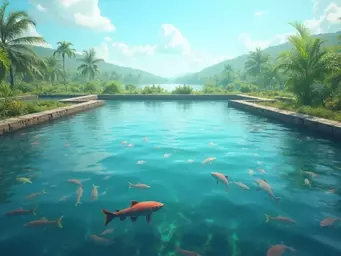

Modern Approach
Recirculating Aquaculture Systems (RAS)
- ✓ High-density production
- ✓ Environmental control
- ✓ Water conservation
- ✓ Suitable for: Tilapia, Trout, Barramundi
Posted on: 2025-10-26
By: Kwame Adom
Choosing between Recirculating Aquaculture Systems (RAS) and traditional pond systems represents one of the most significant decisions you'll make when planning your fish farming operation.
Each approach offers distinct advantages, challenges, and requirements that make it suitable for different situations, scales, and objectives. Understanding these differences thoroughly helps you select the system that aligns with your resources, technical capacity, and business goals.
The contrast between these systems is substantial. RAS represents high-technology intensive farming where you maintain complete environmental control through mechanical and biological water treatment, enabling fish production in warehouses or urban locations with minimal water consumption.
Pond systems rely on natural ecological processes in open water bodies, requiring more land and water but far less capital and technical expertise.
Neither approach is universally superior—your optimal choice depends entirely on your specific circumstances.
This comprehensive guide will help you understand how each system functions, their respective advantages and limitations, comparative economics, species suitability, and the factors that should guide your decision. By thoroughly understanding both options, you can make an informed choice that sets your aquaculture venture up for success rather than discovering too late that you've invested in a system mismatched to your situation.
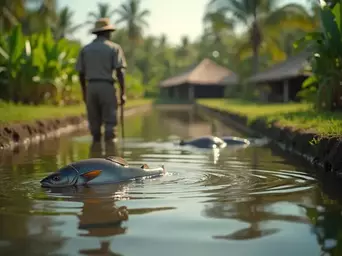
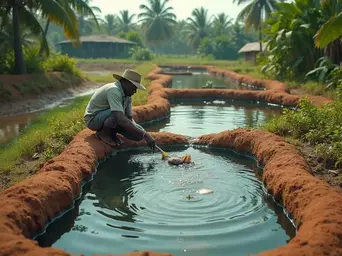
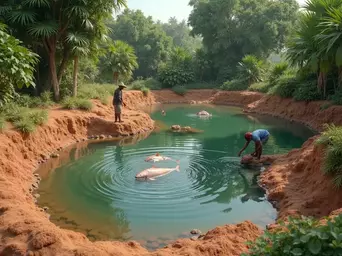
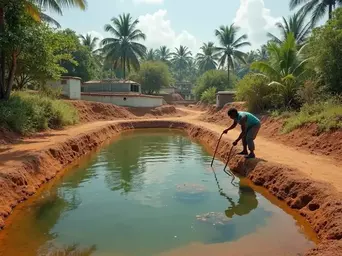
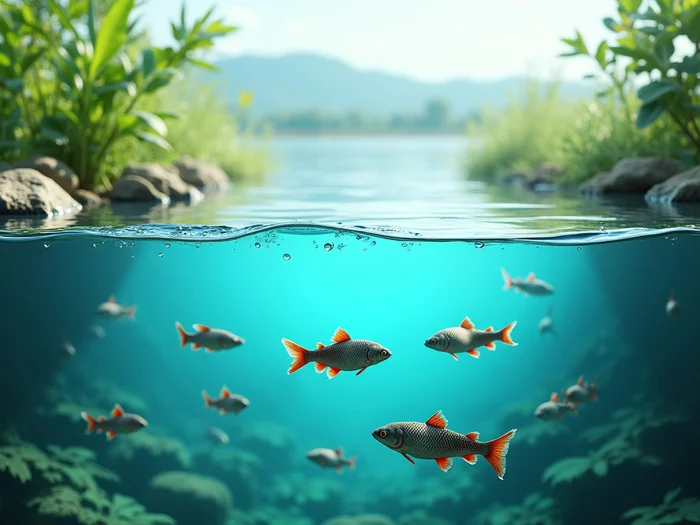
A side-by-side comparison of modern and traditional aquaculture methods for fish farming.
Recirculating Aquaculture Systems represent the high-technology approach to fish farming, where you raise fish in tanks whilst continuously treating and reusing the same water through mechanical and biological filtration.
Rather than flowing water through once and discharging it, RAS recycles water through treatment processes that remove waste, replenish oxygen, and maintain optimal conditions. You typically replace only 5-10% of system water daily, compared to 100% or more daily in flow-through systems.
The core principle behind RAS is creating a closed-loop system where water quality is maintained through active treatment rather than dilution with fresh water. This allows fish farming in locations where abundant water isn't available and provides complete control over environmental conditions regardless of external weather or seasonal variations.
A functioning RAS requires several integrated components working together to maintain water quality and fish health. Understanding these components helps you grasp both the capabilities and complexities of recirculating systems.
Fish rearing tanks hold your stock and must be designed for good water circulation, waste removal, and fish welfare.
Circular tanks provide better water flow patterns than rectangular designs, preventing dead zones where waste accumulates. Tanks typically operate at stocking densities of 50-100kg of fish per cubic metre of water—10 to 20 times higher than pond systems.
Mechanical filters remove solid waste (uneaten feed, faeces) before it breaks down and degrades water quality. Common mechanical filtration methods include drum filters, bead filters, or settling basins. These operate continuously, removing solids that would otherwise decompose and release ammonia into your system.
Biological filters house beneficial bacteria that convert toxic ammonia (excreted by fish and produced by decomposing waste) into less harmful compounds through a process called nitrification. These bacteria require surface area to colonise, oxygen to function, and time to establish stable populations. Biological filtration represents the heart of any RAS—without effective biofilters, ammonia accumulates to lethal levels within hours or days.
Oxygen injection systems maintain dissolved oxygen levels adequate for high-density fish populations. Methods include pure oxygen injection, venturi systems, or low-pressure oxygen aerators. RAS typically maintain dissolved oxygen above 6-7 mg/L—higher than pond systems—because high stocking densities create greater oxygen demand.
Water pumps circulate water through all system components. Pump reliability is critical since circulation failure quickly leads to oxygen depletion and fish mortality. Most RAS incorporate backup pumps and alarm systems to detect failures immediately.
Temperature control systems heat or cool water to maintain optimal growing temperatures regardless of ambient conditions. This allows year-round production at consistent growth rates, unlike ponds where temperature fluctuates seasonally.
RAS offers several compelling advantages that make it attractive despite higher costs and complexity. These benefits drive adoption in specific contexts where they outweigh the challenges.
The biosecurity advantages deserve particular emphasis. In RAS, you control everything entering your system, dramatically reducing disease introduction risks. This becomes especially valuable when farming species vulnerable to endemic diseases in local water bodies. Several South African facilities successfully farm tilapia in RAS where pond farming would face persistent disease challenges from local water sources.
Despite impressive capabilities, RAS faces significant challenges that limit adoption, particularly in African contexts. Understanding these limitations honestly helps you make realistic assessments of RAS viability for your situation.
Capital requirements are substantial. A small commercial RAS producing 20-30 tonnes annually might require 50-100 million Naira or 10-20 million Kenyan Shillings for complete setup including tanks, filtration equipment, pumps, backup systems, and facility construction. This represents 10-20 times the cost of equivalent pond capacity, putting RAS beyond reach for many farmers.
Technical expertise demands are high. Operating RAS requires understanding biological filtration, water chemistry, equipment maintenance, and system troubleshooting. A simple mistake—overfeed leading to ammonia spike, biofilter damage, equipment failure—can kill your entire stock within hours. You need trained operators or significant learning investment before attempting RAS.
Electricity dependency creates vulnerability. RAS depends absolutely on continuous power for pumps, aeration, and filtration. Power outages lasting just 2-3 hours can cause fish mortality if backup systems aren't available. In regions with unstable electrical grids, this represents serious risk requiring expensive backup generators and their associated fuel costs.
Operating costs run higher than ponds despite water savings. Electricity for pumps, aerators, and temperature control; equipment maintenance and replacement; and technical labour create ongoing expenses that exceed pond operations. Feed costs remain similar, but RAS adds 20-40% in additional operating expenses beyond feed.
System complexity means more potential failure points. Ponds have few components to fail—essentially just the pond structure itself. RAS involves pumps, filters, sensors, plumbing, and control systems, each representing potential failure points requiring spare parts, technical knowledge, and maintenance budgets.
Traditional pond systems have dominated aquaculture for millennia for good reason—they work reliably with minimal technology using natural ecological processes to maintain water quality. In pond farming, you stock fish into earthen or lined excavations holding standing water, provide supplementary feed, and allow natural processes to handle waste treatment and oxygen replenishment.
Ponds function as semi-natural ecosystems. Sunlight stimulates algae growth, which produces oxygen through photosynthesis. These algae and natural organisms provide supplementary nutrition for fish beyond formulated feeds. The large water volume and surface area naturally absorb and process waste products. This ecological approach requires understanding natural cycles but demands far less active management and equipment than RAS.
Understanding pond ecology helps you manage these systems effectively. Unlike RAS where you actively control everything, pond management involves working with natural processes.
In earthen ponds, the soil bottom and sides interact beneficially with the water. Soil organisms break down organic matter, whilst minerals gradually dissolve from soil into water, supporting phytoplankton growth. This creates a productive natural system though it also makes complete water quality control impossible.
Oxygen dynamics in ponds follow daily cycles. Algae produce oxygen during daylight through photosynthesis, often creating super-saturated conditions by afternoon. At night, both fish and algae consume oxygen, causing dissolved oxygen to decline steadily until sunrise. This natural cycle means pond oxygen is always fluctuating, unlike RAS where you maintain stable high levels.
Understanding these oxygen patterns explains why pond fish sometimes gasp at the surface in early morning—oxygen has declined overnight to stressful levels. Managing stocking density appropriately for your pond's natural oxygen dynamics becomes critical. You can supplement with mechanical aeration if needed, but this adds costs that erode ponds' economic advantages.
Waste treatment in ponds occurs through natural bacterial action and sedimentation. Solid wastes settle to the pond bottom where bacteria slowly decompose them. This process works effectively at moderate stocking densities but can be overwhelmed at intensive stocking, causing poor water quality and fish stress. For guidance on building effective pond systems, review our article on setting up a fish farm.
Pond aquaculture's dominance across Africa reflects genuine advantages that make it the practical choice for most farmers. These strengths explain why ponds account for over 90% of African aquaculture production.
Lower capital requirements make ponds accessible. A 200-square-metre earthen pond might cost 100,000-200,000 Naira or 50,000-100,000 Kenyan Shillings to construct—one-tenth to one-twentieth the cost per unit production capacity compared to RAS. This allows farmers to start with modest capital and expand gradually using profits from early cycles.
Technical simplicity means farmers can succeed without extensive training. Managing ponds requires observation skills, understanding fish behaviour, and basic water quality knowledge, but doesn't demand sophisticated technical expertise or constant equipment monitoring. Many successful pond farmers learned through apprenticeship and hands-on experience rather than formal technical education.
Natural productivity supplements feeding costs. Algae, insects, worms, and other natural pond life provide free nutrition that reduces your formulated feed requirements by 10-30% compared to tank systems with no natural food. This translates directly to lower operating costs and better profit margins.
Forgiving management allows recovery from mistakes. If you overfeed slightly, pond systems usually tolerate it without catastrophic consequences. Power outages don't threaten immediate fish mortality. This resilience gives beginning farmers room to learn without destroying their investment through inevitable early mistakes.
Scalability through replication works well with ponds. Want to double production? Build more ponds identical to your proven design. This straightforward scaling path suits farmers reinvesting profits into gradual expansion without massive capital requirements for each growth step.
Despite advantages, pond systems face real limitations that restrict their applicability in certain contexts. Honest understanding of these constraints helps you assess whether ponds suit your situation.
Land requirements are substantial. Producing significant volumes requires considerable space. A commercial operation producing 50 tonnes annually might need 2-3 hectares of pond space plus additional land for infrastructure, access, and buffer zones. Where land is expensive or unavailable, this becomes prohibitive.
Water needs can be significant. Whilst ponds don't continuously discharge water like flow-through systems, evaporation and seepage losses require regular refilling. In warm climates, evaporation alone might total 5-10mm daily, requiring substantial makeup water for large pond areas. If water is scarce or expensive to pump, this constrains pond farming.
Environmental control is limited. You can't maintain consistent temperature in ponds—water temperature follows ambient conditions, causing growth to slow during cool seasons. You have limited ability to adjust pH, manage oxygen fluctuations, or respond quickly to water quality problems. This environmental variability means pond productivity fluctuates seasonally more than RAS.
Disease management challenges arise from open systems. Water sources, wild birds, and runoff can introduce pathogens into ponds. Once disease establishes, treatment options in large water volumes are limited. This makes biosecurity more difficult than in closed RAS systems.
Stocking density limits constrain production per unit area. Even with aeration, pond stocking typically remains under 10-20kg per cubic metre compared to 50-100kg in RAS. This means ponds require much more space to achieve equivalent production volumes.
Direct comparison of RAS and pond systems reveals their different value propositions. Neither system is universally superior—each excels in specific circumstances where its strengths align with farmer needs and constraints.
RAS dramatically outperforms ponds in production per unit space. In just 100 cubic metres of water, RAS might produce 5-10 tonnes of fish annually through multiple production cycles at high stocking densities. The same water volume in pond format (covering perhaps 100-200 square metres at 0.5-1m depth) might yield 1-2 tonnes annually.
This difference becomes critical where land is limited or expensive. Urban or peri-urban locations with high land costs favour RAS despite higher capital and operating costs, because you're maximising production from minimal space. Rural areas with abundant cheap land favour ponds, where you can achieve high total production by simply building more ponds rather than intensifying each unit.
Understanding the full economic picture requires examining both capital and operating costs across system lifespans. The table below illustrates typical costs for small commercial operations producing 20-30 tonnes annually:
| Cost Category | RAS | Pond System |
|---|---|---|
| Initial Capital | ₦50-100M / KSh 10-20M | ₦5-10M / KSh 1-2M |
| Land Required | 500-1,000m² | 1-2 hectares |
| Water Use (daily) | 5-10% replacement | 5-15% for evap/seepage |
| Electricity Costs | ₦200-400K monthly | ₦20-50K monthly (if pumping) |
| Technical Expertise | High - specialized training | Moderate - learnable on-site |
| Stocking Density | 50-100 kg/m³ | 2-10 kg/m³ |
| System Lifespan | 10-15 years (with maintenance) | 20-30 years (earthen ponds) |
These economics explain adoption patterns. In developed countries with expensive land, labour, and water but cheap electricity and capital, RAS makes economic sense. In most African contexts where land is relatively affordable, labour is inexpensive, but capital and reliable electricity are scarce, ponds dominate because they match resource availability better.
Feed Conversion Ratio (FCR)—kilogrammes of feed required to produce one kilogramme of fish growth—often favours RAS slightly due to optimal environmental conditions and minimal energy expenditure by fish. RAS tilapia might achieve FCR of 1.2-1.4:1, whilst pond tilapia typically ranges 1.4-1.8:1. This difference accumulates significantly over thousands of kilogrammes of production.
However, this FCR advantage in RAS gets partially offset by lack of natural pond productivity. Ponds provide supplementary nutrition through algae and organisms, reducing formulated feed dependence. When you account for this natural food, the real-world feed cost difference between systems narrows considerably.
Growth rates in RAS typically exceed ponds due to optimised temperature and oxygen. Where pond tilapia might reach market size in 6-7 months, RAS tilapia might achieve the same size in 5-6 months through year-round optimal conditions. This faster turnover allows more production cycles annually, improving capital efficiency despite higher per-cycle costs.
Different fish species have varying environmental requirements and tolerance ranges that make them more or less suitable for RAS versus pond systems. Understanding these species-specific characteristics helps you match your system choice to your target species or vice versa.
Species well-suited to RAS share certain characteristics: they tolerate high stocking densities, adapt well to formulated feeds without natural food supplementation, and thrive in controlled water conditions. Commercial RAS operations worldwide successfully farm several species meeting these criteria.
Tilapia (Nile tilapia in particular) adapts excellently to RAS. The species tolerates high densities, grows rapidly on pelletted feeds, and thrives in the stable warm temperatures (28-30°C) easily maintained in RAS. South African and Kenyan RAS facilities successfully produce tilapia for local and export markets. For more on tilapia suitability, see our guide on selecting fish species for aquaculture.
Trout species perform well in RAS where temperature control maintains the cool conditions (12-16°C) these fish require. In tropical African regions where ponds become too warm for trout, RAS with chilling systems allows year-round production of this high-value species. Highland regions of Kenya and South Africa operate trout RAS serving niche markets willing to pay premium prices.
Barramundi (Asian seabass) succeeds in RAS though this species remains uncommon in Africa. Some South African operations farm barramundi in RAS for export, demonstrating feasibility for species commanding prices that justify RAS costs.
Pond-adapted species tolerate variable environmental conditions, benefit from natural pond productivity, and don't require the precise control that RAS provides. These characteristics make them economical choices for pond culture across Africa.
African catfish (Clarias gariepinus) dominates West African pond farming, particularly in Nigeria. This hardy species tolerates wide temperature ranges, low dissolved oxygen (due to air-breathing capability), and variable water quality. Catfish thrives in earthen ponds with minimal technology, making it ideal for farmers without sophisticated equipment or technical training. Nigeria produces over 300,000 tonnes of farmed catfish annually, nearly all from pond systems.
Nile tilapia succeeds in both systems but remains more commonly farmed in ponds across East and Southern Africa. The species benefits from natural pond productivity (consuming algae and organisms), tolerates moderate environmental fluctuations, and grows well at the moderate densities economical in ponds. Kenya, Uganda, Tanzania, and Zambia all produce substantial tilapia volumes from pond culture.
Common carp, whilst less popular than tilapia or catfish in most African markets, adapts excellently to pond conditions where grown. This bottom-feeding species utilises pond detritus and natural organisms effectively, reducing formulated feed requirements. Some Southern African farms successfully culture carp for niche markets.
Nile tilapia deserves special mention as the species successfully farmed in both RAS and ponds across Africa. This versatility reflects tilapia's remarkable adaptability and hardiness. Whether you choose RAS or ponds for tilapia depends more on your resources, technical capacity, and market access than on species requirements—tilapia will perform reasonably well in either environment.
When choosing between RAS and ponds, consider your target species carefully. If farming species requiring precise environmental control (like trout in tropical regions) or commanding prices that justify RAS costs, the system choice is straightforward. For hardy species like catfish or tilapia that thrive in ponds, choose your system based on economic and resource factors rather than species requirements alone.
Selecting between RAS and ponds requires honest assessment of multiple factors specific to your circumstances. Neither system is universally superior—your choice should align with your available resources, technical capacity, market access, and business objectives.
Begin by evaluating what resources you actually have reliable access to, as these determine which system you can successfully implement and operate.
Capital availability influences your viable options. If you have 50-100 million Naira or 10-20 million Kenyan Shillings available for investment, RAS becomes technically feasible. With 5-10 million Naira or 1-2 million Shillings, ponds represent your realistic option. Attempting RAS without adequate capital leads to under-equipped systems prone to failures, whilst ponds can succeed at modest scales with proportionally modest investment.
Land availability matters differently for each system. Limited land (under 1,000 square metres) constrains pond farming but might accommodate small RAS. Abundant land (multiple hectares) allows pond expansion whilst making RAS's space efficiency less valuable. Urban settings with no agricultural land but industrial space favour RAS, whilst rural farms with acreage naturally suit ponds.
Water access determines feasibility fundamentally. Limited water sources (low-yield boreholes, expensive municipal supply) favour RAS's minimal consumption. Abundant reliable water allows pond farming without concern about supply constraints. In water-scarce regions, RAS may be your only viable option regardless of other factors.
Electricity reliability is critical for RAS but minor for ponds. Stable grid power or affordable backup generation enables RAS operation. Frequent outages without backup capability make RAS extremely risky. Ponds operate successfully with minimal or no electricity, though pumping and optional aeration require power.
Your technical abilities and access to expertise significantly affect which system you can manage successfully. Be honest about your current skills and realistic about acquiring needed knowledge.
RAS demands understanding water chemistry, biological filtration, equipment maintenance, and system troubleshooting. You need ability to interpret dissolved oxygen, pH, ammonia, nitrite, and nitrate readings, then take appropriate corrective actions. Equipment failures require rapid diagnosis and repair. Without these skills or reliable access to technical support, RAS failure risk is high.
Pond management requires observational skills, understanding fish behaviour, and basic water quality knowledge but not sophisticated technical expertise. Many successful pond farmers learned through apprenticeship and hands-on experience. You can start with limited formal training and develop skills through practice in ways difficult with RAS's higher complexity and failure consequences.
Your target markets influence which system makes economic sense. Consider both species demand and price points when making system choices.
Commodity markets paying standard prices for common species (catfish, tilapia) typically don't justify RAS's premium costs. If you're selling fish at ₦800-1,200 per kilogramme to wholesalers or processors, pond economics work better than RAS's higher production costs. Commodity production requires cost minimisation that ponds achieve better than RAS.
Premium markets paying elevated prices for specialty products, certified organic fish, or year-round consistent supply might justify RAS. If selling directly to restaurants at ₦2,000+ per kilogramme or exporting to markets paying premium prices, RAS's capabilities (consistent year-round production, precise quality control, certification possibilities) become economically viable.
For comprehensive market analysis before committing to either system, review our article on market research for fish farming.
Different systems carry different risk profiles that suit different risk tolerances. Understanding your comfort with various risks helps guide system selection.
RAS concentrates risk—high capital investment, technical complexity, and system dependencies create scenarios where single failures cause major losses. Power outages, biofilter crashes, or disease outbreaks in high-density tanks can destroy your entire investment rapidly. This concentration suits risk-tolerant farmers with resources to absorb potential losses or secure technical support minimising failure probability.
Ponds distribute risk across multiple units operating independently. If one pond faces problems, others continue producing. Gradual expansion allows learning with modest stakes before scaling up. This distributed risk approach suits risk-averse farmers or those without safety nets to recover from catastrophic losses.
Between pure RAS and traditional static ponds lies a spectrum of hybrid approaches combining elements of both systems. These intermediate options offer ways to gain some RAS benefits without full system costs and complexity.
You can add limited recirculation to pond systems, pumping water through simple mechanical filters before returning it to ponds. This removes some solids, potentially allowing slightly higher stocking densities than purely static ponds whilst avoiding RAS's full complexity and cost. Several Kenyan and Nigerian farmers successfully operate such systems, achieving production intensities between traditional ponds and full RAS.
Using tanks with continuous fresh water flow (where abundant water exists) or partial recirculation provides some RAS advantages—higher densities, better management control—without full system complexity. These systems suit locations with good water sources but limited land, providing middle-ground solutions.
Linking multiple ponds in sequence where water flows from one to the next provides some natural treatment whilst maintaining pond simplicity. The first pond's effluent provides nutrients supporting plankton growth in downstream ponds, creating integrated systems that function at higher total densities than single static ponds.
These hybrid approaches deserve consideration if you find pure RAS too complex or expensive but want production intensities exceeding basic ponds. They represent pragmatic middle ground that might suit your specific circumstances better than either extreme.
After understanding both systems thoroughly, you can make an informed choice aligned with your circumstances. Remember that this decision isn't permanent—many farmers start with ponds, gain experience and capital, then later experiment with RAS or hybrid systems if conditions warrant.
Start conservatively regardless of which system you choose. Build fewer units than you ultimately want, allowing mastery of fundamentals before expansion. A well-managed small operation teaches more and risks less than an oversized struggling operation. Both RAS and pond farming involve learning curves best navigated at modest scales initially.
Document your experiences carefully. Record costs, production outcomes, challenges faced, and solutions that worked. This creates invaluable reference material for improving subsequent cycles and helps you make evidence-based decisions about system modifications or expansion.
Connect with other farmers using your chosen system. Their practical experience provides insights no textbook can match. Visit operating farms, ask questions, learn from others' successes and mistakes. The knowledge you gain from experienced practitioners often proves more valuable than formal training.
Be willing to adapt your approach based on results. If your initial system choice proves problematic despite honest effort, don't persist stubbornly. The goal is successful fish farming, not proving you chose correctly initially. Successful farmers adjust their methods based on evidence and outcomes.
RAS requires 10-20 times more capital investment than ponds for equivalent production capacity (₦50-100M vs ₦5-10M for 20-30 tonne annual production). However, RAS needs only 500-1,000m² space whilst ponds require 1-2 hectares. Operating costs for RAS run 20-40% higher than ponds due to electricity (₦200-400K monthly vs ₦20-50K), equipment maintenance, and technical labour. Ponds have lower costs but require more land and water.
RAS is generally not recommended for beginners due to technical complexity, high capital risk, and sophisticated management requirements. The system demands understanding of water chemistry, biological filtration, equipment maintenance, and rapid troubleshooting of failures. Most successful RAS operators gained experience first with simpler pond systems before attempting recirculating systems. If you're determined to start with RAS, invest heavily in training, secure ongoing technical support, and start at the smallest viable scale to limit learning costs.
Both systems can produce excellent quality fish when managed properly. RAS offers advantages in year-round consistency, precise environmental control, and strong biosecurity reducing disease exposure. This can result in more uniform product and potentially organic or eco-certification opportunities. Ponds provide fish with natural food supplements and environment that some consumers prefer, viewing pond-raised fish as more "natural." Quality ultimately depends more on management practices, feed quality, and handling than on system type itself.
Climate significantly influences system viability. In regions with distinct cool seasons, pond production slows or stops during cold months whilst RAS maintains year-round production through temperature control. Tropical regions with stable warm temperatures allow consistent pond productivity approaching RAS's year-round capability. Areas with extreme temperatures (very hot or very cold) benefit from RAS's climate independence. Water-scarce arid regions favour RAS's minimal water use, whilst humid regions with abundant rainfall suit pond systems' water needs.
Yes, this represents a practical growth pathway many farmers follow. You can start with basic pond systems, gain experience and generate profits, then gradually add recirculation components (mechanical filtration, aeration intensification, partial water treatment) to increase production intensity. This incremental approach allows learning at each step whilst spreading capital investment over time. Full RAS conversion requires substantial investment, but hybrid systems combining pond and RAS elements offer middle-ground options using your existing infrastructure as foundation.
Nile tilapia offers maximum flexibility as it thrives in both RAS and pond systems. This allows you to choose your production system based on economic and resource factors rather than species constraints. Tilapia's hardiness, rapid growth, and strong market acceptance across Africa make it the safest species choice for farmers uncertain about their system selection. Once you've gained experience with tilapia in your chosen system, you can potentially diversify to more specialised species if market opportunities warrant.
Yomi Adisa
Yomi Adisa is the lead researcher at Fish Farming Business, where he studies what makes aquaculture ventures profitable across Africa. His research focuses on market patterns, buyer preferences, and the business decisions that determine success or failure in fish farming.