
Why Ignoring Quality Control Could Destroy Your Fish Farm’s Hard-Earned Reputation
Posted on: 2025-11-09
By: Yomi Adisa
You've spent months nurturing your fish, monitoring water quality, and ensuring optimal feeding schedules. Your catfish are thriving, your tilapia are reaching market size perfectly, and your production numbers look impressive on paper. But here's the uncomfortable truth: none of that matters if your quality control systems fail when it matters most.
One contaminated batch, one missed inspection, or one shortcut during harvesting can undo years of careful reputation building overnight. In Lagos markets, news of poor-quality fish travels faster than WhatsApp messages during election season. When buyers lose trust, they don't just stop purchasing from you—they warn every other trader in their network.
Consider what happened to a fish farmer in Ogun State who delivered 2,000kg of apparently healthy catfish to a major distributor. Within 48 hours, complaints started flooding in about off-flavours and unusual odours.
The distributor immediately cancelled their contract worth ₦800,000 monthly and demanded compensation for customer complaints. That single quality control failure cost him ₦2.4 million in lost annual revenue, plus the immeasurable damage to his reputation across three local government areas.
Quality control isn't just about avoiding immediate losses—it's about protecting the business asset you've worked hardest to build: your reputation. When you understand exactly what can go wrong and how quickly trust evaporates, you'll realise why successful fish farmers treat quality assurance as their most critical business investment, not an optional expense.
What You Will Learn
- The immediate and long-term financial consequences of ignoring quality control.
- How quality failures can rapidly erode trust within market networks.
- Key best practices for implementing effective quality assurance systems.
- The critical role of communication in managing quality crises.
- Strategies for rebuilding reputation after a quality incident.
Understanding the Risks of Poor Quality Control
You need to understand that quality control failures don't just affect your current harvest—they create cascading problems that compound over time. Most fish farmers focus on production metrics like growth rates and feed conversion ratios, but they underestimate how quickly quality issues can destroy everything they've built. The risks extend far beyond losing a single batch of fish.
When quality control systems break down, you're not just dealing with immediate product losses. You're facing a web of interconnected problems that can cripple your operation for months or even years. The financial impact hits you from multiple directions simultaneously, while regulatory consequences can shut down your entire operation without warning.
The Economic Impact of Quality Control Failures
Your immediate losses from quality failures are just the beginning of your financial problems. When a distributor in Ibadan receives contaminated fish, they don't just refuse that shipment—they typically demand compensation for any products already sold to retailers, plus coverage for customer complaints and potential health issues.
The mathematics of quality failure are brutal. You lose the value of the rejected product, pay for disposal costs, cover compensation claims, and forfeit future orders from that buyer. A farmer in Kaduna discovered this when bacterial contamination in his tilapia led to a ₦400,000 product recall. The distributor demanded ₦150,000 in compensation, he paid ₦50,000 for proper disposal, and lost a contract worth ₦300,000 monthly for the remainder of the year.
Hidden Costs of Quality Failures
Beyond the obvious losses, quality control failures trigger expenses most farmers never anticipate:
- Emergency testing and analysis: ₦25,000-₦75,000 per incident
- Legal consultation and compliance reviews: ₦100,000-₦300,000
- Enhanced monitoring systems implementation: ₦200,000-₦500,000
- Staff retraining and certification programmes: ₦50,000-₦150,000
- Insurance premium increases: 15-30% annual increase
But the most devastating cost is opportunity cost. While you're dealing with quality crises, your competitors are building relationships with the buyers you've lost. Market share in fish farming is incredibly difficult to recover once you've demonstrated unreliability.
Regulatory Consequences and Compliance Issues
You're operating in an increasingly regulated environment where government agencies have real power to shut down non-compliant operations. The National Agency for Food and Drug Administration and Control (NAFDAC) doesn't just issue warnings—they can immediately suspend your operations, seize your inventory, and impose fines that can bankrupt smaller farms.
Regulatory violations create a permanent record that follows your business. When you apply for new permits, seek financing, or try to enter new markets, these compliance failures appear in background checks. Banks become reluctant to extend credit, insurance companies increase premiums, and potential partners question your operational competence.
The complexity of fish farming regulations means you're vulnerable to violations you might not even know exist. Water quality standards, antibiotic usage restrictions, harvesting protocols, transportation requirements, and storage specifications all carry legal consequences. A farmer in Cross River State faced ₦500,000 in fines and a six-month operational suspension because his transportation vehicles didn't meet cold chain requirements he wasn't aware existed.
| Violation Type | Typical Penalties | Recovery Time |
|---|---|---|
| Water quality violations | ₦200,000-₦800,000 fines | 3-6 months |
| Antibiotic residue detection | ₦500,000-₦1,500,000 | 6-12 months |
| Cold chain violations | ₦300,000-₦1,000,000 | 4-8 months |
The regulatory landscape is becoming more stringent, not more lenient. Export opportunities require compliance with international standards that make local regulations seem simple. If you plan to grow beyond local markets, regulatory compliance becomes even more critical to your long-term viability.
Reputational Damage: The Hidden Cost
Your reputation is your most valuable business asset, and it's also the most fragile. In Nigerian fish markets, trust travels through networks of relationships built over years. When quality problems surface, the damage spreads through these networks faster than you can contain it.
Reputational damage operates on multiple levels simultaneously. Individual consumers stop buying your products and warn their friends and family. Retailers remove your fish from their displays and refuse future deliveries. Distributors cancel contracts and share their experiences with other suppliers in their network. The ripple effects can reach markets you've never even served.
The permanence of reputational damage is what makes it so devastating. A farmer in Kano built relationships with buyers across three states over eight years. One incident involving fish with unusual texture and taste destroyed those relationships within two weeks. Eighteen months later, he's still struggling to rebuild trust with buyers who remember his name associated with quality problems.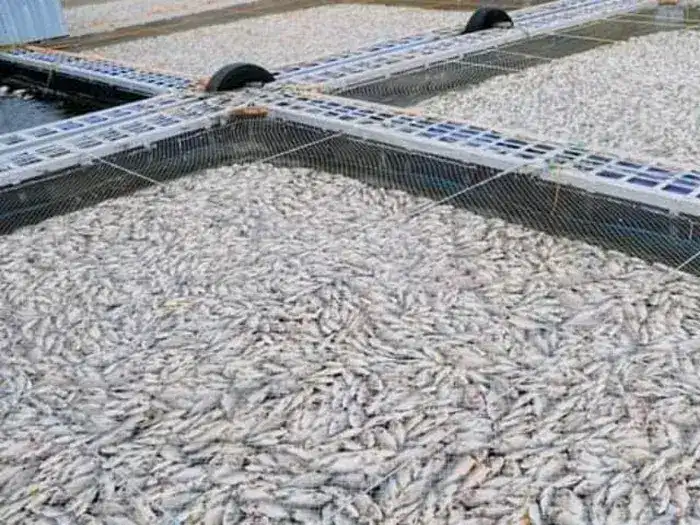
Social media and digital communication have accelerated the speed of reputational damage. Photos of poor-quality fish, complaints about taste or safety, and warnings about unreliable suppliers spread through WhatsApp groups, Facebook pages, and market networks within hours. You can't control the narrative once it starts spreading.
The psychological impact on your team compounds the business damage. When your staff see buyers rejecting products they worked hard to produce, morale suffers. Quality control becomes associated with failure rather than prevention. Your best employees start questioning whether they want to work for an operation with quality problems, and recruiting new talent becomes more difficult when your reputation precedes you.
How Quality Failures Erode Trust in Fish Farming
You need to understand that trust in fish farming operates like a delicate ecosystem—it takes years to build but can collapse overnight. When quality failures occur, they don't just affect your immediate sales; they trigger a chain reaction that spreads through interconnected networks of buyers, retailers, and consumers. The erosion happens faster than most farmers realise, and the recovery process is far more complex than simply improving your next batch.
Trust operates on multiple levels in African fish markets. Personal relationships between you and individual buyers, professional reputations within trading networks, and brand recognition among end consumers all contribute to your market position. When quality problems surface, each level of trust faces different types of damage that require different recovery strategies.
The speed at which trust erodes has accelerated dramatically with digital communication. What once took weeks to spread through market gossip now travels through WhatsApp groups and social media within hours. You're not just managing product quality—you're managing information flow and perception across multiple communication channels simultaneously.
Real-World Case Studies of Reputation Loss
A catfish farmer in Oyo State learned this lesson when his fish developed an unusual muddy taste during the rainy season. He delivered 1,500kg to his regular distributor in Ibadan, confident that his production processes were sound. Within 24 hours, complaints started coming from restaurants and retailers about the off-flavour. The distributor immediately stopped accepting his fish and demanded ₦450,000 in compensation for products already distributed.
The damage spread beyond that single distributor. Restaurant owners who received the affected fish shared their experience with other suppliers in their network. Retail traders warned their colleagues about quality inconsistencies. Within two weeks, the farmer found himself blacklisted by buyers he'd never even met, simply because word had spread through interconnected trading relationships.
The recovery took eighteen months and cost him over ₦2 million in lost revenue. He had to rebuild relationships one buyer at a time, often accepting lower prices to prove his quality had improved. Some buyers never returned, having found alternative suppliers during his absence from the market.
The Anatomy of Trust Erosion
Quality failures damage trust through predictable patterns:
- Immediate rejection: Direct buyers refuse current and future deliveries
- Network spread: Information travels through trading relationships within 48-72 hours
- Market avoidance: New potential buyers hear warnings before you can approach them
- Price penalties: Remaining buyers demand 15-30% discounts to offset perceived risk
- Increased scrutiny: Every future delivery faces enhanced inspection and suspicion
The psychological impact on buyers is often underestimated. When a restaurant serves poor-quality fish to customers, they don't just lose money—they risk their own reputation with diners. This creates a defensive mindset where buyers become extremely risk-averse about working with suppliers who have demonstrated quality problems.
Your competitors benefit immediately from your quality failures. While you're dealing with complaints and trying to rebuild trust, they're approaching your former buyers with promises of consistent quality. Market share in fish farming is finite, and lost customers often become permanently loyal to whoever solved their problems during your crisis.
Stakeholder Perspectives on Quality and Reputation
You need to understand how different stakeholders view quality failures because each group has different priorities and different tolerance levels for risk. Consumers focus on immediate safety and taste concerns, but they also make long-term purchasing decisions based on their experiences. Retailers worry about customer complaints and product returns that affect their own reputation. Distributors consider the operational costs of dealing with quality problems and the risk to their relationships with multiple buyers.
Restaurant owners represent one of the most unforgiving stakeholder groups when it comes to quality issues. They can't afford to serve substandard fish because their customers will blame the restaurant, not the supplier. A restaurant owner in Lagos explained that one bad fish dish can generate negative reviews that affect their business for months. This is why restaurants often permanently switch suppliers after a single quality incident.
| Stakeholder | Primary Concern | Recovery Expectation |
|---|---|---|
| Consumers | Safety and taste consistency | 6-12 months of proven quality |
| Retailers | Customer complaints and returns | 3-6 months with guarantees |
| Restaurants | Reputation with diners | 12-18 months minimum |
| Distributors | Operational disruption costs | 6-9 months with penalties |
Distributors operate with thin margins and can't absorb the costs of quality problems. When they receive complaints about your fish, they face immediate expenses for product recalls, customer compensation, and alternative sourcing. They also risk damaging their own relationships with retailers and restaurants. This is why distributors often impose the harshest penalties for quality failures—they're protecting their entire business network.
Regulatory officials view quality failures as potential public health risks that reflect poorly on their oversight capabilities. When quality problems become public, they face pressure to demonstrate stronger enforcement. This often means increased inspections, stricter compliance requirements, and higher penalties for future violations. Your quality failure becomes their regulatory failure in the eyes of their superiors.
The interconnected nature of these stakeholder relationships means that disappointing one group often triggers problems with others. When a distributor cancels your contract due to quality issues, they typically share their reasons with other distributors to protect the broader network. When restaurants stop buying your fish, they often warn other restaurant owners in their area. This network effect amplifies the impact of quality failures far beyond your immediate customer base.
Understanding these perspectives helps you realise why quality control isn't just about meeting minimum standards—it's about exceeding expectations consistently enough that stakeholders view you as a reliable partner rather than a potential risk to their own operations.
Implementing Best Practices to Safeguard Your Reputation
You cannot afford to treat quality control as an afterthought or something you'll address when problems arise. By the time quality issues surface in your market, the damage to your reputation has already begun. Successful fish farmers understand that quality assurance systems must be built into every aspect of their operation from day one, not retrofitted after the first crisis.
The complexity of maintaining consistent quality in African fish farming environments requires systematic approaches that account for variable water conditions, seasonal challenges, power fluctuations, and transportation delays. You're not just managing fish health—you're managing every factor that could compromise product quality between your ponds and your customers' plates.
Most farmers underestimate the interconnected nature of quality control. A power outage that affects your aeration system doesn't just stress your fish—it can alter their flesh texture and taste. Transportation delays during hot weather don't just inconvenience buyers—they can trigger bacterial growth that makes your fish unsafe. You need systems that anticipate these challenges and prevent quality degradation before it occurs.
Essential Quality Assurance Systems
You need to understand that quality assurance in fish farming goes far beyond checking if your fish look healthy at harvest time. Effective quality systems track and control every variable that could affect your final product, from water quality parameters to post-harvest handling procedures. The Hazard Analysis and Critical Control Points (HACCP) framework provides a systematic approach to identifying and managing these quality risks.
HACCP systems require you to identify every point in your production process where quality could be compromised, establish monitoring procedures for each critical point, and define corrective actions when parameters drift outside acceptable ranges. For fish farmers, critical control points typically include water quality management, feed storage and administration, disease prevention protocols, harvesting procedures, and cold chain maintenance.
Critical Control Points in Fish Farming
Your quality assurance system must monitor and control these essential areas:
- Water quality parameters: pH, dissolved oxygen, ammonia, temperature fluctuations
- Feed quality and storage: Moisture content, contamination prevention, rotation schedules
- Health monitoring: Disease detection, treatment protocols, withdrawal periods
- Harvesting procedures: Timing, handling methods, stress minimisation
- Post-harvest handling: Temperature control, contamination prevention, transportation
The documentation requirements for effective HACCP implementation often overwhelm farmers who are used to managing by observation and experience. You need records that demonstrate consistent monitoring, corrective actions taken when problems arise, and verification that your systems are working effectively. This documentation becomes crucial when regulatory inspectors arrive or when buyers demand proof of your quality control procedures.
Implementation costs for comprehensive quality assurance systems typically range from ₦200,000 to ₦800,000 for medium-sized operations, depending on the level of automation and monitoring equipment required. However, the cost of not having these systems—in terms of product losses, regulatory penalties, and reputation damage—usually exceeds implementation costs within the first year.
The challenge lies in adapting international quality standards to African operating conditions. Power instability affects monitoring equipment reliability. Limited access to testing laboratories delays verification procedures. Seasonal variations in water quality require more frequent monitoring than temperate climate guidelines suggest. You need quality systems that work within these constraints while still meeting buyer expectations and regulatory requirements.
Steps for Effective Quality Control
You must establish quality control as a daily discipline, not a periodic activity. Effective quality control begins with understanding exactly what quality means to your specific buyers and markets. Restaurant buyers prioritise consistent texture and taste. Export markets focus on safety parameters and traceability. Local retailers care about shelf life and visual appearance. Your quality control measures must align with these specific requirements.
Your first priority should be establishing baseline measurements for all critical parameters. You cannot manage what you don't measure, and you cannot improve what you don't track consistently. This means investing in reliable testing equipment, training staff on proper procedures, and creating recording systems that capture meaningful data rather than just compliance checkboxes.
Staff training represents one of your most critical quality control investments. Your employees need to understand not just what to do, but why each procedure matters and what happens when shortcuts are taken. A worker who understands that improper handling during harvest can trigger stress responses that affect flesh quality is more likely to follow protocols carefully than someone who's simply told to "be gentle with the fish."
| Quality Control Area | Monitoring Frequency | Investment Required |
|---|---|---|
| Water quality testing | Daily for key parameters | ₦150,000-₦300,000 |
| Feed quality verification | Each delivery batch | ₦75,000-₦150,000 |
| Fish health monitoring | Weekly systematic checks | ₦100,000-₦250,000 |
| Harvest quality control | Every harvest event | ₦50,000-₦120,000 |
Supplier quality management often gets overlooked, but your quality is only as good as your inputs. Feed contamination, poor-quality fingerlings, and substandard chemicals can compromise your entire production cycle regardless of how well you manage your ponds. You need verification procedures for every input that enters your farm, along with alternative suppliers when quality problems arise.
The timing of quality control interventions matters more than most farmers realise. Waiting until harvest to assess quality means you've missed opportunities to correct problems during the production cycle. Early detection of off-flavours, texture changes, or health issues allows for corrective actions that can salvage a harvest rather than losing it entirely.
Leveraging Technology for Real-Time Quality Monitoring
You're operating in an era where technology can provide continuous monitoring capabilities that were impossible just a few years ago. Automated water quality monitoring systems can alert you to parameter changes before they become critical. Digital record-keeping systems can track trends and patterns that manual recording might miss. Mobile applications can connect you with testing laboratories and provide instant access to quality databases.
The challenge lies in selecting technologies that work reliably in African operating conditions while providing meaningful improvements over manual systems. Solar-powered monitoring equipment addresses power instability issues. Satellite-based communication systems work where cellular coverage is unreliable. Cloud-based data storage ensures your quality records survive equipment failures or natural disasters.
Investment in monitoring technology typically ranges from ₦300,000 to ₦1,200,000 for comprehensive systems, but the return on investment comes through prevented losses rather than increased production. A single prevented quality crisis can justify the entire technology investment, while the ongoing benefits of early problem detection compound over time.
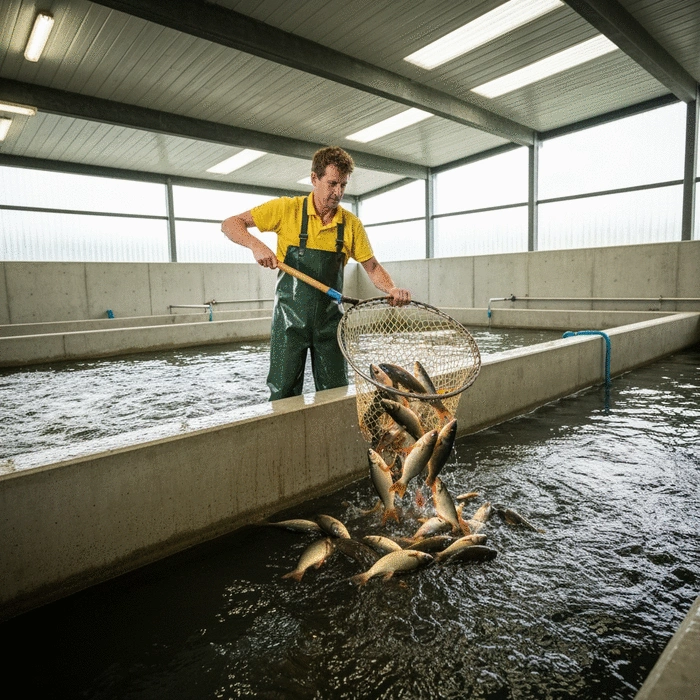
Traceability systems represent one of the most valuable technological investments for quality control. When quality problems arise, you need the ability to trace exactly which inputs, processes, and conditions contributed to the issue. This allows for targeted corrective actions rather than wholesale changes that might address symptoms while missing root causes.
Integration between different monitoring systems provides insights that individual measurements cannot reveal. Correlating water quality trends with fish behaviour patterns, feed consumption rates, and environmental conditions helps you understand the complex interactions that affect final product quality. This systems-level understanding enables proactive quality management rather than reactive problem-solving.
The key to successful technology implementation lies in ensuring your staff can operate and maintain the systems effectively. The most sophisticated monitoring equipment becomes useless if your team cannot interpret the data or respond appropriately to alerts. Training and ongoing technical support are essential components of any technology investment in quality control.
Strategies for Rebuilding Reputation After a Quality Crisis
You will face quality challenges at some point in your fish farming career—the question isn't whether problems will occur, but how effectively you'll respond when they do. The difference between farms that recover from quality crises and those that never regain market trust lies in their crisis response strategies and long-term reputation recovery plans. Most farmers focus on fixing the immediate problem while ignoring the broader reputation damage that continues spreading through market networks.
The speed of your initial response determines how much control you retain over the narrative surrounding your quality crisis. Buyers, regulators, and market networks form opinions about your competence and reliability based on how quickly and effectively you acknowledge problems, implement solutions, and communicate with affected stakeholders. Delayed or inadequate responses amplify the reputational damage far beyond the original quality issue.
Your crisis response must address multiple audiences simultaneously—immediate customers who received affected products, broader market networks that might hear about the problem, regulatory authorities who need to verify your corrective actions, and your own team who need confidence that the situation is under control. Each audience has different information needs and different expectations for your response.
Effective Crisis Management Tactics
You need to act within hours, not days, when quality problems surface. The first 24-48 hours after a quality issue becomes known determine whether you're managing a contained problem or fighting widespread reputation damage. Your immediate priorities must include stopping the distribution of affected products, notifying all potentially impacted buyers, and beginning root cause analysis to prevent recurrence.
Communication during a crisis requires absolute transparency about what you know and honest acknowledgment of what you don't yet understand. Buyers respect farmers who immediately admit problems and take responsibility, but they lose trust in those who minimise issues or blame external factors. A farmer in Rivers State successfully contained a quality crisis by immediately calling every buyer who might have received affected fish, explaining exactly what went wrong, and offering full compensation before anyone complained.
Crisis Response Timeline
Your crisis management must follow this critical timeline:
- Hour 1-4: Stop distribution, assess scope, notify immediate buyers
- Day 1: Complete buyer notification, begin root cause analysis, document everything
- Day 2-3: Implement immediate corrective actions, communicate with regulators
- Week 1: Complete investigation, share findings with stakeholders
- Month 1: Demonstrate sustained corrective measures, begin reputation recovery
Your corrective actions must be visible and verifiable, not just internal process changes. Buyers need to see evidence that you've addressed the root causes, not just the symptoms. This might mean investing in new monitoring equipment, changing suppliers, retraining staff, or implementing additional quality control procedures. The key is ensuring your corrective actions address the specific concerns of the stakeholders who lost trust.
Documentation becomes crucial during crisis management because your response will be scrutinised by buyers, regulators, and potentially legal advisors. You need detailed records of what went wrong, when you discovered it, what actions you took, and how you verified the effectiveness of your corrective measures. This documentation protects you legally and demonstrates your commitment to preventing recurrence.
The financial cost of effective crisis management typically ranges from ₦500,000 to ₦2,000,000 depending on the scope of the problem, including product recalls, compensation payments, corrective action implementation, and enhanced monitoring systems. However, inadequate crisis response often costs 3-5 times more in lost revenue and extended reputation recovery periods.
Long-Term Reputation Recovery Plans
You cannot rebuild reputation through marketing or public relations—you must demonstrate consistent quality performance over extended periods. Reputation recovery requires sustained excellence that gradually rebuilds confidence among buyers who experienced your quality problems. The timeline for complete reputation recovery typically ranges from 12-24 months, depending on the severity of the original crisis and the effectiveness of your recovery efforts.
Your reputation recovery strategy must include systematic re-engagement with lost customers, but you cannot approach them until you've demonstrably solved the underlying problems. Premature attempts to regain business often backfire because buyers interpret them as sales pressure rather than genuine quality improvement. You need to prove your improvements to neutral parties before approaching buyers who lost trust.
Third-party verification plays a crucial role in reputation recovery because buyers are naturally sceptical of your own claims about quality improvements. Independent quality audits, laboratory testing results, and regulatory compliance certifications provide objective evidence that your corrective actions have been effective. Some farmers invest in international quality certifications specifically to demonstrate their commitment to excellence after a crisis.
| Recovery Phase | Duration | Key Activities |
|---|---|---|
| Stabilisation | 3-6 months | Implement corrective actions, demonstrate consistency |
| Verification | 6-12 months | Third-party audits, quality certifications |
| Re-engagement | 12-18 months | Systematic buyer outreach, relationship rebuilding |
| Full recovery | 18-24 months | Market position restoration, premium pricing recovery |
Pricing strategy during reputation recovery requires careful balance between demonstrating value and acknowledging reduced market position. You may need to accept lower prices initially to regain market access, but you must have a clear plan for gradually returning to premium pricing as trust rebuilds. Permanent price reductions signal that you view your products as permanently inferior, which undermines long-term reputation recovery.
Your team's morale and commitment become critical factors in reputation recovery because buyers can sense whether your staff believe in your quality improvements. Employees who are confident in your systems and proud of your products communicate differently with buyers than those who are uncertain about quality or embarrassed by past problems. Investing in staff training, recognition, and engagement pays dividends in how your farm is perceived by external stakeholders.
The most successful reputation recovery strategies include systematic measurement of trust indicators—buyer willingness to place orders, price premiums achieved, referral rates, and complaint frequencies. These metrics help you understand whether your recovery efforts are working and identify areas that need additional attention. Recovery is not complete until these indicators return to pre-crisis levels or better.
Where Do You Go From Here?
You're standing at a critical decision point that will determine whether your fish farming operation thrives or merely survives in an increasingly competitive market. The choice isn't between perfect quality control and accepting occasional problems—it's between proactive quality management that protects your reputation and reactive crisis management that consumes your resources and destroys your market position.
The evidence is clear: farms that invest in comprehensive quality control systems before problems arise consistently outperform those that treat quality as an afterthought. The financial returns from prevented losses, maintained buyer relationships, and premium pricing far exceed the costs of implementing robust quality assurance systems. Yet many farmers continue to gamble with their reputation because they underestimate how quickly trust can evaporate.
Your competitors are making quality investments while you're reading this article. The buyers who currently purchase your fish are evaluating alternative suppliers who can demonstrate superior quality control. The regulatory environment is becoming more stringent, not more lenient. The window for implementing quality systems before facing a crisis is narrowing with each production cycle you delay.
The Choices Ahead: Investing in Quality or Risking Your Future
You can continue operating with informal quality management, hoping that your experience and intuition will prevent serious problems. This approach works until it doesn't—and when it fails, the consequences are severe enough to threaten your entire operation. The farmers who choose this path often justify their decision by pointing to short-term cost savings, but they're trading long-term sustainability for immediate cash flow.
Alternatively, you can invest in systematic quality control that transforms quality from a constant worry into a competitive advantage. This requires upfront investment in systems, training, and monitoring equipment, but it provides predictable quality outcomes that buyers value and pay premiums for. The farmers who choose this path often discover that quality control pays for itself through reduced losses and improved market positioning.
Investment vs. Risk Analysis
Consider these financial realities when making your decision:
- Quality system investment: ₦500,000-₦1,500,000 one-time cost
- Annual operating costs: ₦200,000-₦400,000 for monitoring and maintenance
- Single quality crisis cost: ₦1,000,000-₦5,000,000 in losses and recovery
- Reputation recovery timeline: 18-24 months minimum
- Lost opportunity cost: Immeasurable market share and relationship damage
The mathematics are straightforward: preventing one major quality crisis justifies the entire investment in quality control systems. The challenge lies in making decisions based on preventing problems that haven't occurred yet, rather than reacting to problems that have already damaged your operation. This requires a fundamental shift from reactive management to proactive business strategy.
Your market position will be determined by the quality decisions you make in the next six months, not the production decisions you made in the past six months. Buyers are increasingly sophisticated about quality requirements, regulatory authorities are expanding their oversight capabilities, and consumers are more aware of food safety issues than ever before. The competitive landscape is shifting toward farms that can demonstrate consistent quality rather than those that simply produce large volumes.
The question isn't whether you can afford to invest in quality control—it's whether you can afford not to. Every production cycle you operate without comprehensive quality systems increases your exposure to reputation-destroying failures. Every month you delay implementation gives your competitors additional time to establish quality advantages that will be difficult to overcome.
Seeking Expert Guidance: Navigating the Quality Control Landscape
You need guidance that goes beyond generic quality control principles to address the specific challenges of your operation, your markets, and your growth objectives. The complexity of implementing effective quality systems in African fish farming environments requires expertise that accounts for local conditions, regulatory requirements, and buyer expectations across different market segments.
The most successful quality control implementations result from partnerships between farmers who understand their operations intimately and advisors who understand quality systems comprehensively. You bring knowledge of your specific challenges, constraints, and objectives. Quality experts bring systematic approaches, proven methodologies, and insights from successful implementations across diverse farming operations.
Your quality control strategy must be tailored to your specific situation—the species you're farming, the markets you're serving, the scale of your operation, and the resources you have available. Generic quality control templates often fail because they don't account for the unique combination of factors that define your operation. You need guidance that helps you adapt proven quality principles to your specific circumstances.

The investment in expert guidance typically represents 10-15% of your total quality system implementation costs, but it can prevent costly mistakes that result from misunderstanding regulatory requirements or implementing inappropriate monitoring procedures. The expertise you gain through guided implementation becomes a permanent asset that improves your decision-making across all aspects of your operation.
Consider the alternative: attempting to navigate quality control implementation without expert guidance often leads to incomplete systems that provide false confidence while leaving critical vulnerabilities unaddressed. The farmers who struggle most with quality issues are often those who implemented partial solutions that looked comprehensive but missed essential elements.
Your reputation is too valuable to risk on trial-and-error quality control implementation. The stakes are too high to gamble with systems that might work rather than investing in approaches that have been proven effective across diverse farming operations. The choice you make about seeking expert guidance will determine whether your quality control investment becomes a competitive advantage or an expensive learning experience.
The path forward requires honest assessment of your current quality control capabilities, clear understanding of the risks you're accepting by maintaining the status quo, and decisive action to implement systems that protect your reputation while positioning your operation for sustainable growth. The question isn't whether you need better quality control—it's how quickly you can implement systems that transform quality from a vulnerability into your strongest competitive advantage.
Frequently Asked Questions
What are the immediate economic consequences of poor quality control in fish farming?
Beyond losing the value of rejected products, you face disposal costs, compensation claims from distributors, and the forfeiture of future orders. A single incident can lead to significant financial setbacks, as seen in cases involving product recalls and contract cancellations.
Why is reputational damage considered the most devastating cost of quality failures?
Your reputation, once lost, is incredibly difficult to rebuild. News of poor-quality fish spreads rapidly through market networks and social media, leading to consumers, retailers, and distributors losing trust. This results in lost market share and long-term struggles to regain credibility.
What regulatory consequences might a fish farm face due to quality control failures?
Government agencies like NAFDAC can suspend your operations, seize inventory, and impose substantial fines. Violations create a permanent record affecting future permits, financing, and market access, as regulatory scrutiny is increasing, especially for export ambitions.
What is HACCP, and why is it crucial for safeguarding a fish farm's reputation?
HACCP (Hazard Analysis and Critical Control Points) is a systematic approach to identifying and managing quality risks throughout your production process. By monitoring critical points like water quality, feed, and post-harvest handling, it helps prevent issues and provides documented proof of your quality commitment, which is vital for buyer trust and regulatory compliance.
What is the typical timeline and cost for rebuilding a reputation after a quality crisis?
Reputation recovery typically takes 12-24 months and often costs 3-5 times more than preventing the crisis in the first place, with costs ranging from ₦500,000 to ₦2,000,000 for crisis management alone. It requires consistent quality performance, visible corrective actions, and often third-party verification to regain stakeholder trust.

Yomi Adisa
Yomi Adisa is the lead researcher at Fish Farming Business, where he studies what makes aquaculture ventures profitable across Africa. His research focuses on market patterns, buyer preferences, and the business decisions that determine success or failure in fish farming.